
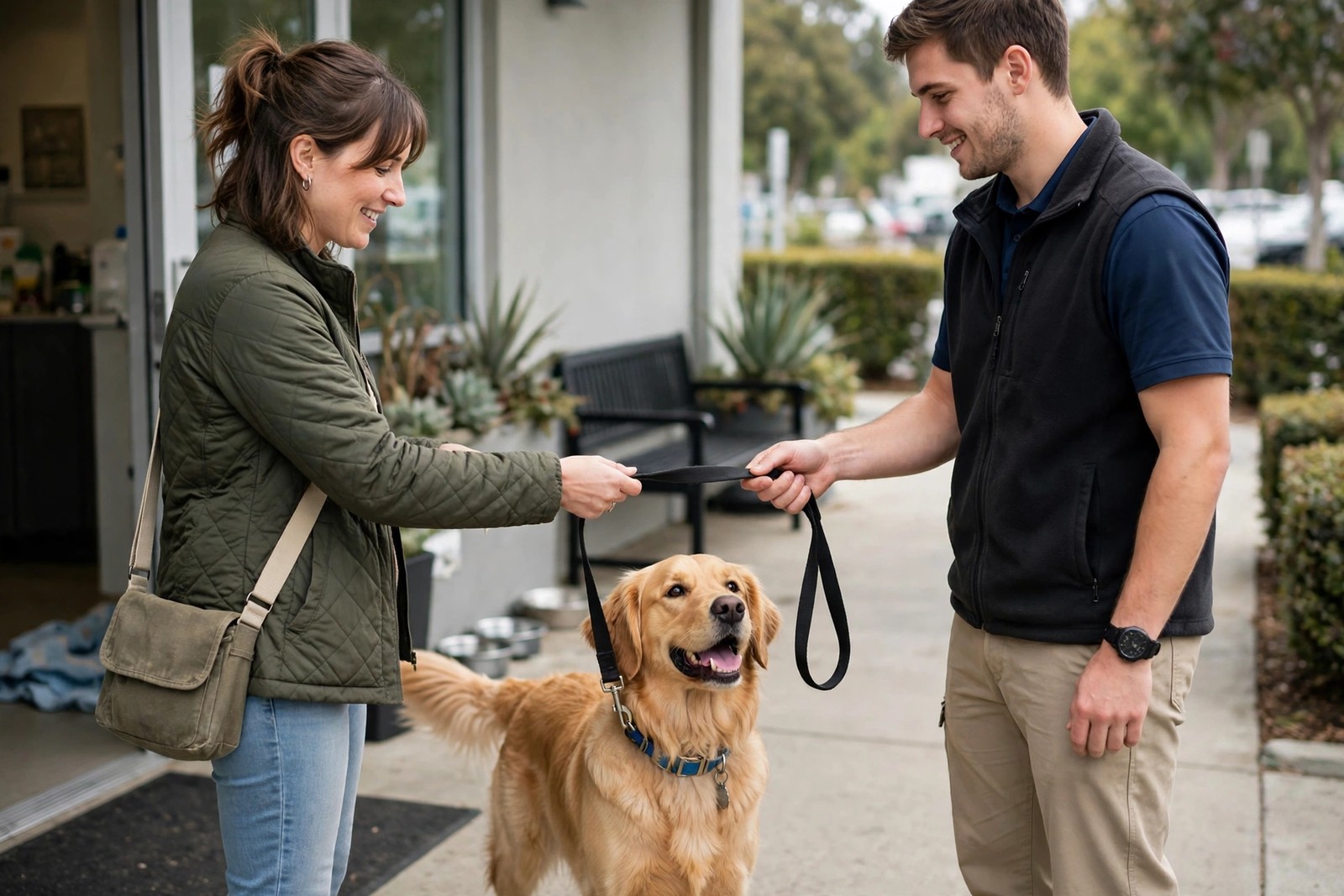
Use a boarding trial stay to learn how your dog actually copes away from home: ask how they ate, slept, played, and got along with staff and other dogs, watch their body language closely at pickup, and judge the facility by how honestly and specifically it reports — including anything that went wrong. A trial that produces only vague praise has told you very little.
Set the trial up to teach you something
Keep it short and representative — one overnight, or a day of daycare followed later by a single night, rather than launching straight into a week. Send your dog with their normal food, a familiar blanket, and honest written notes about temperament, triggers, and medication, because you are testing the facility's care of your real dog, not an idealized version. Tell the staff what you most want to know afterward: whether your shy dog ate, whether your boisterous youngster could settle, whether your senior rested comfortably.
Schedule the trial well before your real trip. If it reveals a poor fit — a dog who needs a quieter facility, in-home sitting instead, or more gradual familiarization visits — you need time to act on that, not a departure date forcing you to ignore it.
Questions to ask at pickup
A good facility answers these specifically, from notes rather than impressions:
- Did my dog eat their meals, all of them, and drink normally?
- How did they sleep, and where did they settle?
- Did they play, and with what kind of dogs — or did they prefer people, or solitude?
- How were they on walks and with handling by different staff members?
- Was there any barking, pacing, appetite loss, loose stool, or conflict I should know about?
Specific answers — "she skipped breakfast, ate dinner, played in the small-dog yard, napped well" — signal observant care. A cheerful "she was great!" with no detail, especially if your dog comes home ravenous, exhausted beyond normal tiredness, or smelling strongly of urine, should prompt harder questions or a different facility.
Read your dog, too
Some tiredness and excitement at pickup is normal — boarding is stimulating. Pay attention instead to the pattern over the following day: a dog who eats, drinks, toilets, and sleeps normally at home and recovers their usual rhythm quickly probably coped well. Lingering signs — clinginess that does not ease, appetite loss, digestive upset that persists, new fearfulness around handling, coughing, or unusual lethargy — are worth a call to your vet, both for your dog's sake and because a pattern across stays matters.
Also notice willingness next time. A dog who walks into the facility on a loose leash, greeting staff, is giving you the clearest review available.
Getting records there with Pet Passport
A trial only runs smoothly if the facility has your dog's paperwork in order first — vaccination proof is required by reputable boarders, and medication and allergy details shape how they care for your dog from hour one. KinsLe's Pet Passport makes that handoff simple: it is your dog's records packet, bundling vaccines, medications, allergies, and documents in one place to share with the boarder. No last-minute clinic calls for a certificate you filed somewhere at home. Send the packet, run the trial, and book the real stay with evidence instead of hope. At pickup, ask staff for their dated notes and file that report in the Pet Passport packet on KinsLe, where its feeding, sleep, and play entries sit beside the vaccine proof for the real stay.