
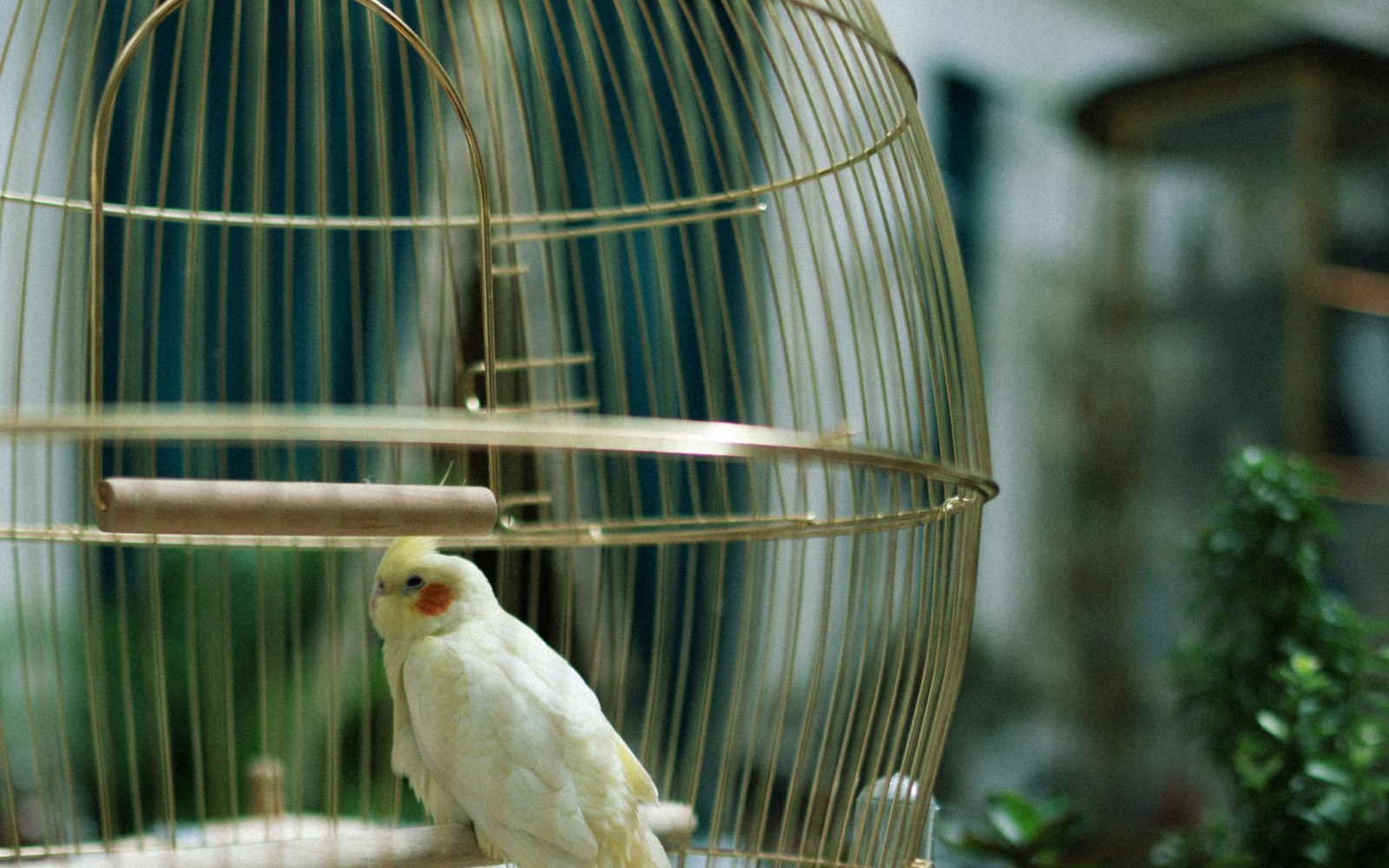
Look for a travel carrier that is secure, well ventilated, and sized so your bird can turn around and sit comfortably on a firmly mounted perch without its tail or crest being crushed — with a door that latches reliably and cannot be worked open from inside. The right carrier is sturdy enough for a car ride or vet trip, easy to clean, and familiar enough that travel day is not the first time your bird has ever seen it.
Size and Fit Come First
Too small is stressful and can damage feathers; too large lets a bird tumble and get hurt if you brake suddenly. Your bird should be able to perch upright with head clearance, turn without bending its tail against the sides, and grip securely. For crested birds, count the crest in that headroom. For long-tailed species, measure the tail, not just the body — that is the dimension owners most often underestimate.
Bring your bird's measurements when you shop, and if you are choosing between two close sizes, think about trip length. A short vet run favors snug and secure; a longer journey needs a little more room to shift position.
Safety Features That Actually Matter
Check these before you fall for looks:
- A door and latch your bird cannot manipulate, with no sharp edges inside
- Ventilation on multiple sides that cannot be blocked by a cover or seat
- A perch mounted firmly so it cannot swing or fall during movement
- Bar spacing or mesh your bird cannot get a head, toe, or beak caught in
- Non-toxic, chew-resistant materials, especially for parrots who test everything
- A solid base that contains mess and can be lined and wiped clean
Skip carriers with loose fabric a strong beak can shred into strings, and be cautious with fully clear designs if your bird is easily startled by movement on all sides.
Comfort for the Journey
Line the base for grip and easy cleaning — paper lining you can replace is practical for most trips. Add one small familiar toy if space allows, but avoid hanging items that will swing wildly in a moving car. Many birds travel calmer with part of the carrier lightly covered to reduce visual stimulation, as long as airflow stays open.
For longer trips, plan how food and water will be offered safely. Shallow, secured cups beat open dishes that spill. Offer water-rich foods your bird already knows, and save brand-new treats for home.
Practice Before You Need It
The carrier should not appear only on stressful days. Leave it out at home with the door open, let your bird explore and perch inside for treats, and take very short practice sits before a real trip. Pair it with calm praise and a predictable routine — out of the cage, onto the perch, door closed briefly, then back to normal life. Birds who have rehearsed the carrier at home usually settle far faster on travel day.
Travel With ID in Place
KinsLe's Pet Pass is your bird's verified ID card, and it makes a smart companion to keep with that carrier whenever you head out — to the vet, a boarder, or on a longer journey. Having identification sorted before you travel means one less thing to scramble for if plans change. Your bird's Pet Pass on KinsLe identifies your bird and names you as its keeper if it is ever handed to a vet, boarder, or finder on a trip.