
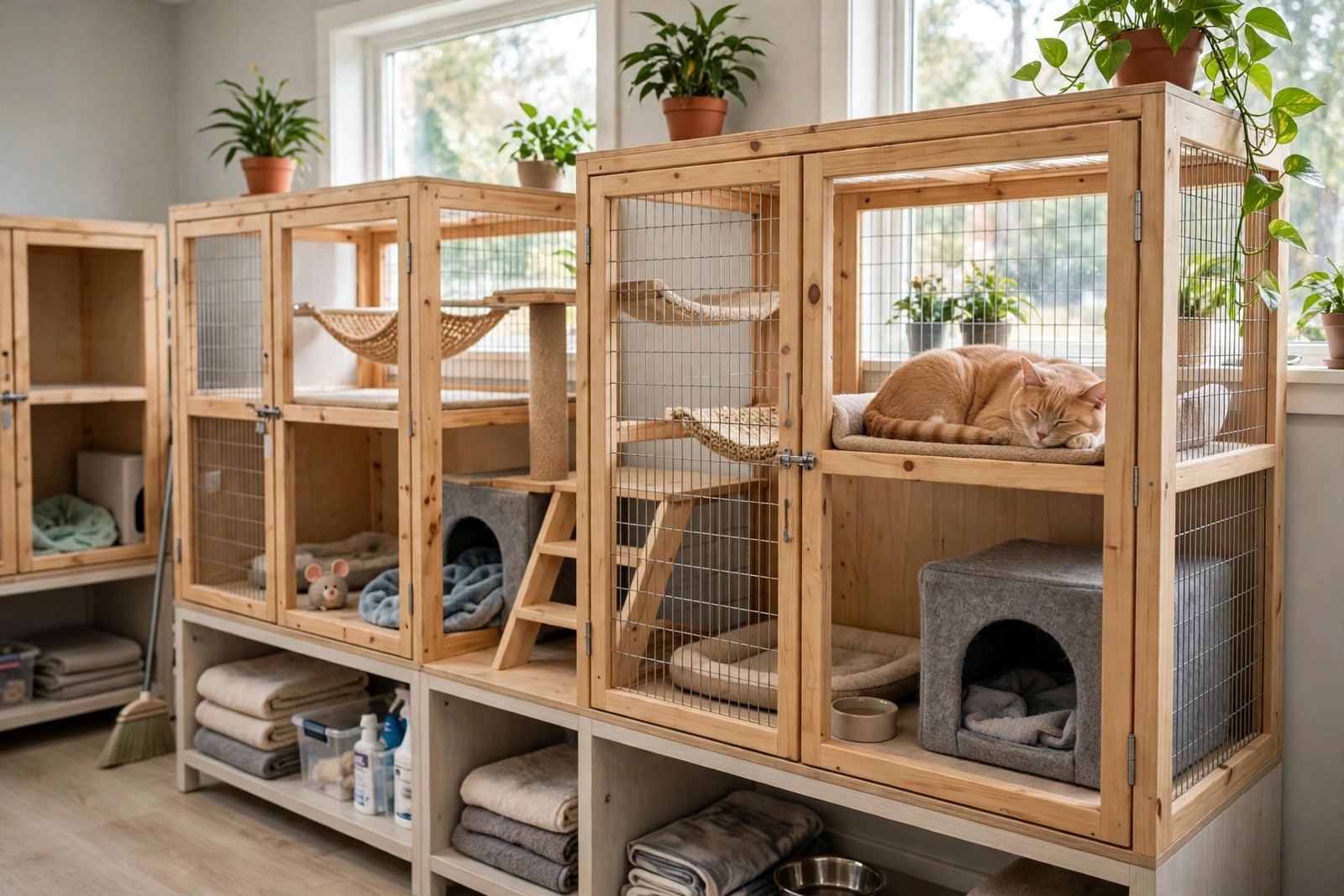
Look for a boarding facility with separate cat-only areas away from dogs, clean individual spaces, clear vaccination requirements, and staff who can describe their daily routine confidently and specifically — then visit in person before you book. A polished website tells you about marketing; a tour tells you about noise, smell, space, and how the cats already there actually look.
Start With a Tour, Not a Booking Form
Call and ask to visit at a normal, busy time rather than a staged quiet slot. As you walk through, use your senses. Does it smell clean without heavy chemical cover? Can you hear barking through the cat ward walls? Are litter boxes clean, water bowls full, and bedding dry? Cats in residence should look settled — eating, grooming, or resting — rather than pressed into the back of every enclosure vocalising.
Check the housing itself. Each cat needs an individual space large enough to separate sleeping, eating, and litter areas, ideally with a perch or shelf and somewhere to hide. A hideaway box inside the enclosure matters: a cat who can choose to be unseen copes far better than one on permanent display. Ask whether bonded pairs can board together and how multi-cat families are handled.
Health, Safety, and Daily Routine Questions
Good facilities are strict, and that strictness protects your cat. Ask:
- Which vaccinations do you require, and do you check proof before arrival?
- How do you separate a cat who becomes unwell, and which vet do you use?
- How are medications given, logged, and charged for?
- How often are cats fed, checked, and given one-to-one attention or play?
- What happens overnight — is anyone on site, or are checks remote?
- How do you handle a cat who stops eating, which is a real risk in stressed cats?
Listen for specifics. 'We check them regularly' is weaker than 'we record appetite and litter use at the morning and evening rounds, and we call you the same day if a cat skips two meals.'
Match the Facility to Your Cat
A confident young cat may enjoy a facility with larger condos and play sessions. A senior cat, a cat on medication, or a shy cat who hides from household guests needs quieter housing, experienced handling, and minimal disruption — and may honestly do better with a home sitter instead. Tell the facility plainly about temperament, stress signals, and handling limits; a good boarder would rather know a cat bites when reached for than discover it.
Ask about bringing familiar bedding or an item that smells like home, and whether you can do a one-night trial stay before a longer trip.
Red Flags Worth Walking Away From
Be cautious if a facility will not allow a tour, houses cats within sight and sound of barking dogs, cannot explain its cleaning or illness protocol, has no vaccination requirements, or pressures you to book on the spot. Overcrowding, shared litter areas between unfamiliar cats, and vague answers about emergencies are also reasons to keep looking.
Finding Local Options With KinsLe
Comparing facilities takes legwork, and KinsLe's Pet Services Directory helps you find and compare local boarders, sitters, vets, and groomers before you book, so you can shortlist places worth touring rather than starting from a blank search. Once you have chosen, keep your cat's vaccination records together so you can prove eligibility without a last-minute scramble.
The right facility should leave you picturing your cat bored and comfortable, not merely contained. Start that shortlist with the Pet Services Directory on KinsLe, where local boarding facilities for cats can be lined up side by side before you visit one in person.