A boarding stable is not really a building; it is a daily routine performed by other people for your horse. Two yards with identical facilities can deliver entirely different lives depending on turnout, feeding and staff cover, so choose on the routine first and the postcode second. Visit more than once, and read the contract as carefully as you walked the fields.
Turnout, Forage and the Daily Routine
Ask how many hours a day horses are turned out, in which fields, in what size of group, and what happens in bad weather or when fields rest — a yard where winter quietly means weeks of standing in is a different proposition from the one described in summer. Ask what forage is included, how much, and whether it is fed in the field as well as the stable, because forage makes up a large share of a horse's diet and is the first place a cheap livery cuts corners. Cover feeding too: which feeds are included, who makes up feeds, whether supplements you supply will be given, and how changes are agreed. Ask how often stables are mucked out under each livery package, what bedding is provided, and whether skipping out happens through the day. Write the answers down per yard; after three viewings, details blur.
Stabling, Arena and Fencing on a Walk-Round
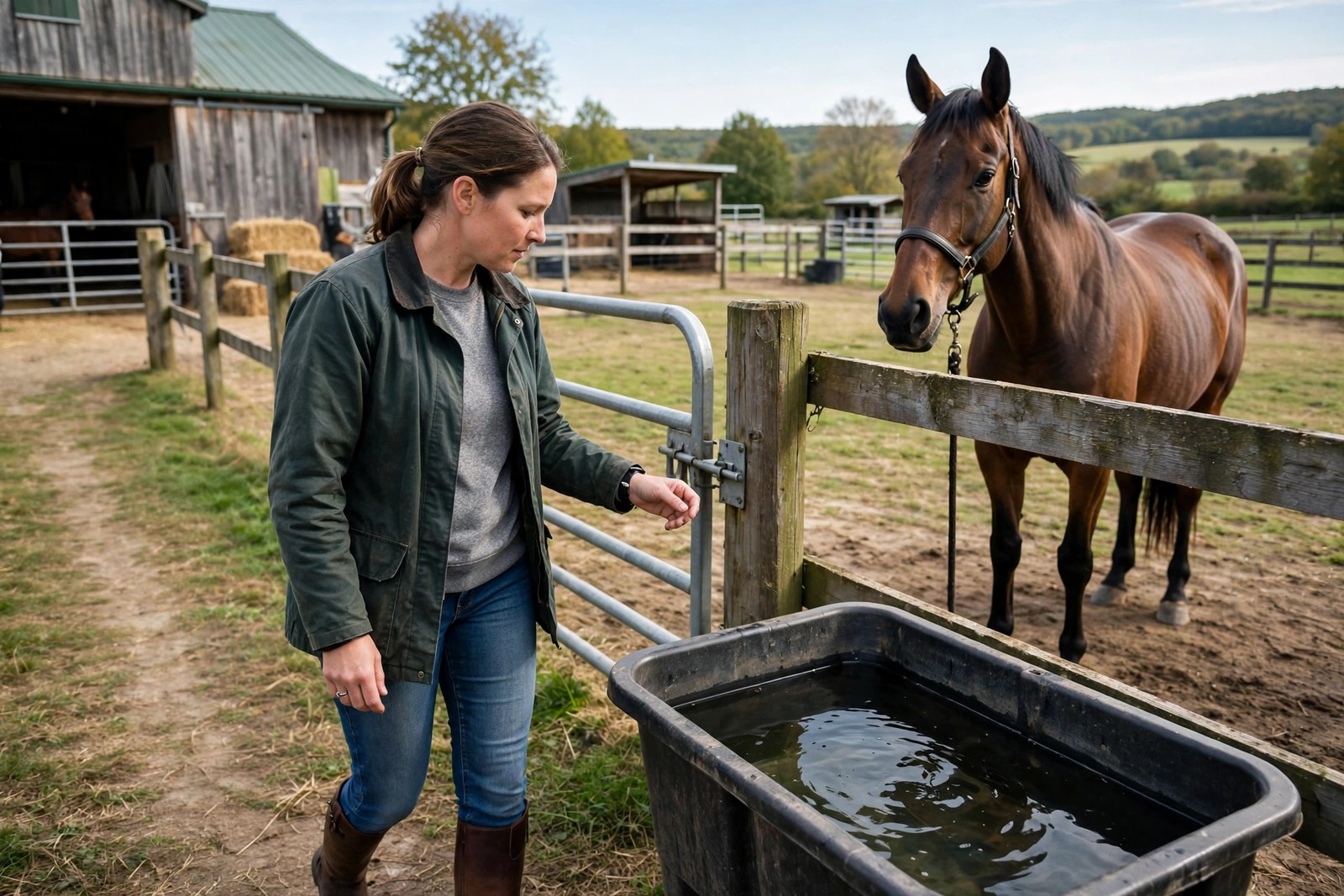
Walk the whole yard yourself rather than touring only the show route. Look at fencing for the things that injure horses — broken rails, wire where it does not belong, gateways churned to mud with no hardcore or mats — and check that field water troughs are clean and working. In the stables, look for light, ventilation without draughts at horse height, sound doors and floors, and horses who look settled rather than wound up. In the arena, ask about the surface, how it is maintained, and how drainage behaves after heavy rain, and check the practical extras that decide whether you will actually ride: lighting for winter evenings, a secure tack room, trailer parking, and hacking routes from the gate. Ask about quarantine arrangements for new arrivals and what happens when a horse is on box rest.
Staff Cover and Emergency Arrangements
Ask who is on site, and when: who does the early check, who is around at night, and what happens when the yard owner is away or ill. Ask the emergency questions too: which vet and farrier does the yard use, who is authorised to call them for your horse if you cannot be reached, and how are you contacted? A good yard has thought about the colicking horse at midnight and can tell you the plan without hesitating. Ask existing liveries, politely, how long they have stayed and what they would change; length of stay is a quietly reliable measure of a yard, and owners who are leaving will often tell you exactly why. Visit once at a busy time — evening feeds or a wet weekend — because a yard's true standard is what it looks like under pressure, not at a viewing appointment.
The Contract: Included, Extra and Notice
Read the written contract before you agree to move, and make sure it states the monthly price, exactly which services that price includes, what is charged as an extra (holding for the farrier, rugging changes, extra forage, holiday cover), and the notice period on both sides. Check the yard rules that will shape your life there: opening and visiting hours, whether your own instructor and vet can visit, worming programme requirements, and whether horses must be vaccinated to a stated standard — a yard that requires this is protecting your horse as much as enforcing a rule. Keep a signed copy. KinsLe's Pet Services Directory is the practical starting point for all of this: you can find local boarding stables, compare what each offers, and draw up a shortlist of yards worth walking round, instead of driving to whichever yard an advert pushed at you first.