
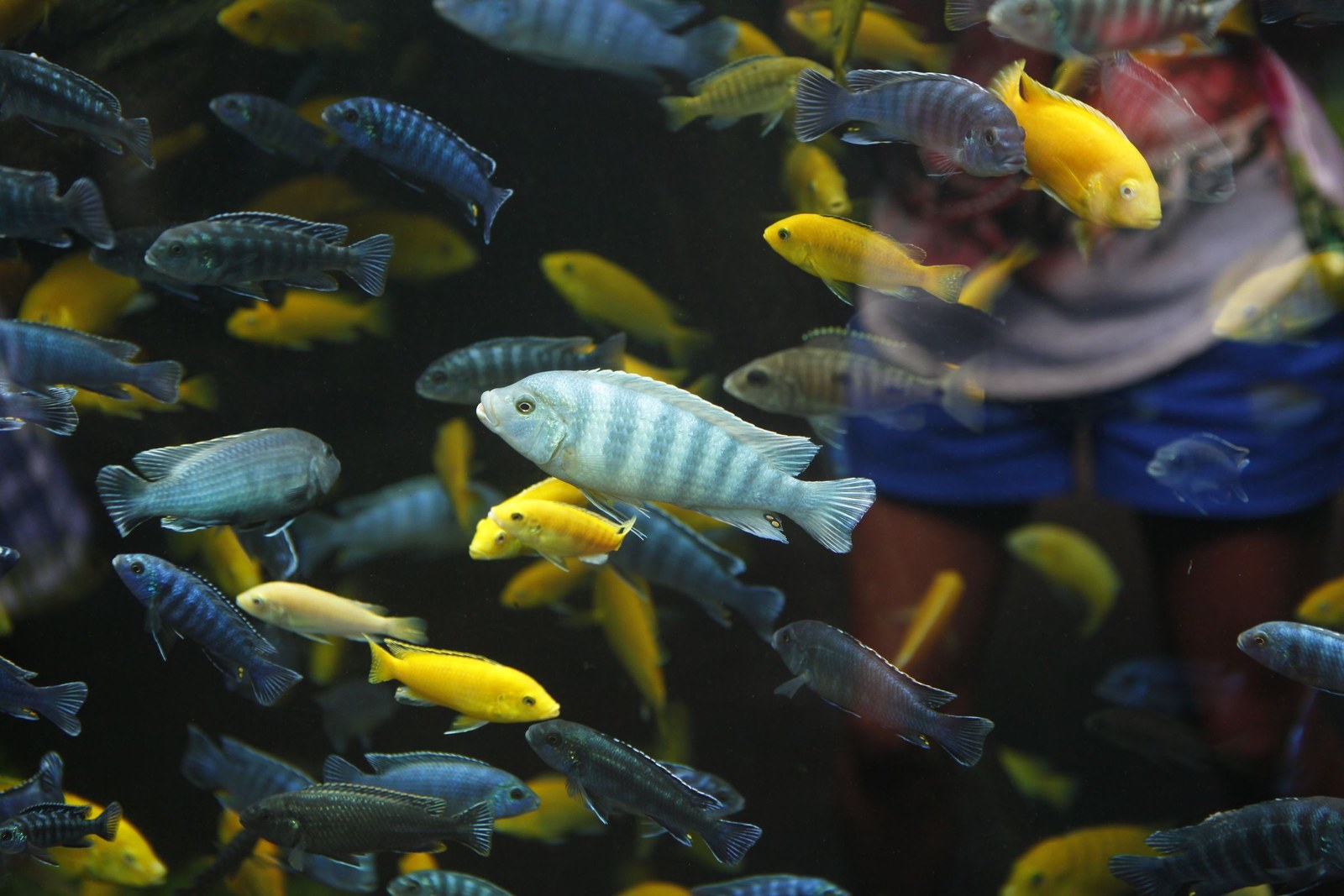
Choose fish that are bright, alert, and swimming steadily, with clear eyes, intact fins, and good body condition — in a clean tank where the tank mates also look healthy. Healthy fish notice you: they track movement, orient toward food, and hold their fins open rather than clamped. Their colors are vivid, their eyes are clear and symmetrical, and they swim with purpose instead of hovering listlessly or darting in panic. Equally important is the tank around them: clean glass, no dead fish, no spotty or fuzzy tank mates, and water that doesn't smell. A great fish from a bad tank is still a gamble.
The five-minute health checklist
Eyes: clear, bright, and equal — cloudy, bulging, or sunken eyes are red flags. Fins: whole, unfrayed, held open; clamped fins signal stress or illness. Body: smooth scales, no spots, patches, raised bumps, or pineconing; belly neither sunken nor bloated. Behavior: steady swimming, schooling with its own kind, interest in food — ask the staff to feed them and watch who eats eagerly. Gills: even movement, not flared or gasping. If most fish in the tank fail these checks, walk away no matter how pretty the one you wanted is.
Read the tank, not just the fish
Look past your target fish at the whole system. Dead fish in the tank or in neighboring tanks on the same filtration are a hard no. White spots, fuzzy growths, or listless fish anywhere in the system mean shared water — and shared problems. Ask how long the fish have been in the store: brand-new arrivals are still stressed from shipping, while fish settled for a week or two have shown their true condition. Ask what they've been eating and whether they've been treated for anything.
Questions worth asking the staff
"How long have these been here?" "What are you feeding them?" "What are your water parameters — and can I see a test?" Good stores answer confidently and may even test water in front of you. Ask about the fish's adult size and temperament, and whether it's wild-caught or tank-bred — tank-bred fish are usually hardier and better adjusted to aquarium life. Be wary of pressure to buy today, vague answers, or staff who can't tell a corydoras from a pleco.
The 24 hours after you buy
Float the bag to equalize temperature, acclimate gradually, and quarantine — the healthiest-looking fish can still carry something invisible. Dim the lights for the first day and offer food only once they're settled. Watch the newcomers eat within 24–48 hours; a fish that won't eat after two days deserves a closer look. Keep your receipt and note the purchase date — reputable stores stand behind their livestock for a short guarantee period.
How KinsLe helps
Finding a store worth trusting is half the battle, and KinsLe's Pet Services Directory is a good place to start your search for local fish stores and aquatic vets with real reputations. Once your new fish are home, each one gets its own KinsLe profile to track where it came from and how it's settling in. On KinsLe, you can locate the shops worth that checklist through the Pet Services Directory, narrowing the field to local fish stores before you walk in and start asking questions.