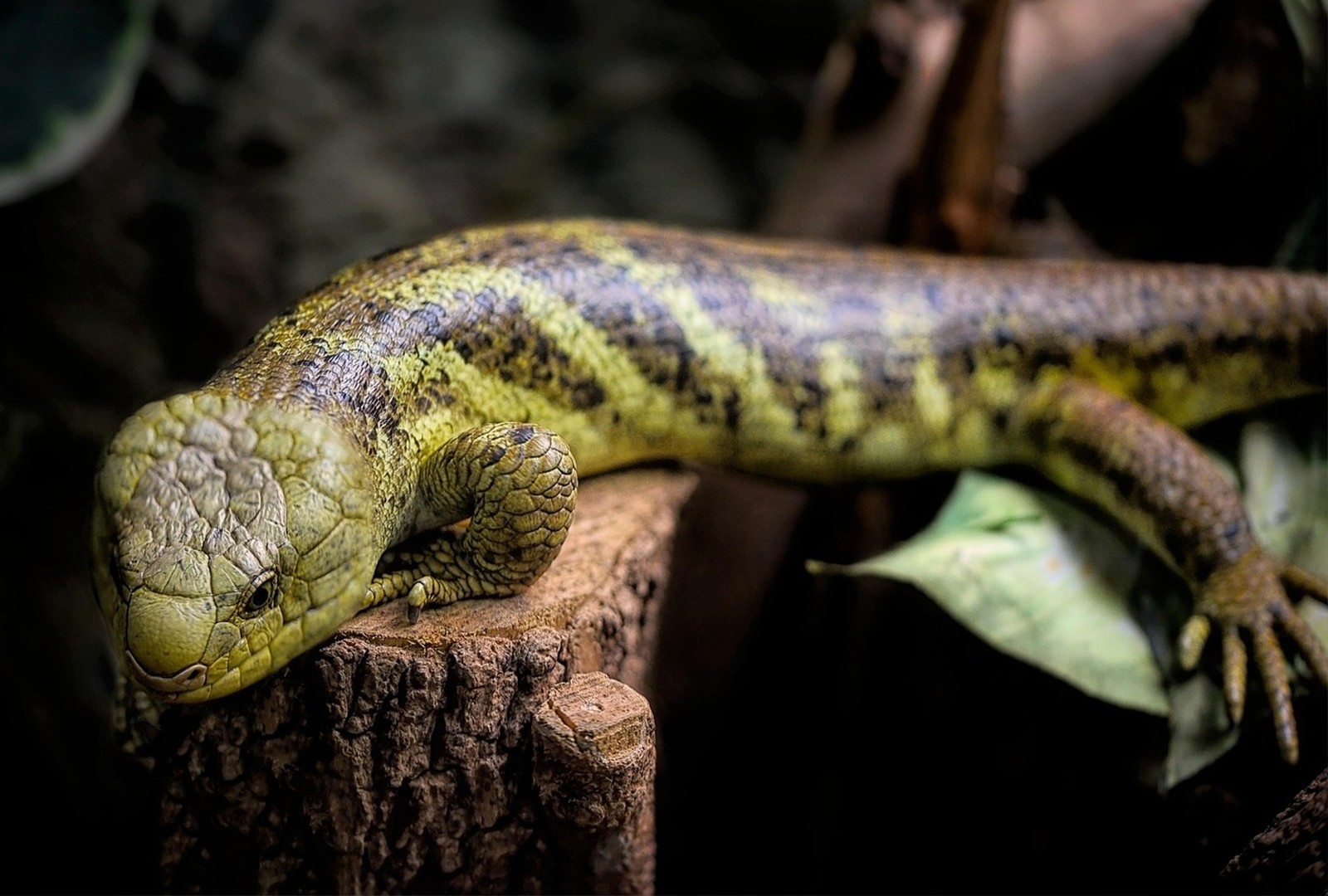
A juvenile skink turning away from every vegetable offered can make a keeper feel like they are failing at the basics. Usually they are not. Young blue-tongue skinks are built to run protein-forward while they grow, and their interest in plant matter typically builds as they mature — which means a juvenile refusing a tidy pile of greens is behaving like a juvenile, not staging a protest. The workable goal at this age is not a skink that loves salad. It is a skink that eats some vegetable matter regularly, almost without noticing, while the keeper keeps the process calm enough to repeat for weeks.
Why a Young Skink Leans Toward Protein
Growth is expensive, and a young skink's appetite follows its construction phase: protein and fat for building body, with vegetables playing a supporting role that grows larger across the first years of life. That is why the plain bowl of vegetables fails so reliably — offered alone, it is the least interesting item in the enclosure to an animal wired for richer food, and a hungry juvenile will simply wait out the experiment for something better. Understanding the life-stage pattern changes the strategy completely. You are not trying to win an argument about greens; you are smuggling a gradually rising share of plant matter into meals the skink already wants, while its own maturing appetite slowly lowers the resistance you are working against.
Hide the Vegetables Inside What Already Works
The method that earns its keep is mixing. Chop the vegetables fine — small enough that they cannot be picked out or eaten around — and fold them through the favored protein so every mouthful carries both. A skink gulping down the food it loves takes the vegetables in the same bite, and taste familiarity builds quietly over repeated meals. Rotate the vegetable side through ordinary keeper staples: squash, leafy greens, and other common vegetables in turn, because variety protects against a single refusal becoming a total one, and because a skink that tolerates greens mixed one way may accept a second vegetable once the routine itself feels safe. Keep the chopping and mixing identical in the Care Teams feeding note on KinsLe, so whoever feeds produces the same mixture rather than their own interpretation of it.
Sequence, Variety, and Weeks of Patience
Order matters as much as content. Offer the vegetable-laced mixture when the skink is properly hungry, and let it land before any plain protein does; a skink that has already filled up on its favorite has no reason to investigate the mixed bowl. Keep portions modest at first, and let acceptance set the pace. Then settle in: patience here is measured in weeks, not days. A mixture refused on Monday may be eaten on the twelfth offering, and keepers who log what was offered and what was accepted — a line per feed in KinsLe's Care Teams log — can see the slow bend in the curve that memory alone would miss entirely.
When Refusal Stops Being Pickiness
Hold one boundary firmly in mind. A skink that eats its protein happily while dodging vegetables is a picky juvenile; a skink eating nothing at all, or losing weight, is a different matter and routes to a vet. Watch the whole animal alongside the bowl: steady growth, bright behavior, and normal shedding say the mixing strategy has time to work, while a shrinking tail base or a skink that stops coming out to feed says it does not. Never force-feed a reluctant juvenile over vegetables, and never let frustration turn mealtime into a contest the skink experiences as threat. The keepers who succeed at this are rarely doing anything dramatic — they are mixing finely, sequencing sensibly, rotating patiently, and letting a young animal grow into a broader appetite at the speed its own body sets.
Write tonight's result into KinsLe's Care Teams log before lights out, and tomorrow's feeder starts from evidence rather than a guess.