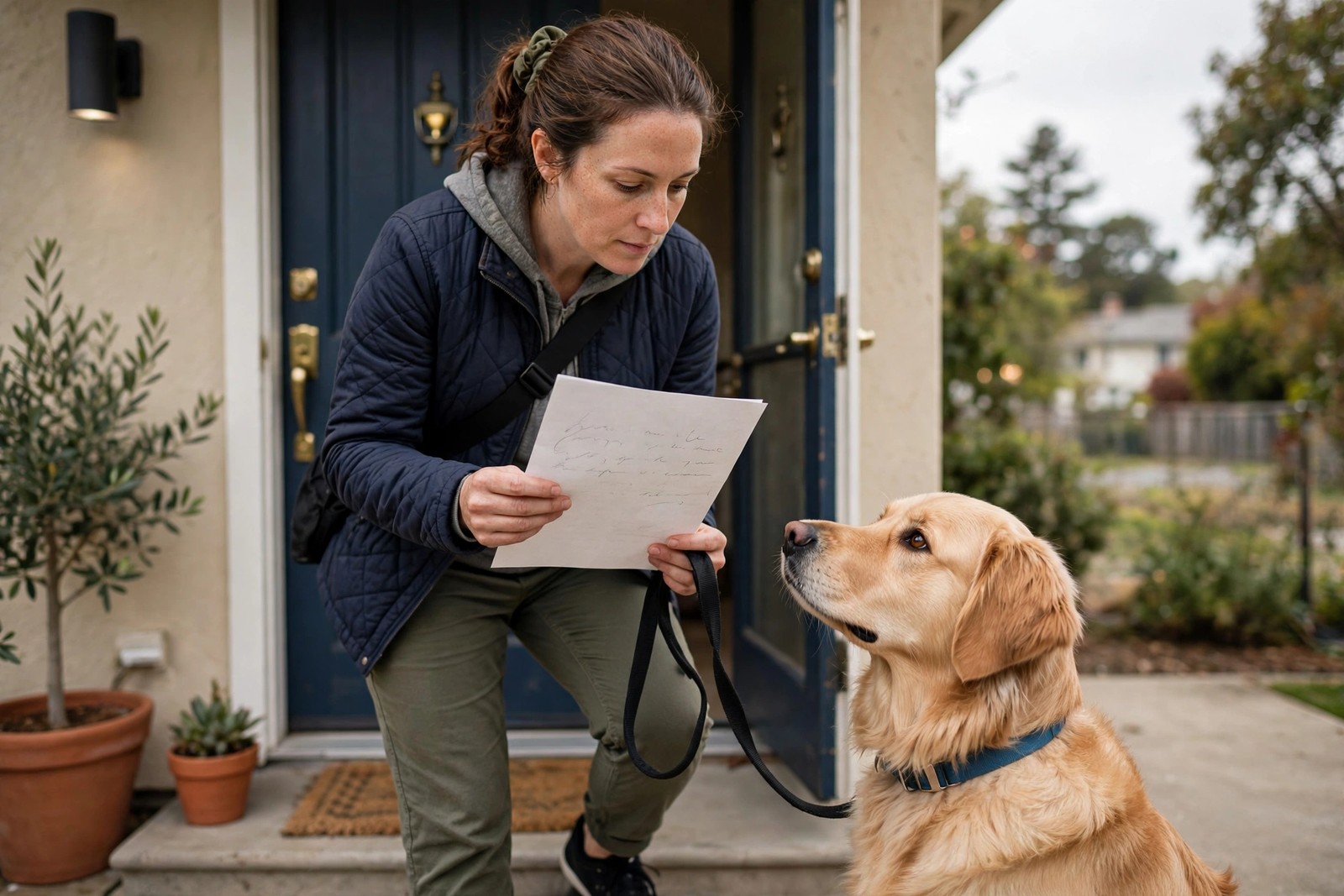
Verbal handoffs evaporate. A walker told three things at the front door will remember two by the park, and the forgotten one is usually the health limit. Put the brief in writing, keep it to what a walk actually involves, and organise it the way the walk unfolds: before, during, and after.
Health Conditions and Walk Limits
Name every condition that shapes the walk, in plain terms: a heart condition that means a steady pace and no running, arthritic joints that rule out steep slopes and long distances on cold days, a recovering injury with a maximum walk length set by your vet, or breathing limits in a flat-faced breed that make heat a hard stop. State the maximum distance and duration, what terrain to avoid, and the signs that mean cut the walk short and come home — lagging, heavy panting, limping, or sitting down and refusing. If medication timing interacts with the walk, such as a dose due midday or treatment that must not get wet, write it here with the exact instruction from the label or your vet.
Reactivity, Recall, and Lead Behaviour
Describe triggers specifically: dogs approaching head-on, off-lead dogs rushing in, bicycles, joggers, children, livestock, or a particular dog on the route. Say what your dog does — lunges, barks, freezes, pulls to greet — and what works: crossing the street early, a watch-me command, a treat scatter, or simply more distance. Be blunt about recall: whether it is reliable, patchy, or non-existent, and state plainly that your dog stays on the lead unless in a fully enclosed area you have named. Note pulling strength honestly, which collar or harness to use and how it fits, and any rule about extending leads near roads.
Route, Toilet Habits, and Treats
Give the usual route or the areas to use and avoid, including known hazards such as a yard with a fence-fighting dog or fields with livestock at certain times. Record toilet habits: where your dog usually goes, the cue word you use, roughly how long they take, and that bags are always carried and used. List treats the walker may give, any food allergies or intolerances, and anything your dog must never be fed by well-meaning strangers. Add water expectations on warm days and whether your dog swims, drinks from streams, or rolls in anything disgusting given half a chance.
After the Walk and In an Emergency
Write the homecoming: paws wiped or washed, water bowl refilled, food only if instructed, and where the dog is left — which room, crate, or behind which gate. End with your mobile number, a backup contact, your vet and the emergency clinic, and a simple instruction to message you about any incident, injury, eaten object, or fight, however minor it seemed. KinsLe's Pet Passport stores this walker brief alongside your dog's health records in one packet, so when a vet changes the exercise limit or a medication, the version your walker works from changes with it.