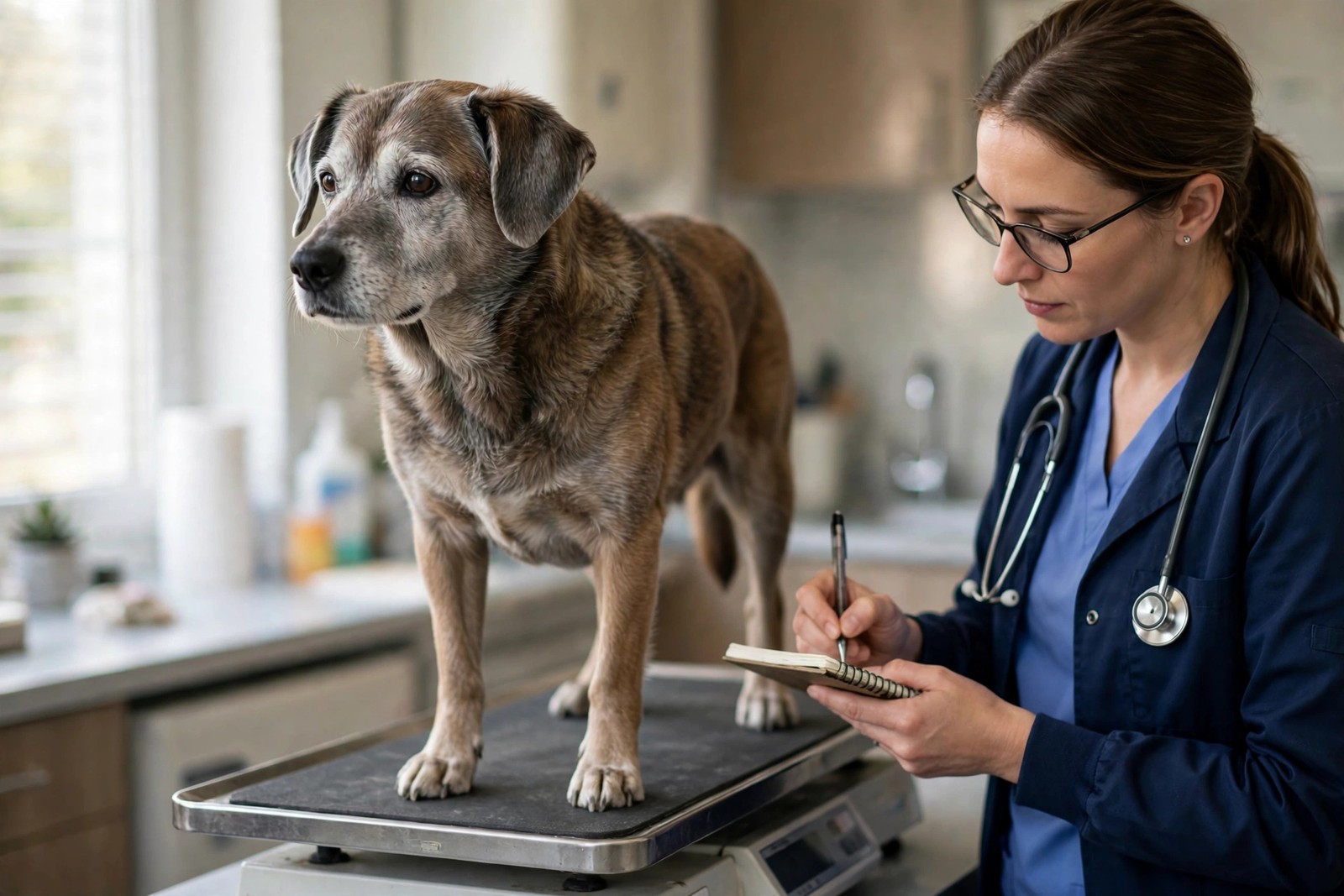
Senior food is a label in search of a definition. Unlike puppy food, which follows recognised growth standards, senior recipes have no single legal recipe, so two bags marked senior can differ widely in calories, protein, sodium, and joint-support ingredients. That is why the switch should start with your individual dog's condition and a veterinary conversation, not with the number of candles a birthday would carry if dogs had birthdays anyone celebrated.
Read the Dog in Front of You
Ageing runs at different speeds: a small breed may be vigorous at ten while a giant breed is elderly at seven. Assess the dog directly. Has weight crept up as activity fell, or is the dog losing condition despite a good appetite? Run your hands along the ribs, spine, and hindquarters to judge fat cover and muscle, because older dogs can lose muscle while gaining fat, leaving the scale unchanged while strength declines. Note stiffness after rest, reluctance on stairs, slower recovery after walks, and changes in thirst, appetite, coat, and digestion. Each observation points somewhere different: unintended weight loss or rising thirst is a reason for tests before any food change, while gentle weight gain with sound health may need only smaller portions of the current food.
Let Blood Work Inform the Choice
A senior health check with blood work, and urine testing where your veterinarian advises it, turns the food decision into an informed one. Kidney values influence protein and phosphorus choices. Thyroid results can explain weight change that owners blame on age. Liver values, blood sugar, and a dental examination all shape what a diet should and should not attempt. Bring a list of everything the dog eats, including treats, chews, and supplements, because a formula change built on partial information can double up ingredients such as fish oils or joint supplements. If results are normal and the dog is lean, active, and holding muscle, staying on a quality adult food is a defensible veterinary decision rather than neglect of age.
What a Senior Recipe Should Actually Offer
When a switch is warranted, judge a recipe by substance. Protein quality and quantity matter more, not less, for many older dogs, because maintaining muscle depends on digestible protein plus continued exercise. Calorie density should match the dog in question: a sedentary dog may need fewer calories per cup, while a thin, active older dog may need a richer food. Joint-support ingredients such as omega-3 oils are commonly included, fibre may rise to help digestion and satiety, and sodium and phosphorus levels become relevant where a veterinarian has flagged heart or kidney concerns. Ignore front-of-bag promises and read the feeding guide and nutrient figures, then weigh the food for the opening weeks so portions are real rather than estimated.
Switch Slowly and Measure the Result
Transition across seven to ten days, mixing rising shares of the new food into the old, and watch stools, appetite, and energy as you go. Weigh the dog every two weeks for the opening two months and keep a simple note of weight, walking stamina, stiffness, and coat, because memory edits trends. If weight moves the wrong way, adjust the portion in small steps before blaming the recipe, and report changes in thirst, appetite, or weight loss to your veterinarian promptly rather than waiting for the next annual visit. Running the transition as shared feeding duties inside KinsLe's Care Teams, with each feeder logging the current mix and any observation, keeps a gradual change gradual in a multi-person household.