
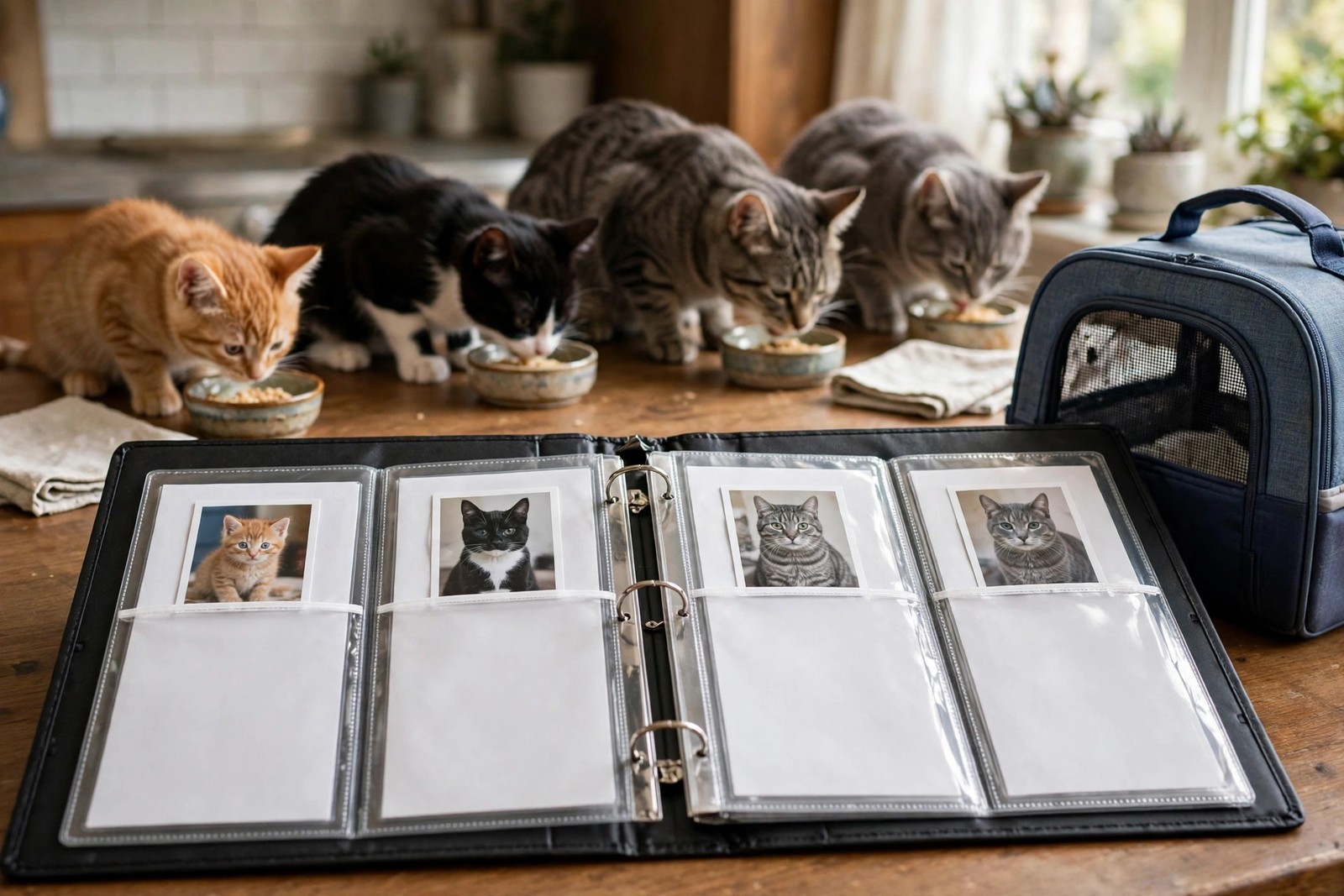
With four cats of very different ages, a single shared instruction sheet is where boarding mistakes begin. A kitten, two adults in their prime, and a senior cat do not eat the same amounts, do not need the same supervision, and do not show illness the same way. The folder that works is organized per cat: four clear sections, one for each animal, with a household front page the boarder reads first. Everything a stranger needs at 7 a.m. with four hungry cats circling should be findable in under a minute.
The Household Front Page
Start with what applies to everyone. Put your own phone number and travel dates at the top, then the household emergency contacts: a local person who can physically come over, a neighbor with a spare key, and the person authorized to make decisions if you cannot be reached. Add the veterinary clinic's name, address, and phone number, plus the after-hours emergency clinic, because a boarder should never have to search for either while holding a sick cat.
Note the house basics on the same page: where food, litter, and cleaning supplies are stored, which doors stay shut, where the carrier lives, and how the boarder reaches you fastest. One front page, read once, prevents most of the urgent texts.
One Section Per Cat
Each cat's section opens with the basics first: name, age, breed or description, and a photo, because in a four-cat household 'the tabby' can describe two animals. Then feeding: the exact food, the measured amount, the times, and where that cat eats, since cats fed in separate spots cannot steal a prescription diet or a kitten's richer food. Note who finishes eagerly and who grazes, so the boarder can spot a missed meal.
Medication gets its own clear line in the section, recorded exactly as prescribed — the name, the timing, and how that cat takes it easiest, such as hidden in a small amount of food or given directly. Record what the prescription says and nothing beyond it; the boarder's job is to follow the label and your notes faithfully, and any question about changing a dose goes to the vet, never to guesswork.
Finish each section with quirks: the hiding place that cat chooses when stressed, whether it tolerates being picked up, the door it tries to slip through, and the signs that mean call the vet promptly for that individual animal.
Flagging the Youngest and the Oldest
The kitten's section needs its own warnings. Kittens eat more often than adults, tire and chill faster, and investigate everything, so flag the small spaces, cords, and chewable hazards the boarder should keep closed off, and state the feeding frequency in bold terms a tired sitter cannot miss.
The senior's section carries a different flag. Note stiff joints, any hearing or vision loss, litter box access needs such as a low-sided tray, and the senior's normal appetite and energy baseline. An old cat who skips food or hides is not being fussy, and the boarder should know that a prompt call to the vet is the right move rather than waiting until you return.
Putting the Folder in the Boarder's Hands
Walk through the folder with the boarder before you leave, ideally during one real feeding, so the separate eating spots, the medication routine, and each cat's personality stop being words on a page. Leave the printed folder where feeding happens, and agree on a simple check-in rhythm: a daily photo or a short note on who ate and who used the tray. For the next trip, KinsLe keeps the folder current while Care Pass limits each boarder's view to the cats, dates, and details that boarder actually needs.