
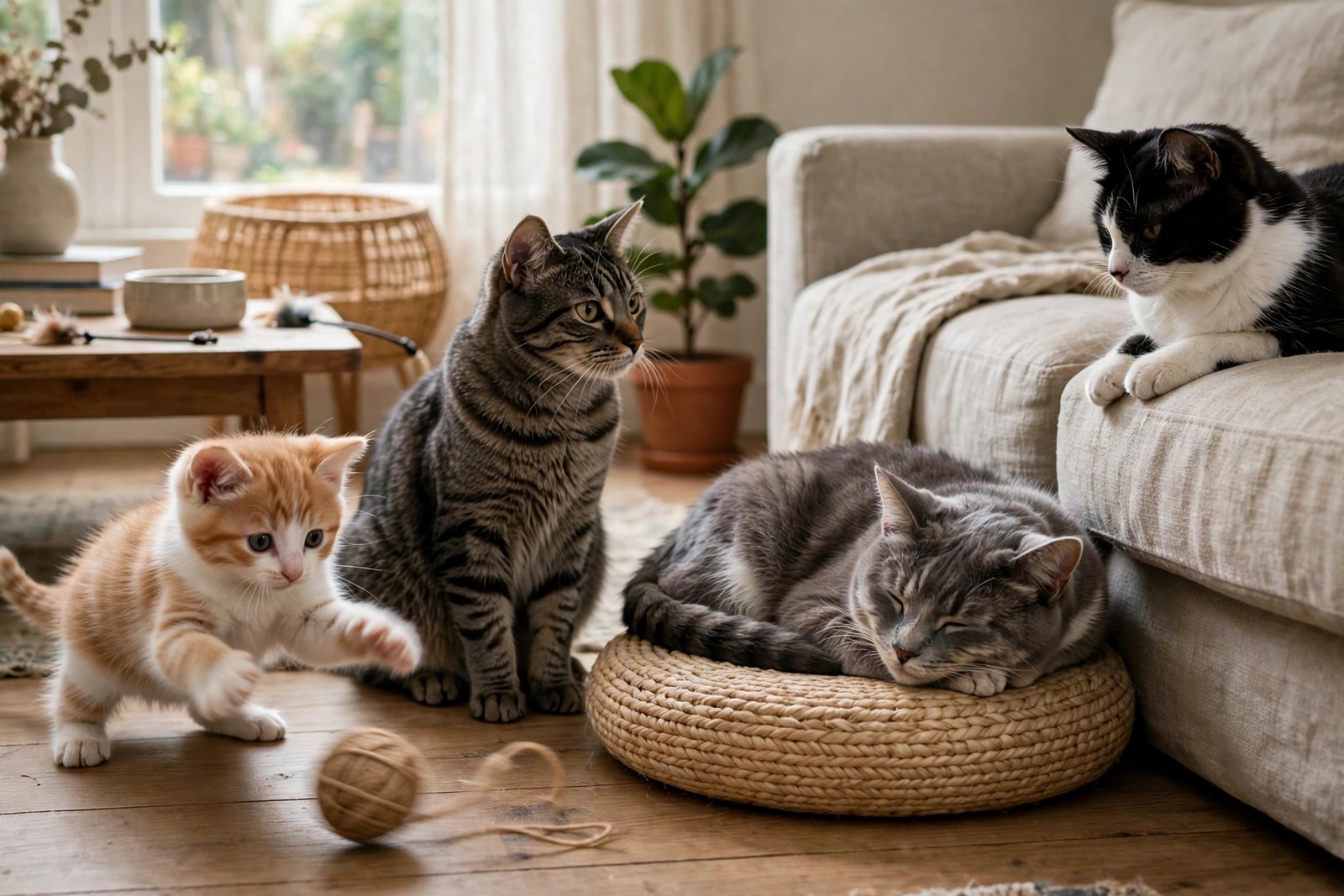
A week away from a four-cat household is not one preparation job; it is four, running in parallel. A kitten, a confident adult, a middle-aged cat with set ways, and a senior with stiff joints share an address, not a care plan. The work that makes the week go well is separating each cat's needs on paper, briefing one named caregiver against those notes, and testing the whole arrangement before the real absence begins.
Each Age Needs a Different Plan
Start with the youngest. A kitten eats more often than the adults, plays in intense bursts, and gets into trouble in spaces the older cats ignore, so feeding times, safe rooms, and supervision expectations need spelling out. The healthy adult is usually the simplest: keep food, water, litter, and routine exactly as normal, and note the usual hiding places so a caregiver does not panic at a cat who naps behind the sofa every afternoon.
The middle-aged cat often carries the household's firmest habits: a specific food, a preferred tray, a strong opinion about strangers. Write down what the routine actually is, not an idealized version, including which changes reliably cause litter protests or skipped meals. The senior needs the most detailed page: mobility limits, stairs to avoid, any medication given exactly as prescribed, appetite patterns, and the difference between normal extra sleep and withdrawal that should trigger a phone call. Age drives all of this, and a plan that averages the four cats serves none of them.
Written Notes, Cat by Cat
Turn those differences into a separate written note for each cat, kept in the order the caregiver will work through the day. Each note should cover food type and amount, feeding location when cats eat apart, water arrangements, litter duties, medication as prescribed with no improvisation, mobility notes, and the signals that mean call the owner or call the veterinarian. Add the regular veterinarian's number and the after-hours clinic on every page, not just the first, because emergencies do not wait for filing systems.
Brief the named caregiver in person, walking through the house cat by cat. Show where each cat eats, sleeps, hides, and takes medication, and say plainly which cat may be picked up and which should be approached on the floor. A briefing that takes an hour prevents a week of guesses, and a caregiver who has met the senior's slow mornings will not misread them as illness on day three.
Trial the Arrangement Before the Week
Run a trial before the real trip: one overnight stay, or a full day where the caregiver does every task while you stay away. The trial exposes what the written notes missed. Perhaps the kitten's food is stored where the adult raids it, or the senior's medication routine takes two people, or the middle-aged cat refuses food from a stranger on the first visit and eats on the second. All of that is cheap to learn during a trial and expensive to learn from another city.
Adjust the notes after the trial, stock food for the week plus a spare supply, set out carriers, and confirm the caregiver can reach you and an emergency contact who can authorize care. Leave the house in its normal state rather than deep-cleaning away the familiar smells the cats rely on.
Bounded Access for the Caregiver
The caregiver needs the records, not the run of your accounts. Care Pass on KinsLe is designed for this shape of help, because the Care Pass access on KinsLe opens each cat's feeding, medication, and contact notes to one named person for a defined period and no longer. When the week ends, access through the Care Pass arrangement on KinsLe ends with it, leaving each cat's notes updated for the next absence.