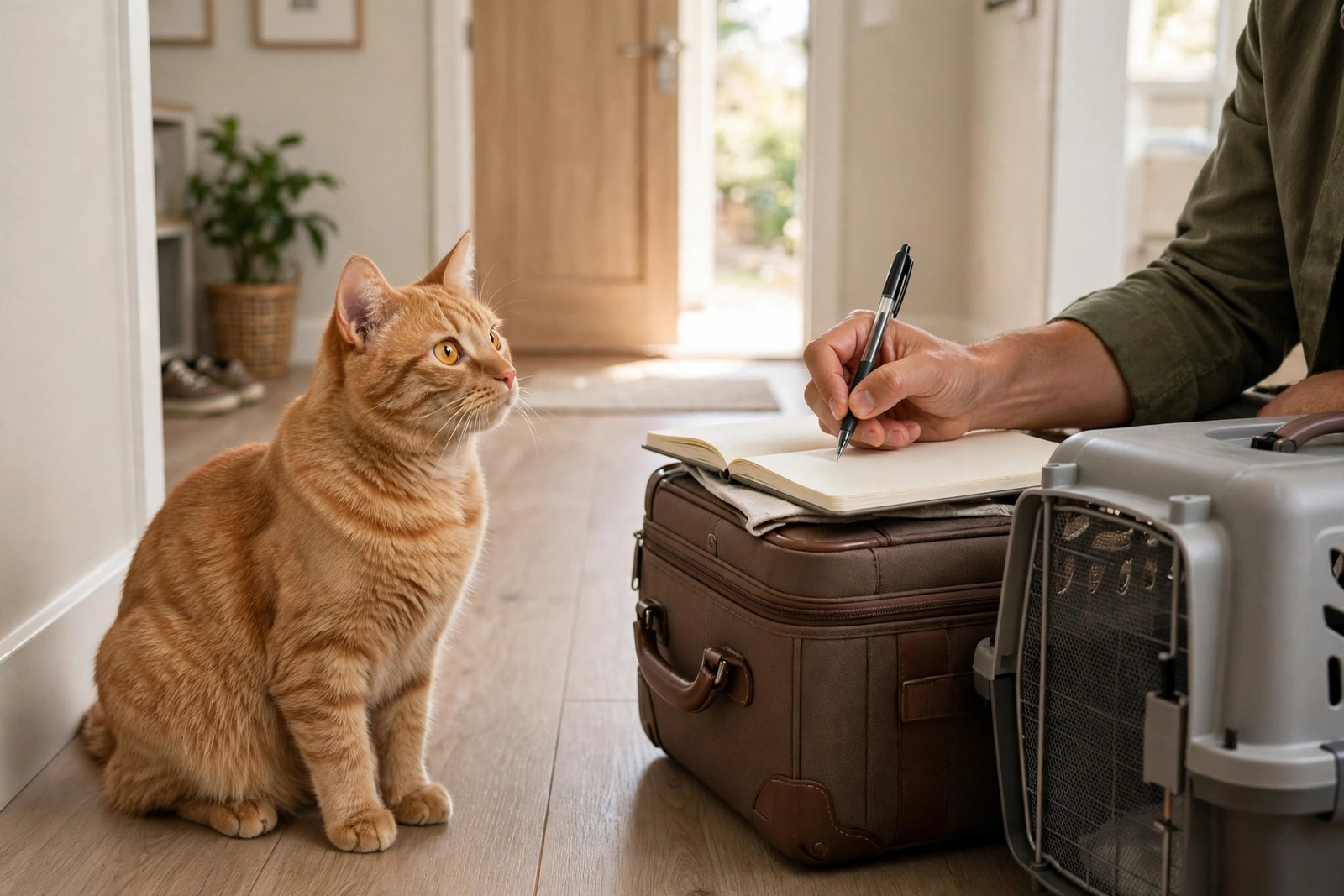
Two weeks is long enough for a treatment date to slip past unnoticed, and a sitter cannot act on a date that only exists in your head. Before you pack, turn your cat's flea and worming record into three clear facts for each treatment: when it was last given, when it is next due, and who will deal with it if that due date falls while you are away. Write those facts down rather than rounding them to sometime this month.
Do the Date Arithmetic First
List flea treatment and worming treatment separately, because they often run on different cycles and only one of them may fall due during the trip. Take the last-given dates from your vet record, a treatment card, or the note you keep at home, and count forward to the next due date for each one. Then lay those dates against your travel dates. If both treatments are next due after you return, the update is simple: record the dates, note that nothing falls due during the trip, and leave your sitter free of the job. If a due date lands inside the two weeks, or in the couple of days either side when travel plans can shift, that treatment needs a decision before you go, not a message from the airport.
Agree the Plan With Your Vet, Then Write It Down
Whether a treatment can be moved, and by how much, depends on the product and your cat, so that call belongs to your vet rather than to a guess at home. Ask in good time, because the answer may be to give the treatment shortly before departure, to leave it for the sitter on the exact due date, or to deal with it promptly on your return, and each answer leads to a different handover. Record what was agreed in plain words: the product name exactly as your vet records it, the date it is to be given, and the name of the person giving it. If your sitter is giving it, leave the product itself, the written instructions from your vet, and your vet's phone number together in one obvious place, stored safely away from children and other animals, and talk the sitter through the job once before you leave.
Do the same check for every cat in the house, not just the one whose record you opened first. Multi-cat homes often run each animal on a different product and a different cycle, set by the vet according to age, weight, and whether the cat goes outdoors, and a plan that covers one cat can silently miss another. Write each cat's name beside its own dates and product so a sitter never has to match a treatment to an animal by guesswork. Indoor cats count in this exercise too: owners sometimes let their dates drift, and a vacation is exactly when a lapsed record gets discovered.
While You Are Away and When You Return
Ask your sitter to confirm by message when the treatment has been given, with the date and time, so the record stays accurate for the next cycle rather than being reconstructed later. If your cat goes to a cattery instead, give the cattery the same dates and tell them what has already been agreed with your vet, because boarders often ask for proof that parasite treatment is current. On your return, enter the actual date given, not the date that was planned, and count the next due date forward from the actual one. Note anything your sitter reports, such as a spat-out worming tablet or a treatment that was refused, and tell your vet rather than quietly repeating it. Recording the last-given date, the agreed vacation plan, and the confirmed date in your cat's KinsLe Pet Passport keeps the whole cycle in one packet your vet and sitter can both work from.