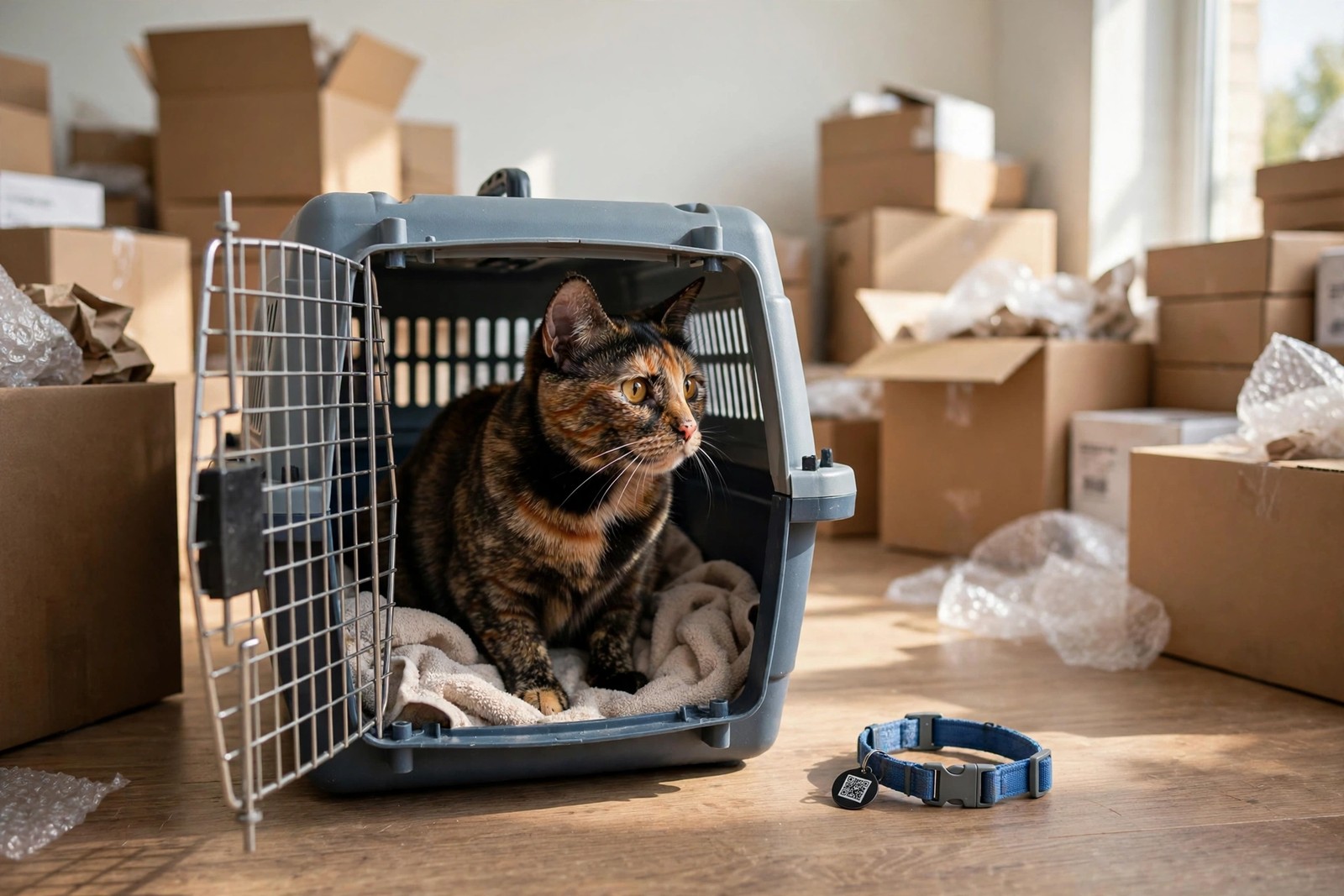
The chip under your cat's skin holds one thing only: a number. Everything a finder needs, including your address and phone number, lives on the registry database that number points to, and that database still shows your old house until you change it. Moving is also a high-risk time for escapes, with doors propped open, unfamiliar rooms, and a new neighborhood outside. Update the registry as part of the move itself, not as an afterthought once the boxes are unpacked.
Change the Address and Contact Fields on the Registry
Log in to the registry holding your cat's chip, or phone it, and replace the home address with the new one in full, including postcode, exactly as you would write it on a letter. Check the mobile number digit by digit, because many owners registered a number years ago and have changed it since, and check the email address is one you still open, since registries send confirmation and renewal messages there. Look at the secondary or emergency contact as well: if that person was a neighbor at the old address, swap them for someone who can still help, and keep at least one contact who does not live at your house, in case you are away when your cat is found. Save the changes and ask for, or screenshot, the confirmation, because a form that looks submitted is not the same as a record that has updated.
Check the Chip Number and Registration Itself
While you are in the record, confirm the chip number shown is identical to the number on your vet's paperwork and your cat's vaccination record. Mismatches are rare but real, especially where a cat was chipped by a rescue, rehomed, or registered by someone else. If your cat came to you from a previous owner, confirm the registration is in your name at all, because a chip still registered to a former owner sends a finder to the wrong person no matter how new your address is. If anything cannot be changed online, phone the registry and note the date and who you spoke to. Your vet can scan your cat at the first visit after the move to confirm the chip reads cleanly and matches the paperwork you both hold.
If the move crosses a national border, ask the registry and your vet what applies, because chip databases are run country by country and a registration in one system does not always follow a cat into another. You may need to register the same chip number afresh in the new country's database, keeping the old record until the new one is confirmed live.
Timing, the Move Itself, and the Records Around It
Make the registry change before moving day if you already know the new address and moving date, or on the day itself at the latest. Keep your cat shut in one quiet room, or boarded away from the house, while doors stand open, and keep her indoors at the new home until she is settled, because a cat that slips out in the first days may try to navigate back to the old address, where your updated registry details are now a direct route from the finder to you. Tell your old vet about the move, register with a new vet if the distance calls for it, and give the new practice the chip number so their record matches the registry. Update the address on a collar tag too if your cat wears one. Bringing your cat's KinsLe Verified QR ID Pet Profiles contact details up to date alongside the registry means both routes a finder might use, collar scan and chip scan, land on the new address from the first day.