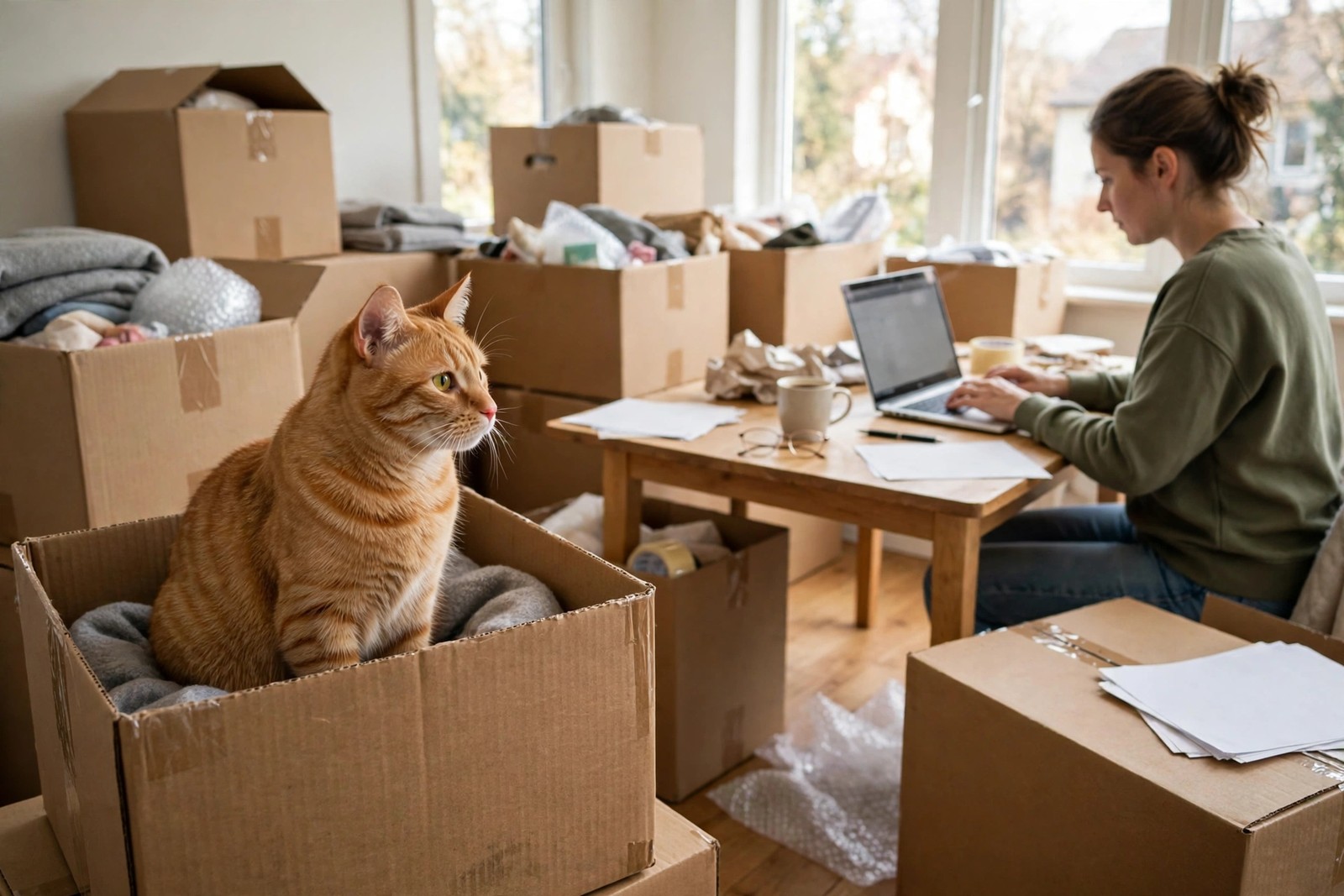
Pet insurance is priced and administered from the details on the policy, and a house move changes several of them at once. Insurers treat address as a material fact: it feeds the premium calculation and the correspondence record, so a move you never reported can complicate a claim at exactly the wrong moment. Work through the policy the week you move — not at renewal — and update these specific items.
Address, contact and correspondence details
Start with the obvious trio: the new home address in full, including the postcode, the date you move, and any phone number or email that changes with the move. Confirm the correspondence address separately if renewals or claim letters could still go to the old house for a while — a missed renewal letter can lapse a policy without you ever seeing a warning. If your premium changes, the insurer should tell you why: vet fees vary considerably by region, and moving from a rural area to a city, or the reverse, commonly reprices a policy at the move or the next renewal. That is expected, not a penalty — but you want to hear it from the insurer now, not discover it on a statement later.
The veterinary practice and cover area
Many policies ask which practice you use, and a move usually means a new one. Update the named vet once you have registered with a practice near the new home, and sooner if your cat is mid-treatment: ongoing claims often need notes passed between practices, and the insurer's records should show the handover. Check geography too — if you move a long distance, confirm nothing in the policy limits cover by area or ties any included services to your old location. While you are on the phone, ask how the insurer wants the move recorded for any condition currently being claimed for, so there is no gap in the paperwork trail.
Lifestyle changes the move creates
A move often changes the cat, not just the address. A cat gaining its first garden, going from indoor-only to outdoor access, or the reverse after a move to a flat, has a different risk profile, and where the policy asks about indoor or outdoor status, answer for the new reality, not the old one. The same applies if the move changes who lives with the cat — a new dog in the household, for instance — where a question covers it. Accuracy here protects you: a claim for an outdoor injury on a policy that still says indoor-only invites an argument you do not need.
The separate job: microchip and records
The insurer is only one database. Update the address and phone number on your cat's microchip registration separately — insurers and chip registries do not share updates — because a cat that slips out during a move, the highest-risk week of its life, is reunited through the chip, not the policy. Keep your own file straight at the same time: policy number and insurer contact, microchip number, old and new vet details, and vaccination and treatment history gathered in one place before boxes swallow them. That gathering is the whole point of KinsLe's Pet Passport: it holds your cat's policy details, chip number and both vets' information in one portable packet, so if a claim, a new-vet registration or a lost-cat call happens mid-move, every number you need is in your hand, not in a sealed box.