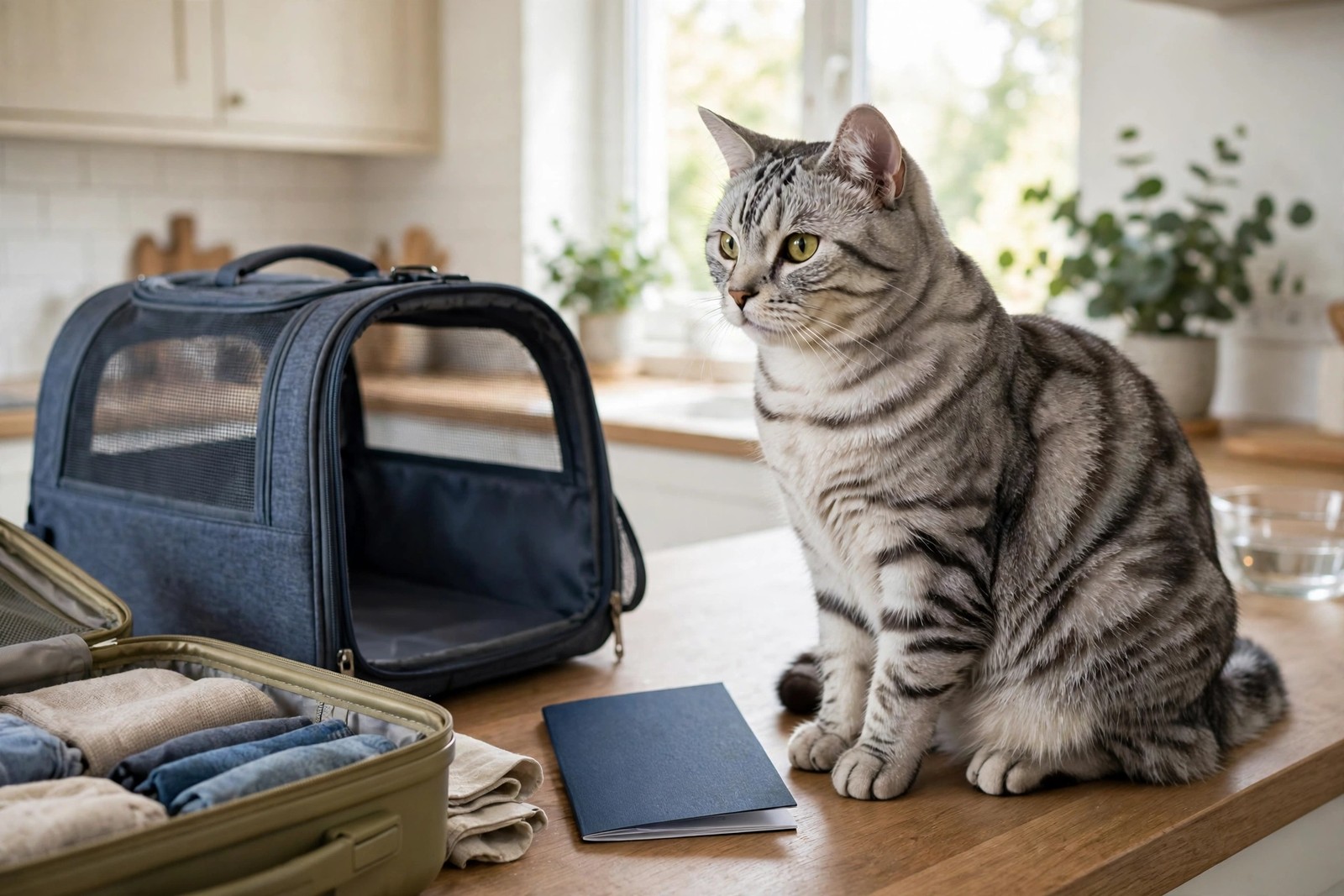
A vaccination record only helps a vacation if it is current, legible, and in the hands of the person caring for your cat. Two weeks away is long enough for a booster to fall due mid-trip, and most catteries check dates at booking or arrival rather than taking an owner's word for it. Work through the record itself a few weeks before you travel, while there is still time to book a vet visit without scrambling.
Read the Record Like a Boarder Would
Open the record and read each entry in turn: which vaccine was given, the date it was given, and the date the next booster is due, as your vet has recorded them. Flag any booster that falls due before you leave, during the two weeks, or in the first days after you return, because those are the dates that can collide with boarding rules or a delayed journey home. Check the identifying details at the top of the record too. Your cat's name, description, and microchip number should match her other paperwork, and entries should be dated and stamped or signed by the practice, since a loose note an owner wrote themselves carries far less weight with a cattery than the practice record does.
Ask What Proof Is Required, in Good Time
Boarding catteries set their own admission rules, and many require vaccination to be fully up to date, with any booster completed a set period before the stay begins rather than the day before. Ask your chosen cattery exactly what they need to see and by when, and ask the same of a house-sitter service if you are using one, because a sitter who takes your cat into a home with other cats may have rules of their own. If a booster is due, book the vet appointment as soon as you know, on your vet's advice about timing, rather than leaving it to the final week when appointment slots and your own packing compete. Never try to reconstruct or backdate a record from memory: if an entry is missing or unclear, ask your vet's practice to reissue a complete copy from their system.
The same check works differently depending on where your cat is spending the two weeks. A cattery will usually want to see the record before confirming the booking, not just at drop-off, so send a clear copy when you book rather than discovering a problem with a suitcase already packed. A sitter caring for your cat at home may never ask to see it, but the record still matters if your cat becomes unwell and a vet needs her history quickly. Cats who travel with you are a separate case: carriers and destinations can ask for proof too, so carry the record with your own documents rather than in checked luggage.
Copies for Everyone Who Needs Them
Take at least two copies of the updated record: a paper copy that stays with your cat at the cattery or with your sitter, and a clear phone photograph you can send if the paper copy goes astray. If your cat is staying home with a visiting sitter, leave the copy with her food and care notes, together with your vet's phone number, so a sitter facing an unwell cat is not hunting through drawers. Check before you leave that the copy is the latest version, because owners often photograph the record and then have a booster given afterwards, leaving the copy one visit behind. On your return, file any new entries made while you were away and check the next due dates afresh. Holding the checked, copied record in your cat's KinsLe Pet Passport keeps her vaccination proof in the same portable packet as her identification and emergency contacts, ready for the next trip without another search.