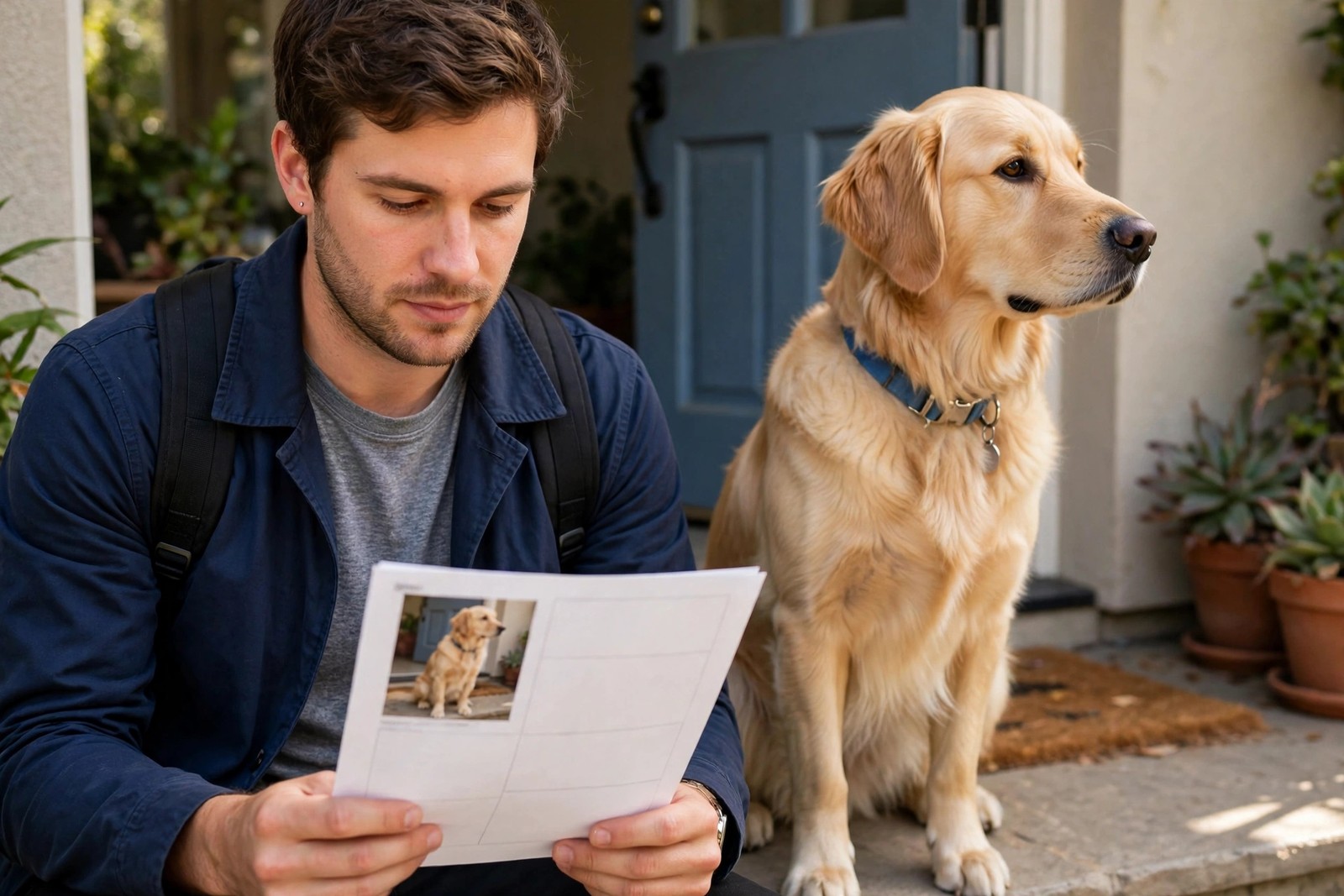
A walker profile is not an advertisement for your dog. It is the briefing that lets a stranger keep your dog safe on day one, before they have learned the dog by walking them. One honest page, written for the street rather than the sofa, beats five fond paragraphs about personality.
Identity and the Dog in One Glance
Begin with name, breed or mix, age, sex, weight, colour, and a clear recent photo, plus one line on size and strength that a walker can plan around, such as 'strong puller when excited, 28 kilos of enthusiasm.' Add microchip and tag details, and note any visible identifying feature. This top block is what gets used if the dog is ever found by someone else, so accuracy here does double duty.
Temperament and Reactivity, Without the Gloss
Describe how your dog greets people, including whether jumping up is a habit and how to manage it, and how they behave around children, strangers at the door, and visitors. Then reactivity in detail: toward other dogs on lead and off, the distance at which your dog can stay calm, the body language that shows the limit is near — stiffening, hard staring, raised hackles — and the exact move that works, whether that is crossing the road, turning away, or a treat scatter. Include prey drive toward cats, squirrels, and birds, traffic nerves, and any sounds that spook your dog, from skateboards to bin lorries.
Health Limits, Commands, and Equipment
List health conditions that affect walking, exercise limits, medication timing if a midday walk includes a dose, and allergies, including treats the walker must not give. Write the command set exactly as you use it — sit, wait, leave it, this way, heel or close — with a word about tone, because a walker using different words in a different order confuses the dog and then blames the dog. Specify equipment precisely: which harness and which attachment point, collar and ID, a fixed lead rather than an extending one near roads, a long line only in named open areas, and whether a muzzle is used and how the dog feels about wearing it.
Habits, Contacts, and Incident Reporting
Finish with the ordinary: usual route and length, toilet cues and timing, water and mud habits, and what the dog does after the walk at home. Give your number, a backup contact, your vet and the emergency clinic, and ask plainly for a message after any incident, scare, or unusual behaviour. Update the profile after any change in health, behaviour, or equipment. KinsLe's Pet Passport keeps the current walker profile inside your dog's records packet, so each new walker starts from the same accurate page instead of a retold version of it.