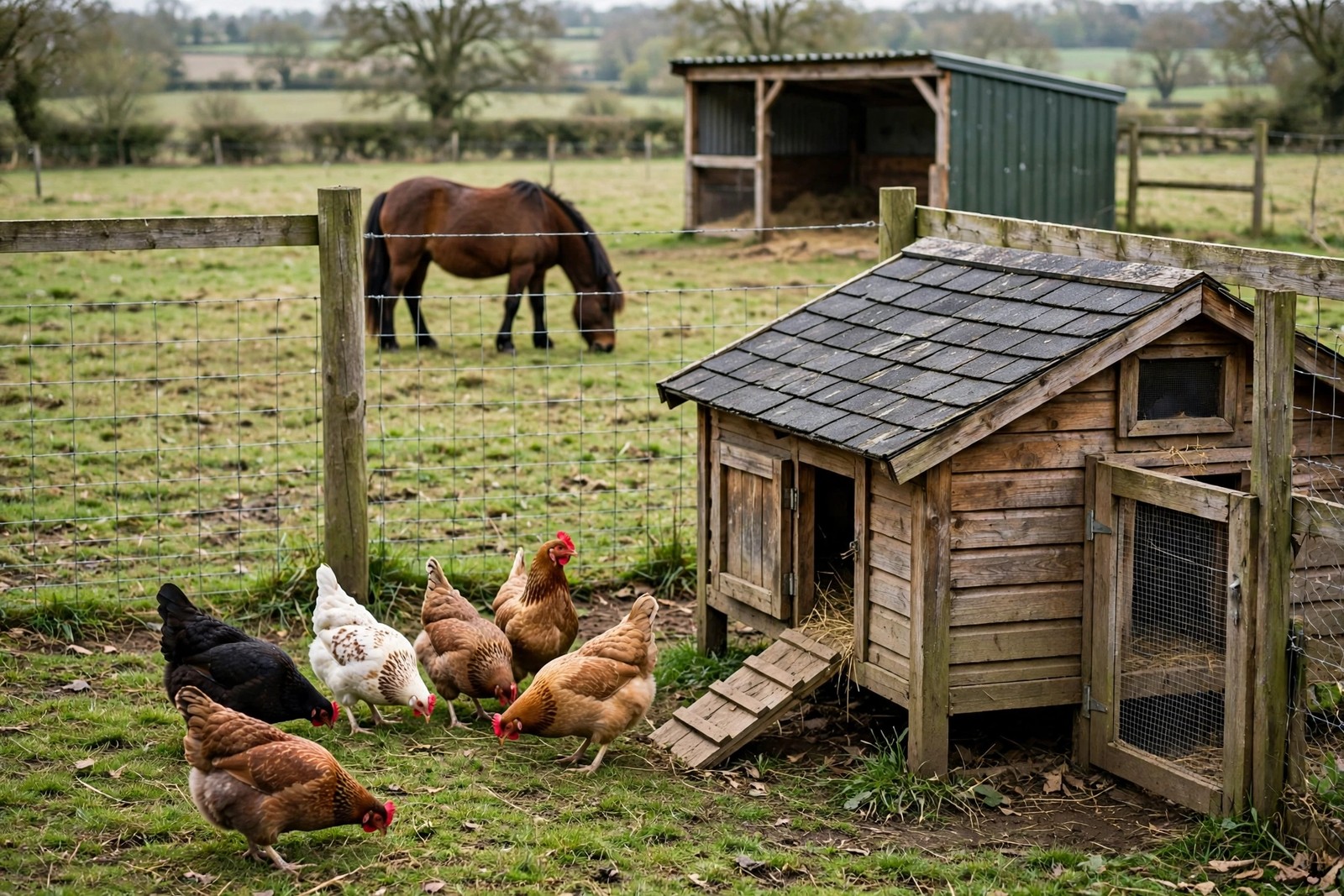
Keeping animals on rented land can work beautifully, but the difference between a smooth arrangement and a dispute is almost always paperwork done before the animals arrive. Chickens and a pony both change how land is used, worn, and smelled, and a landlord who happily agreed in conversation may feel differently once it has to be put in writing. The important answers belong in the lease or a signed addendum.
Written Permission That Actually Names the Animals
Start with the lease itself. Does it allow animals at all, and if it is silent, get written consent that names chickens, a pony, or both, with numbers. A permission that says pets is a weak shield for livestock. The written agreement should also cover where a coop and shelter may be built, whether fencing may be added or altered, who pays for repairs when a pony leans a fence down, and how the ground must be left when you go.
Ask about notice and change: can permission be withdrawn, and with how much warning? Animals cannot be rehomed on a weekend's notice, so a reasonable notice period written down protects everyone. Raise insurance and liability at the same stage: whose policy responds if a pony injures a visitor or strays onto a road is a question to settle in writing, not after an incident. If an agent manages the property, confirm the consent comes from someone with authority to grant it.
Rules Beyond the Landlord
Private permission is only the first layer. Many towns and counties restrict poultry, commonly ban roosters for noise, and set rules about how close livestock housing may sit to neighboring homes or property lines. Check with the local authority before buying a coop, because a rule you discover afterward is enforced against the animals, not the paperwork.
Neighbors deserve a thought as well. Chickens announce mornings, a pony draws flies if manure is unmanaged, and goodwill from the people over the fence prevents the complaints that test a landlord's patience. A short conversation before arrival, and a genuine plan for manure storage away from boundaries, go further than any clause.
The Land Itself, Honestly Assessed
Walk the ground as an animal keeper. Is there reliable water access in all seasons, and permission to run a hose or trough supply? Fencing for a pony must be sound from day one, and you need to know whether existing fencing is yours to repair, replace, or only to use as-is. Look at drainage and shelter: a field that floods leaves chickens standing in mud and a pony with nowhere dry, and any stable, run-in, or coop you add needs the landlord's agreement on placement and on whether it stays or goes at the end.
Plan the unglamorous systems too: where manure is stored and how it leaves the property, where feed is stored so it stays dry and secure, and how a veterinarian's or farrier's vehicle reaches the animals. Finally, plan the ending before the beginning: if the lease ends early or permission is withdrawn, where do the chickens and the pony go, and who arranges it? Writing that answer down while everyone is friendly is the kindest check on this list.
Keep Every Agreement in One Shared Place
In a household where several people tend the animals, the details scatter fast: one person heard the fencing agreement, another holds the landlord's email, a third arranged the farrier. On KinsLe, the Family Sharing record for the animals can hold the permission terms, the care plan, and the useful contacts together, so anyone feeding on a given day works from the same agreements rather than from recollection.
That shared record also carries the daily side of the arrangement: who checks water, who collects eggs, who walks the fence line each week looking for the loose rail a pony will find before you do. Rented land works for animals when the permission is real, the rules are checked, and the care is steady, and a household that keeps its land agreements visible in KinsLe, inside the shared Family Sharing checklist, starts every season on solid ground.