
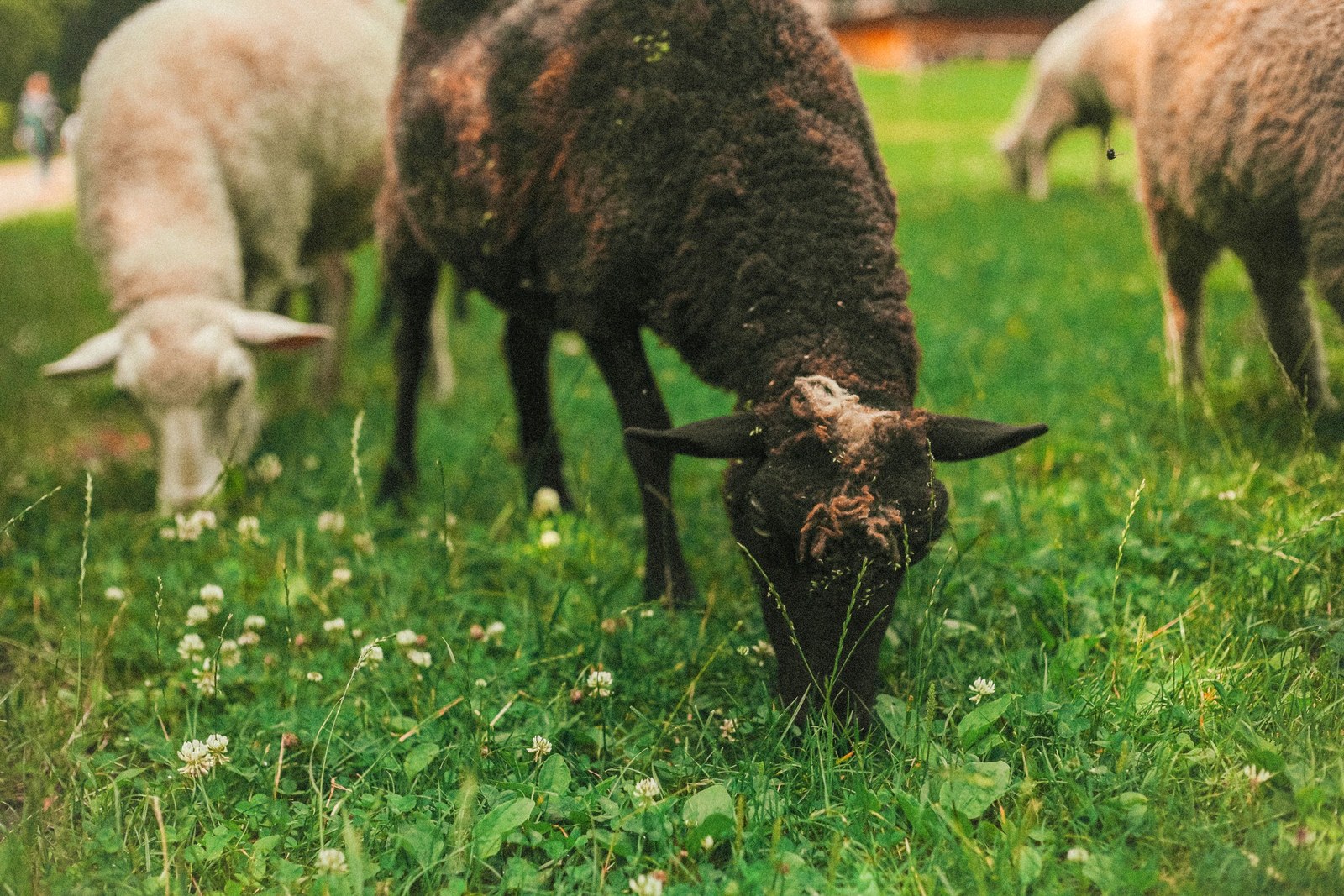
Sheep and cows should graze primarily on good grass pasture — a diverse mix of grasses with some legumes like clover where it suits your soil — supplemented with quality hay whenever grass is dormant, snow-covered, overgrazed, or in drought. Healthy pasture plus timely hay is the foundation; grain, where it is used at all, is a targeted extra for specific animals, not a substitute for forage.
What Good Pasture Looks Like
Sheep and cattle are true grazers, built to harvest grass efficiently and ferment it in the rumen. A productive pasture is dense, varied, and given time to recover between grazings. Perennial grasses such as orchardgrass, fescue where appropriate, timothy, and ryegrass are common bases, often with white or red clover adding protein and fixing nitrogen naturally.
Not every green field is safe or nutritious. Avoid letting hungry animals onto lush, rapidly growing pasture in a sudden change, introduce new pasture gradually, and learn to identify toxic plants common in your area — certain weeds, wilted cherry leaves, and ornamental plantings blown or dumped into fields can be dangerous. Your local extension service can identify plants from photos and advise on control. When in doubt about a new field, walk it first and remove hazards before turnout.
Keep water in every grazing area. Animals who must walk a long way back to a single trough graze less evenly and trample the route.
Rotation, Rest, and Stocking
Rotational grazing — dividing land into paddocks and moving animals before grass is grazed too short — protects roots, spreads manure, and helps break parasite cycles. Grass needs rest to regrow; a common guideline is to move animals when forage is grazed down to around 3 to 4 inches and let that paddock recover for several weeks, adjusting for season and rainfall.
Overstocking undoes all of this. Too many animals for the acreage means bare ground, weeds, mud around gates and troughs, and animals losing condition despite your best hay bill. Stock conservatively for dry years, and plan a sacrifice area or dry lot for wet periods so the whole farm does not turn to mud.
Sheep are close grazers and can crop pasture shorter than cattle, which is useful in a mixed rotation — cattle first on taller forage, sheep following — but it also means sheep paddocks need careful rest so they do not damage the sward.
When Grass Is Not Enough
Hay steps in during winter, drought, and lambing or calving seasons when energy needs climb. Feed hay that is green, leafy, and free of mold and dust, and test hay if you feed a lot of it — knowing its quality helps you decide whether late-pregnant or lactating animals need a supplement.
Thin animals, mothers nursing young, and growing stock may need extra energy or protein on veterinary or nutritionist advice. Make any change gradually to protect the rumen, and keep species-appropriate minerals available while grazing and while on hay.
Handing Over Pasture Notes With KinsLe
Pasture plans live in details: which paddock the sheep are in, when the cows move, and which field gets hay only. KinsLe Care Pass is a temporary, scoped link you can share with someone covering your farm for a weekend — the recipient needs no account or app to view what you share. Pass along the rotation order, gate notes, and hay instructions in one place instead of a string of texts they will lose.
Because the link is scoped to what you choose, your relief help gets exactly the grazing plan they need and nothing more. Care Pass on KinsLe gives the neighbor covering your pastures for a long weekend the rotation order, gate notes, and hay amounts for each paddock — nothing beyond that grazing plan.