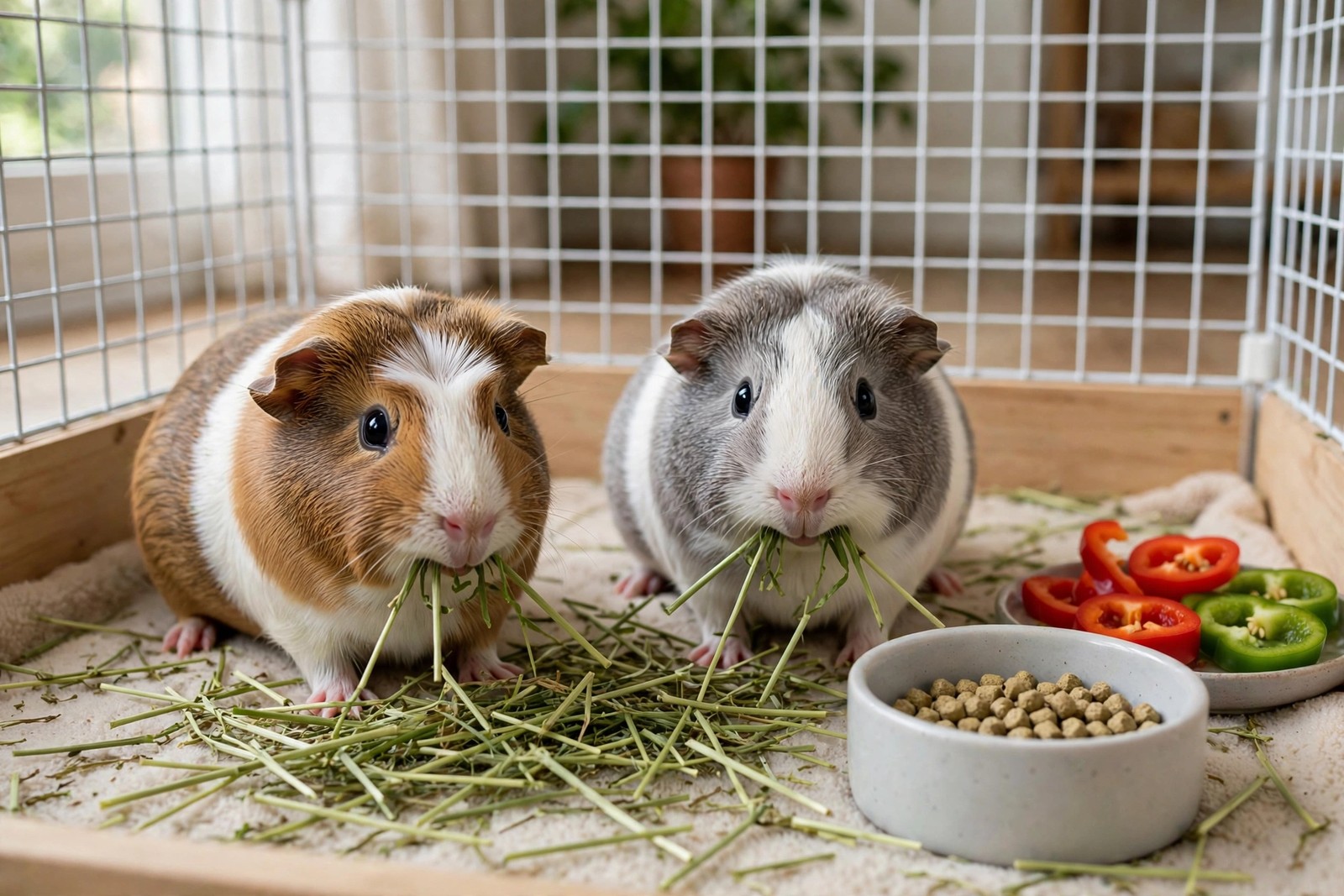
The difference between a young guinea pig's menu and an adult's comes down to one mineral: calcium. A pup that is still growing, like a pregnant or nursing sow, is building bone and needs noticeably more calcium and protein than a settled adult. Feed an adult the rich diet built for that growth, month after month, and the spare calcium has to leave through the urinary system, where guinea pigs handle excess poorly. That is why the foods below belong to the youngster's bowl, in the right season of life only.
Alfalfa Hay: The Growth Hay
Alfalfa is a legume hay, richer in calcium and protein than the grass hays adults live on. Offer it freely to guinea pigs under about six months old, alongside grass hay rather than instead of it, so youngsters learn the grass hay habit their teeth and digestion will depend on for life. Pregnant and nursing sows are the other group who benefit from alfalfa, for the same reason: they are building bodies besides their own. A healthy adult, by contrast, should meet alfalfa only as an occasional small handful treat, or not at all. Adults fed alfalfa as their main hay take in calcium they cannot use, and over time that pattern is linked with bladder sludge and stones, painful problems that can need urgent veterinary care.
Pellets Formulated for Young Guinea Pigs
Pellets made for young guinea pigs carry more protein and calcium than adult pellets, and often use alfalfa as their base. Feed them in a small measured amount each day, following the portion guidance for a young animal, with unlimited hay doing the real work of filling your pig up and wearing its teeth down. Adults should eat an adult, grass-hay-based pellet instead, also measured, because pellets of any kind are easy to overfeed and a fat guinea pig is not a healthy one. If youngsters and adults share a cage, the adults will eat the young pellets too, so ask your vet how to handle the overlap: feeding the pups separately for a short session each day is a common, practical answer.
Watch the evidence as youngsters grow. Guinea pig urine is normally a little cloudy, but frequent gritty white deposits left where the urine dries, squeaking while passing urine, or a hunched, miserable posture are reasons to see a vet promptly at any age, and they matter more in an adult still eating a young animal's rich diet. Weigh pups weekly on kitchen scales and keep the numbers: steady gain is the clearest sign the growth diet is doing its job, while a pup that stalls or loses weight needs a vet's eye, not simply more pellets. Once growth levels off, that same weight record tells you when the adult menu is due.
What Stays the Same at Every Age
Grass hay, timothy or meadow, should be available around the clock to young and old alike, in piles big enough to burrow into, because constant chewing keeps teeth worn and guts moving. Vitamin C matters at every age too, since guinea pigs cannot make their own: a daily cup of fresh vegetables per pig, built around bell peppers and leafy greens, covers it for pups and adults alike, and no age group should be relying on drops in the water bottle instead. Fresh water, changed daily, completes the picture. Switch a youngster onto the adult diet gradually at around six months, mixing alfalfa with grass hay and young pellets with adult pellets over a week or two, and watch weight and droppings as you go. Setting the separate young and adult feeds as their own tasks in KinsLe's Care Teams means a partner or helper opening the food bins feeds each age group correctly instead of guessing.