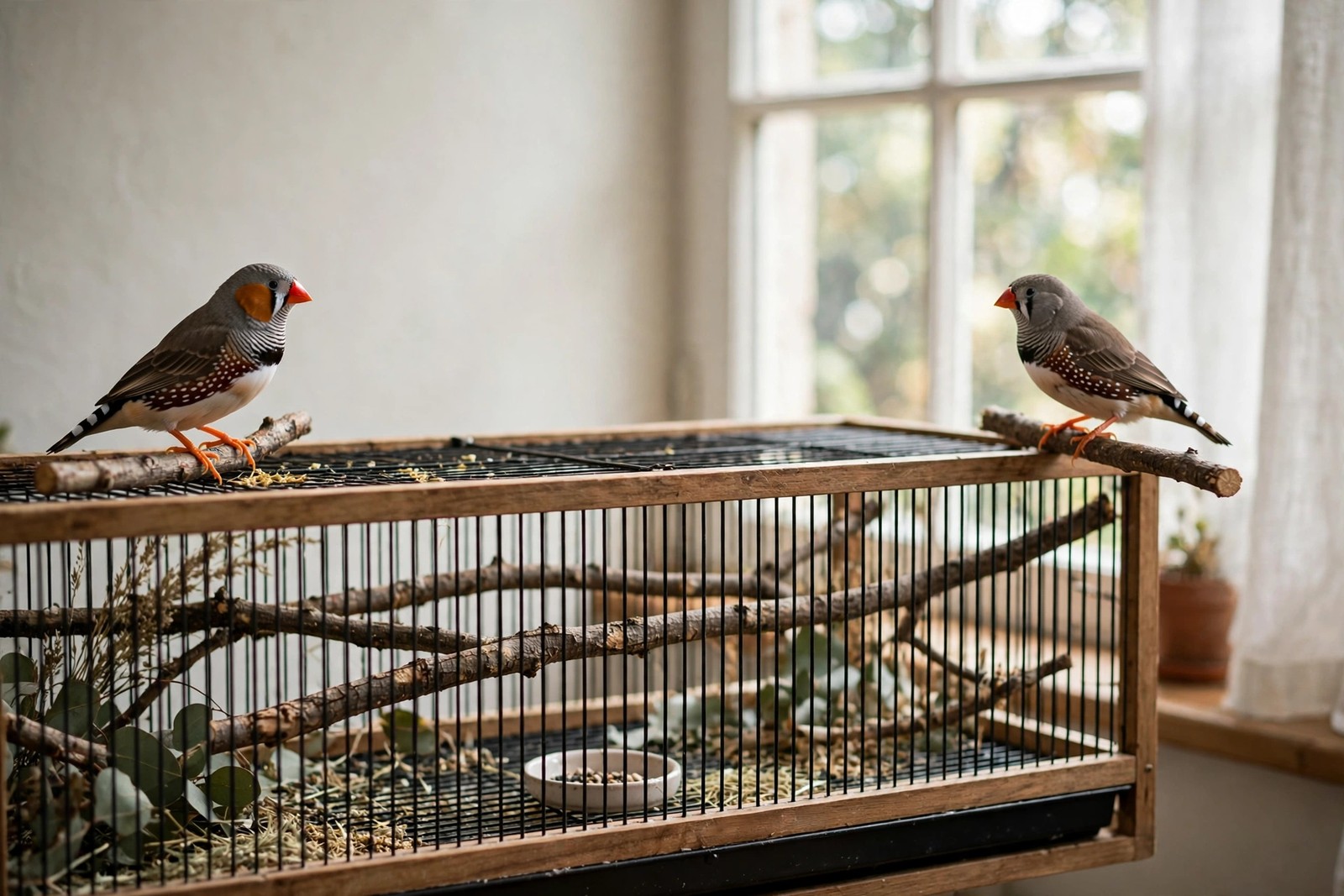
For zebra finches, buy length before anything else. A pair needs a cage at least about 30 inches long, 18 inches wide and 18 inches tall, and a cage closer to 36 or 40 inches long is a genuine improvement rather than a luxury. Zebra finches are busy, social little birds that spend the day making short, level flights, so the distance between the two ends of the cage is the space they will actually use.
Why Length Beats Height
Finches do not climb like parrots and they do not fly straight up. They launch sideways, cross the cage, land, turn and cross again. A tall, narrow cage that looks generous in a shop gives them a chimney they mostly ignore, while a modest-height cage with real horizontal run lets them exercise, court, squabble and settle at a distance from each other. Judge cages with a tape measure on the length first, the width second and the height last.
Bar spacing matters just as much for a bird this small. Spacing should be no wider than half an inch, and narrower is safer still, so a finch cannot push its head between bars or wedge itself while panicked. Check door latches and the gap where trays slide out, too — finches find openings that look far too small to matter.
Scaling Up for More Birds
Zebra finches are usually kept as a pair or a small group, and each added pair needs more flight room, not just more perches. For four to six birds, look for a flight cage around 40 inches long or longer, with more than one feeding station so a confident bird cannot guard all the seed. Crowding shows up as feather plucking, chasing at the food cups and birds that never fully relax on a perch.
Setting Up the Space You Bought
Place perches near each end of the cage rather than across the middle, so the full length stays open as a flight path. Offer perches of slightly different diameters, including a natural branch, so feet grip at varied angles, and keep the centre of the cage clear of hanging toys that shorten the run. Put food and water at one end and a bath at the other if space allows, which encourages movement through the day.
Set the cage at about eye level in a bright room away from kitchen fumes, draughts and direct midday sun, and keep a shallow tray or sheet beneath it — finches scatter seed hulls constantly. Clean droppings from perches weekly and wash the base tray regularly; a long cage with a slide-out tray makes both jobs quick. Sharing the finches' measurements, perch layout and cleaning schedule through KinsLe Family Sharing means anyone covering for you keeps the same setup instead of rearranging the cage.