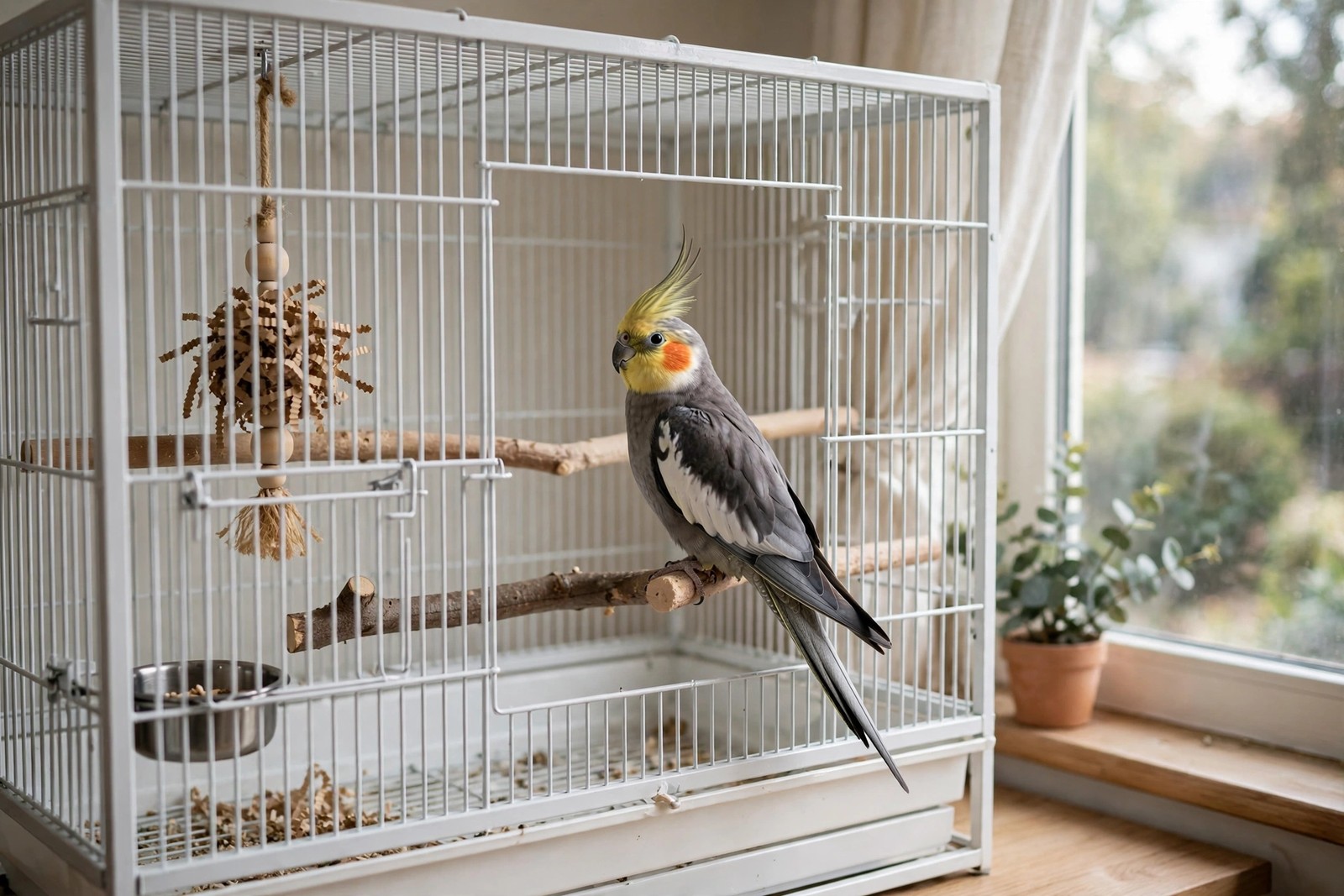
A single cockatiel needs a cage at least 20 inches wide, 20 inches deep, and 24 inches tall, with bar spacing of 1/2 to 5/8 inch. Treat those figures as the floor, not the goal. A cockatiel has a wingspan of roughly 19 to 20 inches and a long tail that alone accounts for about half of its total length, so a cage that looks generous empty can feel cramped once perches, dishes, and toys go in and the tail needs clearance whenever the bird turns around.
Why width beats height
Cockatiels travel horizontally. In a tall, narrow cage they mostly climb and hop between two perches, while a wider cage lets them make short flights, stretch both wings fully, and choose between a high sleeping perch and a lower feeding area. If your space allows it, a flight cage around 32 inches wide gives a single bird or a bonded pair genuine exercise room between out-of-cage sessions. Measure the inside of the cage, not the stand or the decorative roof, and check the spacing on the door and corners as well as on the side panels, because spacing sometimes widens where panels join.
Bars, perches, and layout
Choose horizontal bars on at least two sides so your cockatiel can climb, which is a large part of how these ground-feeding birds explore. Place perches of different diameters across the cage rather than in a straight ladder, leaving a clear flight path down the middle. Keep food and water dishes away from directly under a favourite perch so droppings do not fall into them, and put shredding and foraging toys near the sides instead of in the flight path. A swing hung to one side adds movement without blocking the centre. Avoid filling every corner: an overcrowded cage discourages flight and makes a nervous cockatiel feel trapped rather than sheltered.
Room to live, not just to sit
Out-of-cage time does not shrink the cage minimum. Even a bird who spends three or four hours out each day still sleeps, eats, naps, and shelters in the cage, and a holiday or illness can mean several full days inside it. Inside, rotate toys every week or two, offer a cuttlebone or mineral block for beak and calcium interest, and set the cage against a wall at about chest height so the bird feels backed and secure rather than exposed on all sides. If you keep two cockatiels, step up well beyond the minimum and watch that both birds can eat and perch without one guarding the dishes.
A cage is a long purchase, so measure your doorway and cleaning space before you buy, and keep a note of the dimensions, perch arrangement, favourite toys, and cleaning routine together. Keeping those cage details in KinsLe's Transferrable Profiles means a future owner, or anyone taking over care, starts with your cockatiel's exact housing set-up instead of guessing at sizes and spacing.