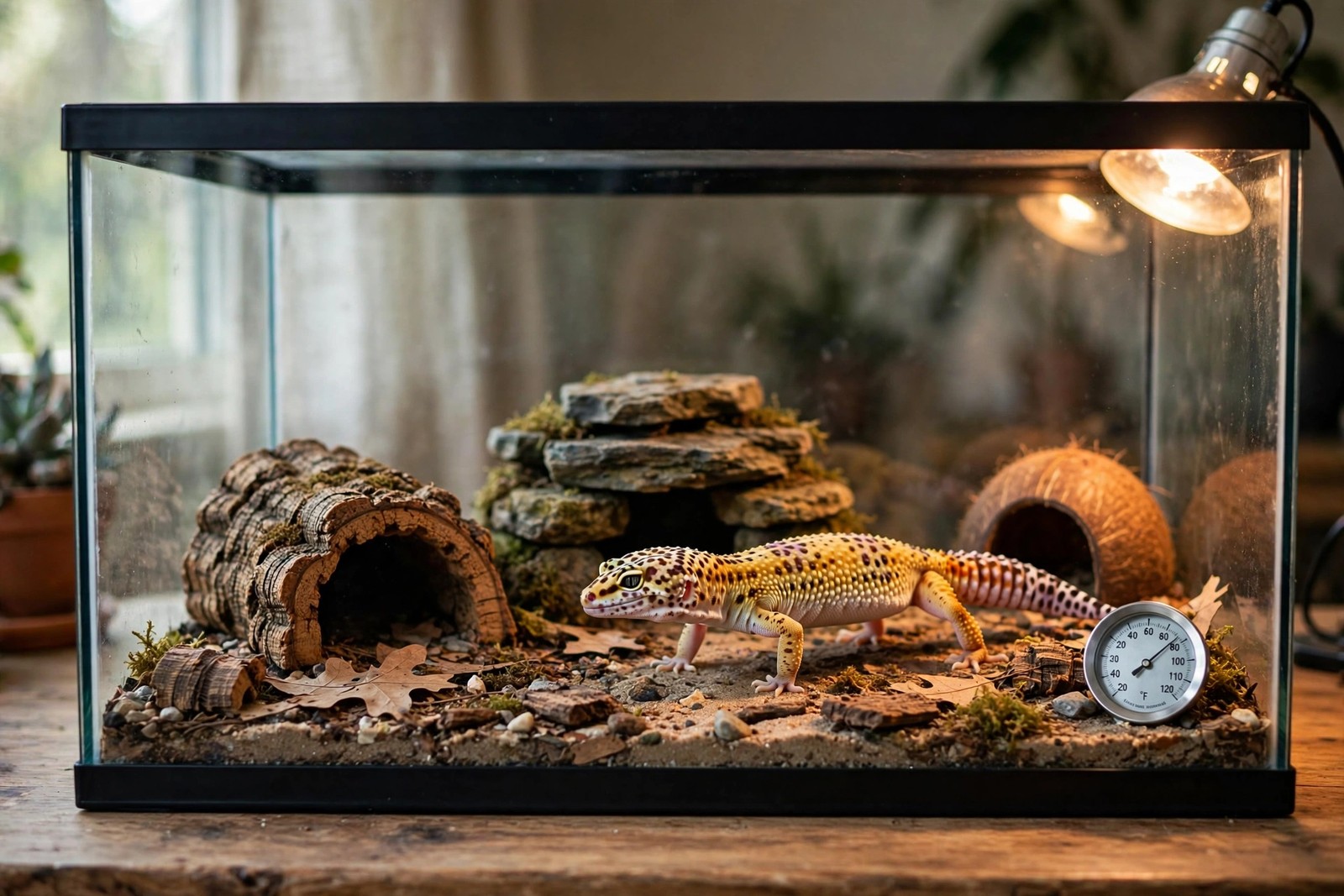
An adult leopard gecko needs an enclosure with a floor footprint of at least 36 inches by 18 inches, which is roughly a 40-gallon long enclosure and usually about 18 inches tall. Leopard geckos live on the ground. They do not climb branches for exercise the way many lizards do, so a tall, narrow tank with a small floor is a poor trade even when its total volume sounds generous. The 36 by 18 inch floor is what lets you build the setup this species depends on: a warm end, a cool end, and enough middle ground for the gecko to choose its own body temperature hour by hour.
Why the Footprint Has to Fit a Gradient
A leopard gecko cannot regulate its own body heat, so it shuttles between zones instead. Aim for a warm-side floor surface around 88 to 90°F (about 31 to 32°C) over the heat source, falling to roughly 75 to 80°F (about 24 to 27°C) at the cool end, always controlled by a thermostat and checked with a thermometer at floor level, where the gecko actually lives. In a tank much smaller than 36 inches long, those two zones blur into one average temperature, and the gecko loses the choice entirely: digestion slows, appetite drops and shedding problems follow. The footprint also has to hold three hides without crowding: a warm hide over the heat, a cool hide at the far end, and a humid hide lined with damp material that helps old skin loosen cleanly.
Furnishing 36 by 18 Inches Well
Use the floor deliberately. Place a shallow, sturdy water dish at the cool end, a small dish of plain calcium supplement where the gecko can lick it as needed, and low, flat rocks or cork pieces that create shaded pathways between hides, because geckos prefer moving under cover to crossing open ground. Keep substrate safe for a hunter that lunges at moving insects: a solid surface or a suitable soil-and-sand mix made for the species, with loose particles that could be swallowed in mouthfuls kept out of a feeding area, and feed from a smooth dish or with tongs where you can. Leave one open stretch of floor for hunting live insects, since chasing food is this gecko's main exercise. Keep the layout stable once it works, because a gecko that has memorised its routes between hides hunts and settles far more confidently than one whose furniture moves at every clean. Front-opening doors make all of this easier to service and far less frightening for the gecko than a hand descending from above.
Young Geckos and Growing Into the Space
A hatchling can look lost in a full-size enclosure, yet small is not automatically kinder. Many keepers start a youngster directly in the adult footprint, filled with extra hides, cork and cover so the baby can move without feeling exposed, and that avoids a stressful move later. Others begin with a smaller nursery enclosure and upgrade within the first year; either route works if the gradient and the three hides are never sacrificed to save space. House one gecko per enclosure as the safe default, since leopard geckos are solitary and sharing invites bullying, dropped tails and one animal quietly monopolising the warm hide. KinsLe's Care Teams helps here by letting you assign your gecko's floor-temperature check, water change and feeding to a named family member on set days, with each task marked complete by timestamp, so a shared household keeps the gradient and the routine exactly where you set them.