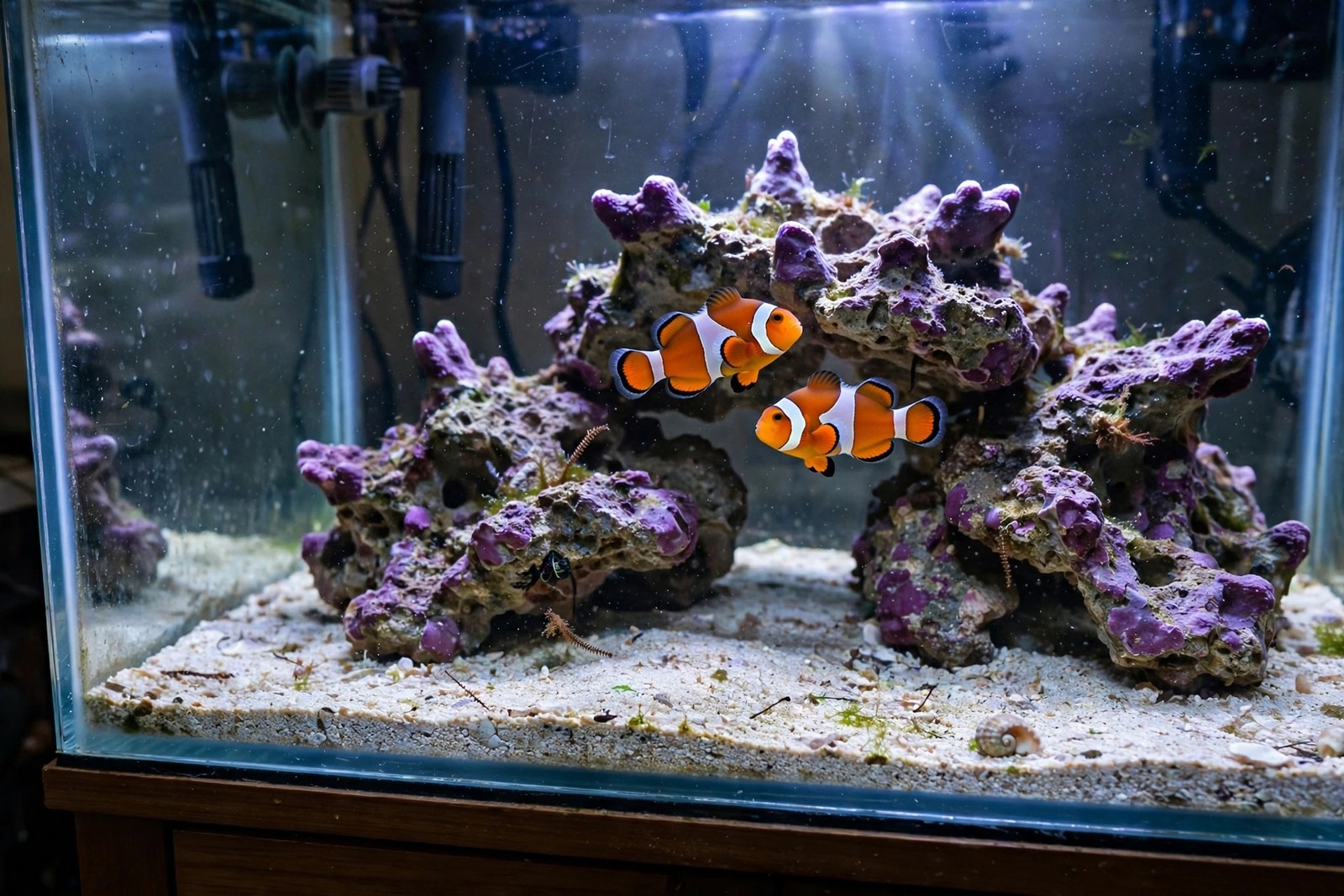
Clownfish are among the most forgiving first saltwater fish, but the tank size question has two parts: the space the fish themselves need, which is modest, and the water stability a beginner needs, which argues against going too small. For a single ocellaris clownfish or a bonded pair, about 20 gallons is the sensible floor. That volume holds temperature and salinity steadier than a tiny nano tank, while still fitting the fish's stay-at-home lifestyle.
Why Clownfish Do Not Need a Huge Tank
In the wild and in aquariums, clownfish are homebodies. A pair claims a host spot — an anemone if one is present, or a favourite corner of rockwork if not — and spends most of its life within a short distance of it. They are not open-water swimmers pacing the glass for exercise. What they need from the tank is a defensible patch of structured rockwork, stable warm saltwater, and freedom from aggressive tankmates. A well-arranged 20-gallon tank with caves and ledges serves a pair better than a bare, larger box with nowhere to call home.
When to Go Bigger
Step up to 30 gallons or more in a few clear situations. Larger, more assertive species such as maroon clownfish grow substantially bigger than ocellaris and defend their space harder, so they earn the extra volume. A community with several other fish needs more water and more separate rockwork territories, not just for swimming but to keep quarrels down. And many keepers simply find a bigger tank easier: evaporation changes salinity more slowly, a missed top-off matters less, and small mistakes in feeding or dosing are diluted rather than concentrated.
What the Tank Needs Besides Gallons
An anemone is not required — captive-bred clownfish thrive without one, and anemones have demanding light and water needs of their own. Provide live rock or good artificial structure, a sand bed, gentle to moderate flow, a secure lid because clownfish can jump, and consistent salinity and temperature checked as part of a weekly routine. Feed a varied marine diet once or twice a day in amounts eaten within a couple of minutes, and keep up partial water changes to hold water quality where a small system cannot buffer mistakes.
If you plan on a pair, buy two small juveniles together and let the dominant one become the female as they mature, rather than adding a second adult later and inviting a fight.
The Sizing Mistake to Avoid
The common error is choosing a very small tank because the fish is small, then fighting unstable water for a year. Twenty gallons is not generosity, it is the size at which the water stops working against you — and it leaves a decade-long home for fish that commonly live many years in good care. Whoever shares that care, KinsLe's Care Teams lets you assign the daily feed, the evaporation top-off and the weekly test as separate duties for the tank, with a timestamp on each completed job, so a small saltwater system gets the steady routine its size demands.