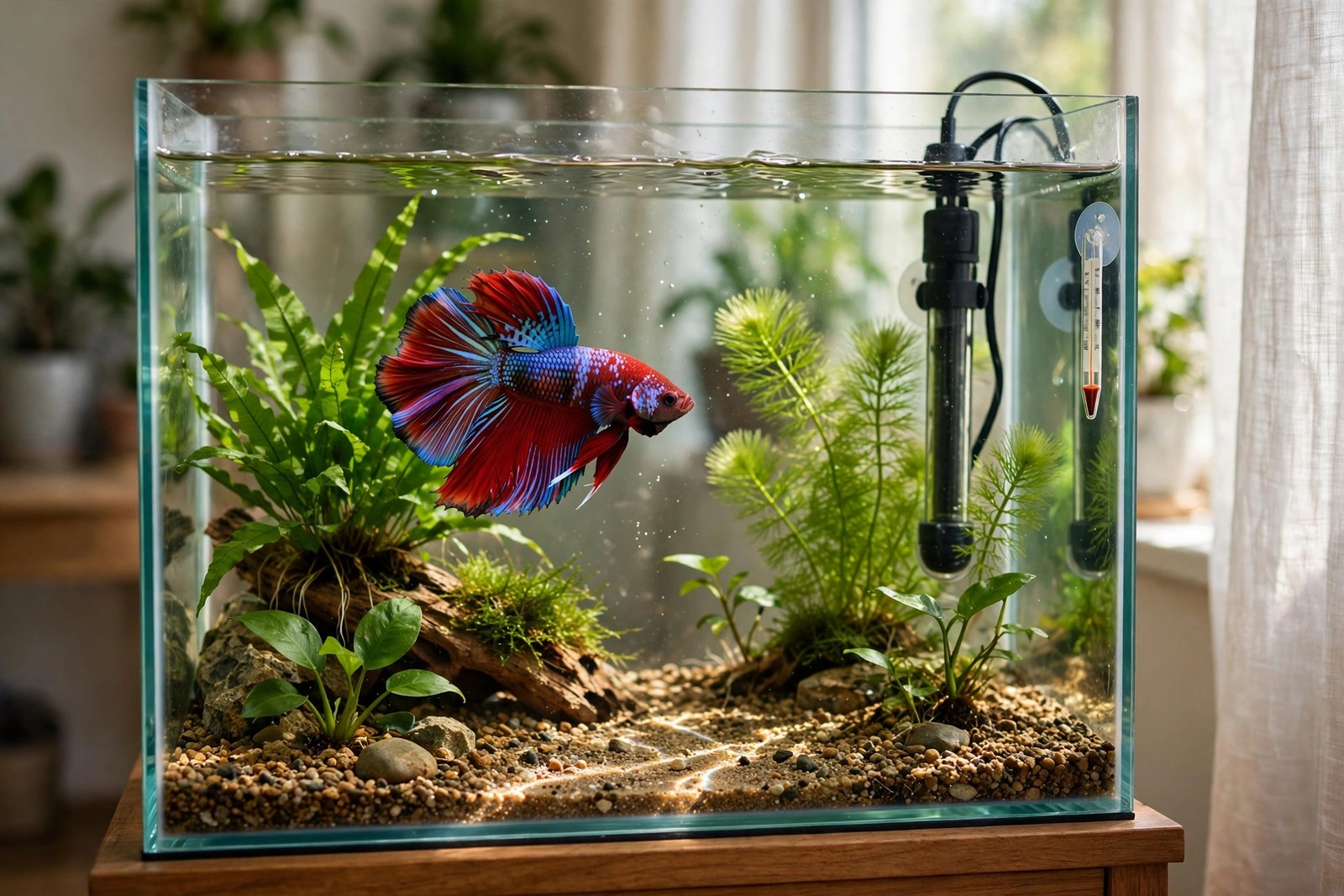
The short answer is five gallons as a genuine minimum for one betta, and ten gallons if you want the easier version of the hobby. Bettas survive for a while in cups and tiny bowls, which is exactly how the myth that they prefer cramped water started — surviving is not thriving, and a betta given warm, clean, roomy water behaves like a different fish: patrolling, exploring, building bubble nests and greeting you at the glass.
Why Five Gallons Is the Floor
Water volume is stability. In a gallon or two, waste from one fish shifts ammonia, temperature and pH within hours, so the keeper is permanently chasing problems the tank itself creates. Five gallons is roughly where a small filter can keep the water reliably cycled, a heater can hold a steady temperature without cooking or chilling the fish, and a weekly partial water change becomes a calm routine instead of an emergency. It also gives a betta — a fish with long fins that swims in short, deliberate bursts — actual distance to cross, turn in and explore.
Why Ten Gallons Is Often Better
A 10-gallon tank forgives more. Temperature and water chemistry drift more slowly, there is room for live plants, a couple of smooth hides and a leaf hammock near the surface where bettas like to rest, and the modest extra cost buys years of easier maintenance. Longer, shallower tanks suit bettas better than tall narrow ones, because they regularly swim up to breathe air at the surface and horizontal room beats vertical depth for a fish that cruises rather than dives.
The Equipment That Counts as Much as Size
A betta is a tropical fish, so a heater keeping the water steady around 78 to 80 degrees Fahrenheit matters as much as the gallons; a cold betta is a sluggish, disease-prone betta. Filtration should be gentle — a strong current exhausts a long-finned fish that evolved in slow water — so choose low flow or baffle the output. Add a secure, close-fitting lid, because bettas are determined jumpers and a small gap is enough. Soften the interior: live or silk plants instead of sharp plastic, smooth decor checked for fin-snagging edges, and subdued lighting with somewhere shaded to retreat.
What to Skip
Skip bowls and vases entirely, skip unfiltered novelty tanks under five gallons however they are marketed, and skip tankmates as a reason to stretch a small tank further — a betta's home should be sized for the betta, with any snail or shrimp companions treated as additions a larger tank can absorb. Feed sparingly in any size of home, because uneaten food in small water fouls it quickly.
Set up at five gallons or above, heated, filtered and lidded, and you have given a betta the conditions it actually evolved for — and when several people share the upkeep, KinsLe's Care Teams lets you hand the water change, heater check and daily feed to named helpers, with every completed task timestamped, so a small tank stays as stable as a bigger one.