
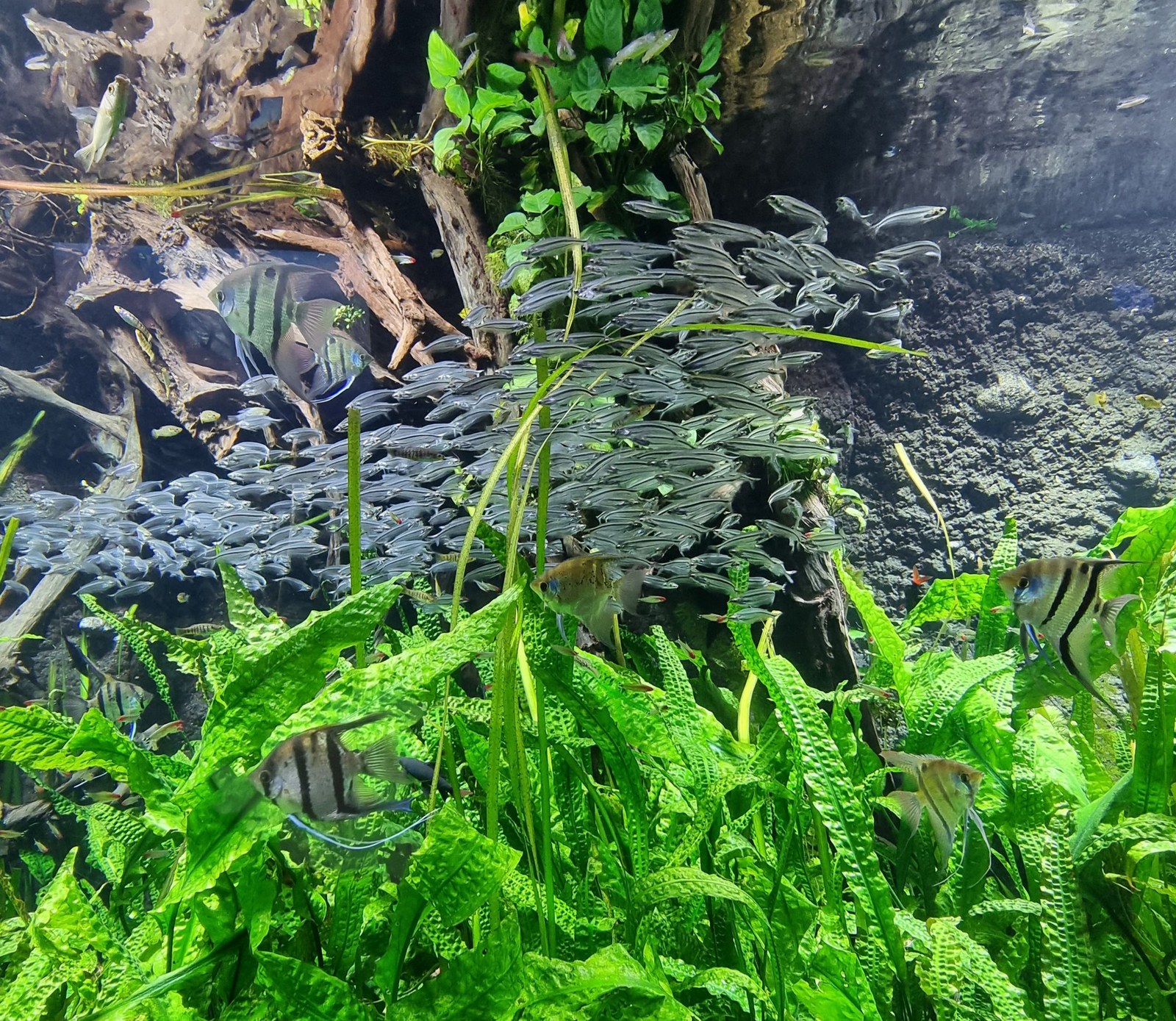
For a first freshwater community aquarium, the 20-gallon long format is the size to build around. It holds enough water to keep conditions stable while you learn, offers real swimming room for a proper little community, and stays manageable in size, weight, and cost. It beats a small bowl or a 5-gallon starter kit in almost every way that matters.
The Short Answer: Go With a 20-Gallon Long
The "long" part matters. A 20-gallon long (30 inches by 12 inches by 12 inches) has more floor space and more water surface than a tall 20-gallon. More surface area means better oxygen exchange at the waterline, and the longer footprint gives active swimmers like zebra danios and neon tetras the horizontal room they actually use. Tall tanks look dramatic, but most community fish swim sideways, not up and down. Put the tank somewhere level and sturdy — filled, a 20-gallon weighs over 200 pounds, so a dedicated aquarium stand or a very solid piece of furniture is non-negotiable.
Why More Water Forgives More Mistakes
Beginners make small errors: an extra pinch of food, a skipped water change, a heater that overshoots by a degree. In a 5-gallon tank, one careless moment can double the ammonia level overnight. In 20 gallons, that same mistake gets diluted across four times the water volume, buying you time to notice and correct it. Temperatures swing more slowly in bigger volumes too, and pH stays steadier. Think of it as a wider safety margin while you build your instincts. Nothing about a 20-gallon removes the need for cycling and testing — it just makes the learning curve survivable for your fish.
What Can Actually Live in a 20-Gallon Long? Plenty. A classic beginner community might be 10 neon tetras or cardinal tetras, 6 corydoras catfish to patrol the bottom, and one centerpiece like a honey gourami or a male betta with a peaceful temperament. Other great choices include guppies, platies, harlequin rasboras, cherry barbs, and otocinclus algae eaters. The old "one inch of fish per gallon" guideline is only a rough starting point — it ignores body mass, waste output, and territory needs — but for small-bodied community fish it keeps you in safe territory. Add fish gradually, a few at a time, so your bacteria colony can grow with the bioload. Skip combos known for trouble, like fin-nipping tiger barbs with long-finned fish.
Follow-up questions for a new tank
A healthy new tank is built on small, consistent habits: a quick daily glance at behaviour and equipment, a weekly change and test of the water, a monthly check of the filter. Questions surface as that rhythm settles — a cloudy test result, how much water to change each week, when a filter check is due, or which fish can join the community next. Your first tank is a learning adventure, and working through those questions one by one turns the routine into second nature. As questions arise for your first community, put a follow-up question to KinsLe's Kimmy; she answers using the KinsLe Answers library.