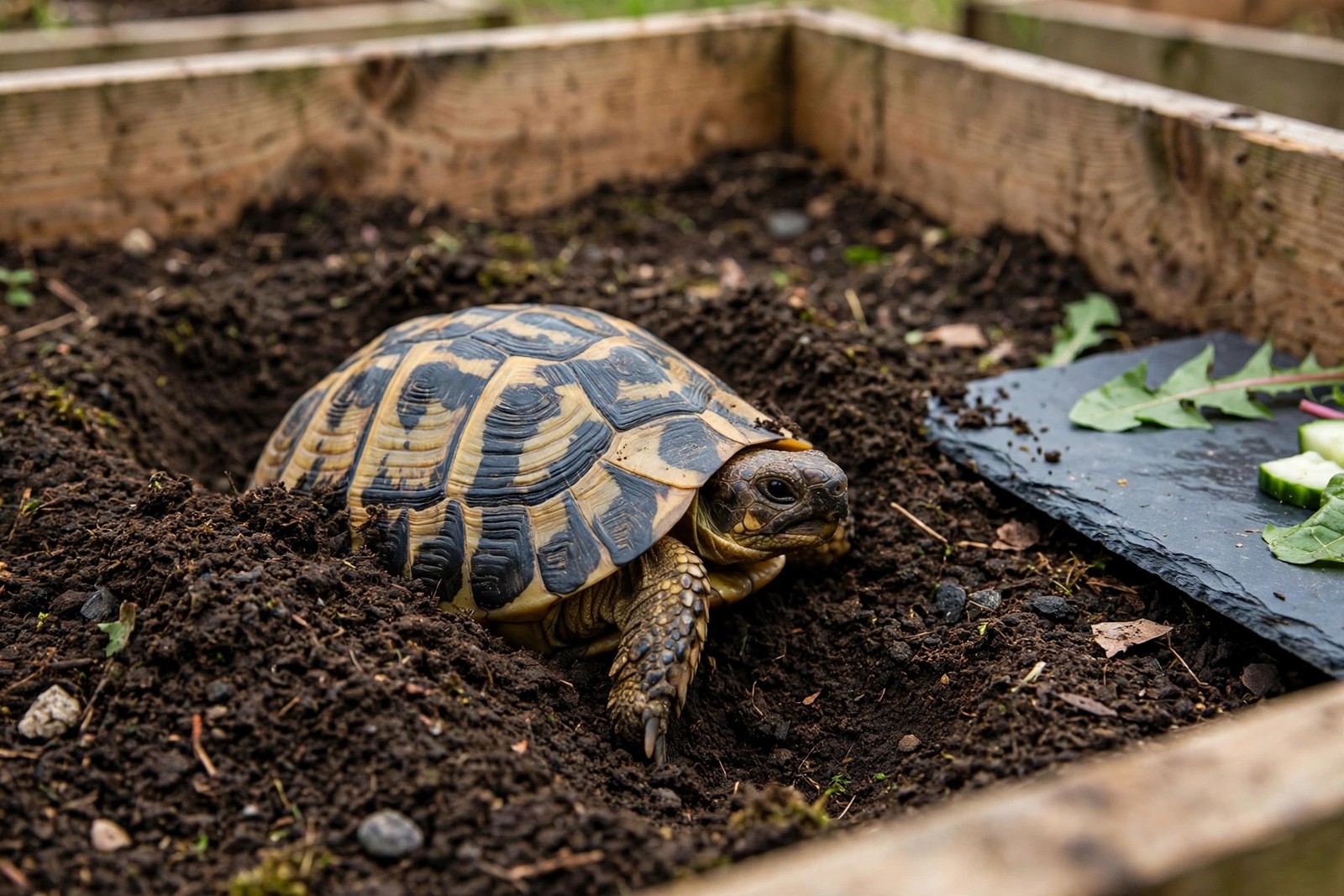
A tortoise table is an open-topped enclosure, so its substrate does jobs that a vivarium floor in a sealed box does not: it must hold the shape of a scrape or burrow, buffer humidity in dry room air, cushion a heavy shelled animal that digs daily, and stay harmless when it inevitably sticks to damp food and gets eaten. One material does all four jobs well, and it is the least exotic option on the shelf.
Sterilised Topsoil as the Base
Plain sterilised topsoil — sold for gardening, with no added fertiliser, pesticides or perlite — is the standard recommendation for Mediterranean tortoises such as Hermann's and spur-thighed tortoises on tables. Its mix of fine soil particles packs just enough to hold a burrow wall, yet yields under digging claws, and a tortoise can bury itself completely in it for the night, which is normal, settling behaviour for these species. Because it is soil, small amounts swallowed off food leaves pass through as they would in the wild. Read the bag before buying: you want topsoil that lists nothing added, and you should pick out stones, sticks and the white perlite grains from any bag that contains them. If you prefer a slightly firmer, less dusty floor, mix in washed play sand at roughly 70% topsoil to 30% play sand — the same ratio throughout the table, so digging resistance feels even from end to end.
Depth and Moisture: Where the Substrate Earns Its Keep
Depth is not decoration. Lay the substrate four to six inches (about 10 to 15 cm) deep across the table, deeper in the sleeping corner, so the tortoise can dig down rather than scrape along the base board. A shallow sprinkle gives neither burrowing nor humidity control. Moisture should live in the lower layers: spray or pour water in and turn the soil so the surface stays dry to the touch while the soil a knuckle down feels cool and faintly damp. That gradient lets the tortoise choose its own microclimate, and it supports clean shedding and smooth shell growth far better than a table kept bone dry end to end. In the dry air above an open table, the hide area benefits most from this damp depth.
What To Keep Off the Table
Pure sand is the main trap: it does not hold a burrow, it dries the air at floor level, and eaten in quantity it can compact in the gut. Calcium sand sold as digestible carries the same risk in a more expensive bag, because a tortoise that licks it deliberately for its calcium content can take in far too much. Gravel and coarse stones are a swallowing hazard at small sizes and make for uncomfortable walking at large ones. Wood chips and bark pieces can mould in damp patches, splinter, and are hard for a tortoise to dig through naturally. Artificial turf and solid mats remove digging altogether, which removes one of the animal's core behaviours. Finally, avoid any garden soil dug from ground that may carry weedkiller, slug pellets or fertiliser — bagged sterilised topsoil exists precisely to remove that doubt.
Keeping It Working
Spot-clean droppings and fouled patches daily, turn the soil weekly so the damp layer does not sour, and replace the full bed when it stays smelly after turning or has been in place for several months. Feed from a slate or tile so less food drags substrate with it, and keep the water dish on a flat stone to stop the surrounding soil turning to mud. KinsLe's Care Teams puts those spot-cleans and full substrate changes on your tortoise's task list, so whoever is on duty can see what is due and mark each job complete with a timestamp.