
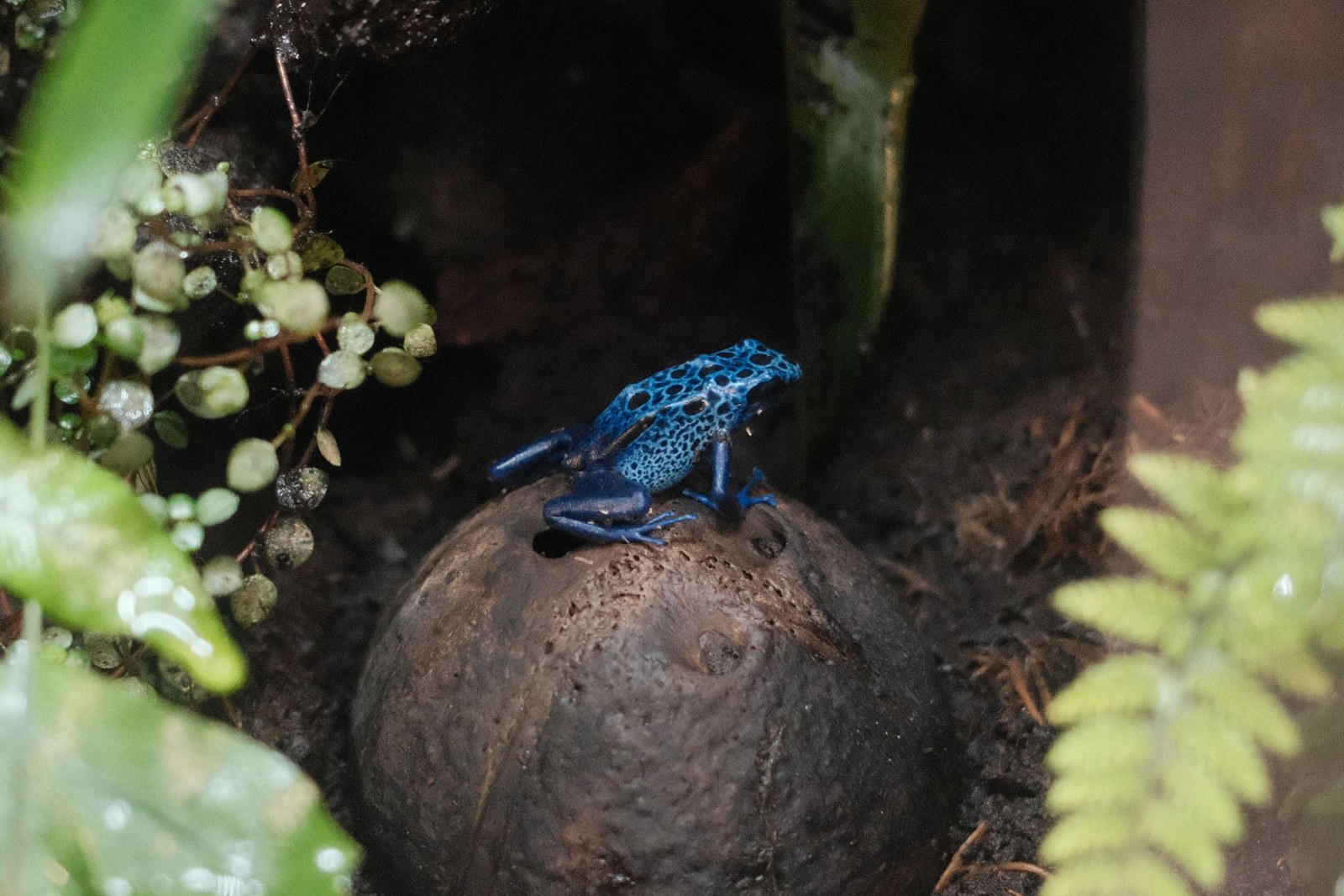
Safe substrates for a frog's enclosure are coconut fibre, sphagnum moss, and plain organic topsoil with no fertilisers or perlite — materials that hold moisture, cushion landings, and will not injure your frog if a little is swallowed while it strikes at food.
Why Substrate Choice Matters More for Frogs
A frog lives in direct contact with its flooring and absorbs moisture — and anything dissolved in it — through its skin. That makes substrate a health decision, not a decorating one. It also shapes humidity, odour, and how easy the enclosure is to keep clean. Choose for your species' lifestyle: burrowing frogs such as Pacman frogs need several inches of loose, damp soil-like substrate to dig into, tree frogs spend most time climbing but still need a moisture-holding floor, and fully aquatic frogs need no land substrate at all.
Good Choices, and What Each Does Best
- Coconut fibre (coir): sold in bricks, expanded with dechlorinated water; holds moisture well, resists mould, and is soft for burrowers
- Plain organic topsoil: inexpensive and natural for planted, bioactive setups; confirm it contains no fertiliser, pesticides, or white perlite pieces
- Sphagnum moss: excellent over soil to lock in humidity and give frogs a moist surface layer; use long-fibre moss rather than finely milled peat
- Leaf litter: a top layer over soil in bioactive tanks that offers cover and grazing surface for clean-up insects
Many keepers layer these — soil below, moss and leaf litter above — for a floor that behaves like a forest floor.
Substrates to Avoid
Skip small gravel, pebbles, and bark chunks sized anywhere near your frog's mouth: frogs lunge at moving prey and can ingest pieces, risking a blockage that needs veterinary help. Avoid cedar or pine products, sand for most species, artificial turf that traps waste and harbours bacteria, and any soil from a garden where sprays may have been used. Reptile carpet is sometimes used for larger terrestrial frogs, but toes and jaws can snag on loops, and it needs rigorous washing to stay hygienic.
Keeping It Clean and Skin-Safe
Spot-clean visible waste and uneaten food daily, stir and check buried substrate weekly for sour smells, and replace non-bioactive substrate fully on a regular cycle before waste builds up invisibly. In a bioactive setup, springtails and isopods help process waste, but they do not excuse you from water changes or from removing larger waste. Always expand or rinse new substrate with dechlorinated water, and wash your hands before and after maintenance — what is on your skin, including lotions and salts, can pass to your frog.
If your frog stops eating, strains, or you suspect something has been swallowed, do not wait it out; that is a prompt call to a veterinarian who treats amphibians.
Getting Species-Specific Advice With KinsLe
Care sheets disagree because species genuinely differ, and local, hands-on advice is worth having before you rebuild a setup. KinsLe's Pet Services Directory helps you find local groomers, vets, sitters, and trainers, including specialists you can ask about the right substrate depth and mix for your exact frog. Before you rebuild the floor, search the Pet Services Directory on KinsLe for an amphibian veterinarian nearby and ask that clinician how deep your frog's coconut fiber and topsoil layers should sit.