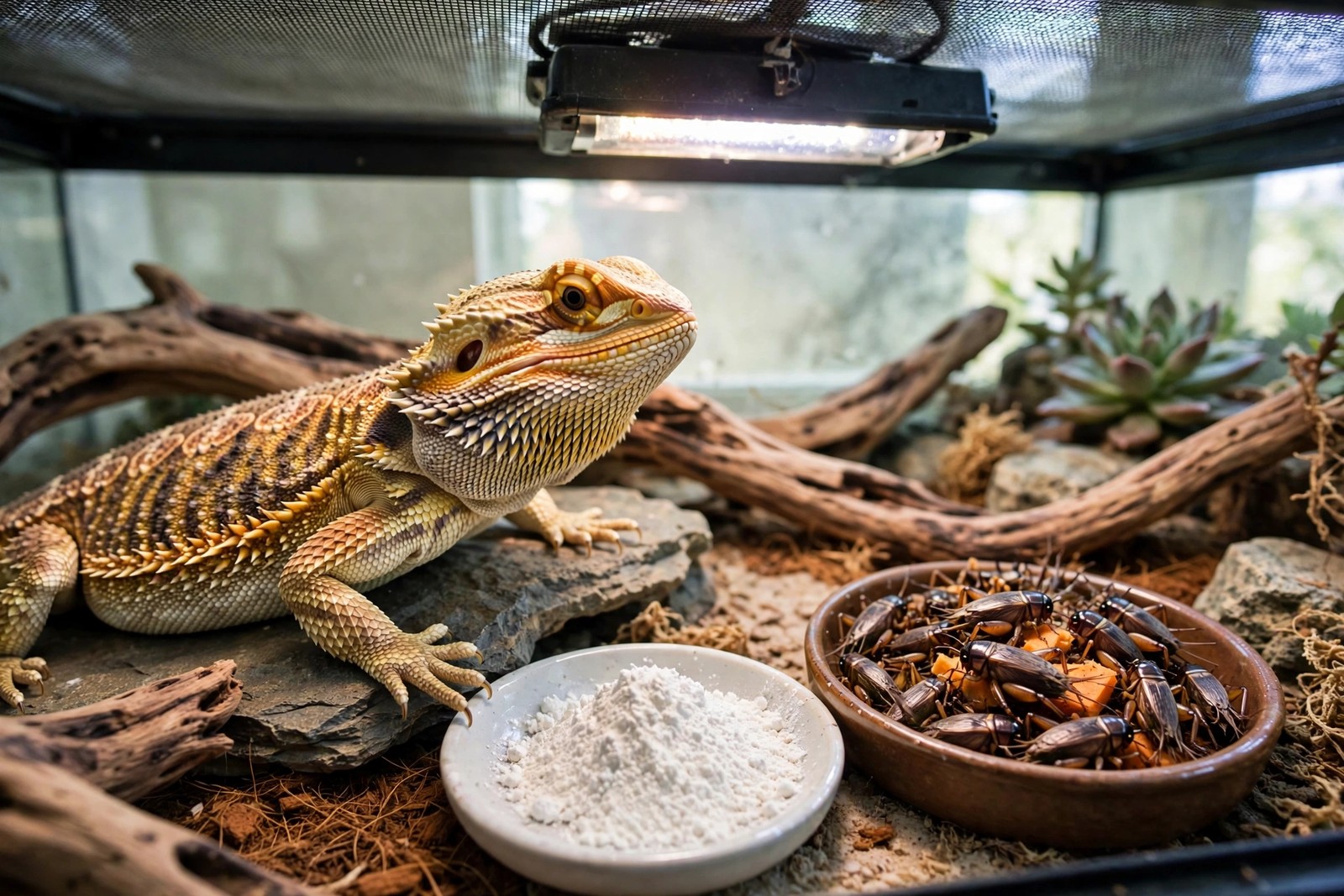
Most pet reptiles kept indoors need some nutritional help that their wild relatives get from a varied diet and real sunlight. The two gaps that matter most are calcium and vitamin D3, which works with calcium, because commonly fed insects are naturally calcium-poor and glass and distance filter the ultraviolet light reptiles would use to make D3 themselves. That is the general picture — the right plan for any individual animal is a veterinary conversation, and this article is general information, not a feeding prescription for your reptile.
Why Calcium Sits at the Centre
Growing juveniles building a skeleton, breeding females producing eggs, and insect-eating species such as bearded dragons, leopard geckos and chameleons all draw heavily on calcium. When intake and D3 fall short over time, the body borrows calcium from bone, and keepers may eventually see tremors, a soft or rubbery jaw, bent limbs or weakness. Those signs are not a cue to pile on more powder at home; they are a prompt to see a reptile vet promptly, because by the time signs show, the problem needs professional assessment, not just a better dusting routine.
Supplements and Lighting Are One Decision
Supplementation cannot be planned separately from lighting. A day-active reptile under strong, correctly positioned UVB lighting that is still within its working life makes much of its own D3, while the same species under weak, old or absent UVB leans far more on what the diet provides. Lamps lose output long before they stop glowing, so note when each lamp was fitted and replace it on the maker's guidance. Nocturnal species, animals fed whole prey such as most snakes, and aquatic turtles each sit in genuinely different situations again — whole prey, for example, arrives nutritionally complete in a way a cricket never is. This is why a schedule copied from another keeper's chart, for a different species under different lights, can be wrong in both directions.
Using Supplements Safely, in Practice
Safe use is mostly about having one plan and following it exactly. Agree the approach — which supplement, which form, and how it fits your animal's lighting and life stage — with a reptile vet, ideally at the first health check after the animal arrives and again as it moves from juvenile to adult. Write the plan down where anyone feeding the animal can see it, because the commonest real-world error is two people both dusting the same feed, or a sitter guessing. Keep powders dry, sealed and within their use-by dates, and gut-load feeder insects on nutritious vegetables before offering them, so the insect itself carries more than the coating on it. More is not safer: excess fat-soluble vitamins and long-term calcium imbalance both cause real illness, which is another reason the plan belongs with a vet rather than with enthusiasm.
When to Stop and Ask Instead
Ask a reptile vet before supplementing a newly arrived animal that is not eating, any animal losing weight, and any reptile showing the bone or weakness signs described above. Bring your notes: what the animal eats, the lighting setup and lamp age, and the supplement routine you have actually been following. KinsLe's Pet Passport is built for exactly that conversation, holding your reptile's vet-agreed plan, lamp-change notes, feeding history and past check-ups together in one portable packet, so the vet adjusts a documented routine instead of reconstructing one from memory.