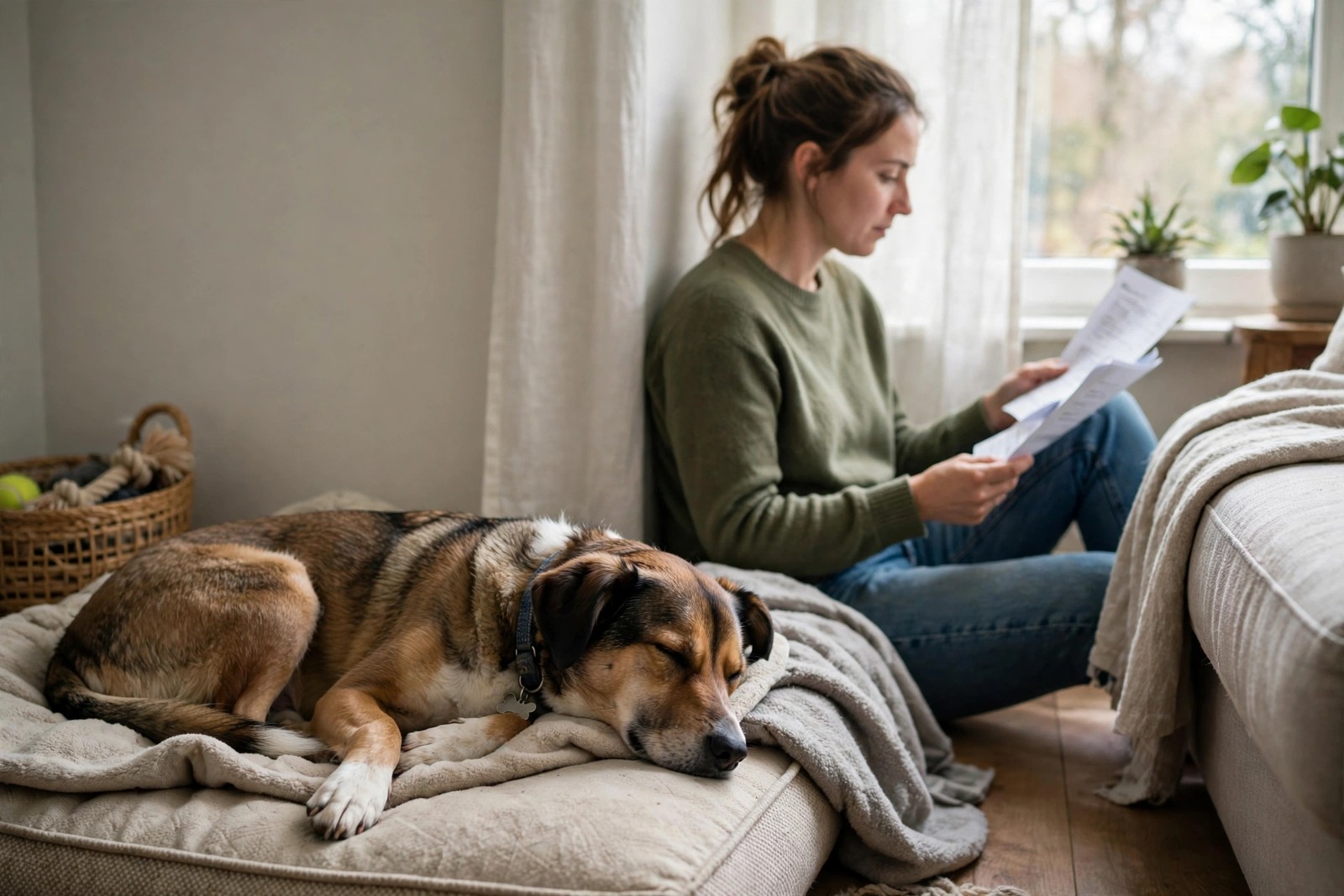
Support in the first weeks is practical, and it starts before your dog sleeps at your home. The rescue should give you a named contact, often the dog's fosterer or an adoption coordinator, with a phone number and the hours that person can be reached. Expect a check-in call in the first few days, further contact after two to three weeks, and written guidance covering the food the dog has been eating, the amount per meal, sleep arrangements, and how introductions were handled in foster care. That paperwork is working information, not a welcome pack to file away unread.
Who You Can Call, and for What
The named contact is your first route for ordinary settling questions: a dog who skips meals on day one, cries at night, or toilets indoors despite regular trips outside. Behind that person, many rescues keep a behaviour adviser you can be referred to when a problem needs more than reassurance, such as fear of visitors, tension with a resident dog, or guarding around food. Medical questions follow a separate route. A rescue can explain what its own vet found before adoption, what treatment is already under way, and which local vet practice it works with, so you can register the dog and share that history rather than starting a medical record from a blank page. Ask at handover which number covers evenings, because a named daytime contact and an emergency route are rarely the same thing.
The Follow-Up Rhythm
The call in the first few days has a predictable shape. The rescue wants to know whether the dog is eating and drinking, passing urine and stool normally, sleeping for reasonable stretches, and coping with being left alone for short periods. Answer plainly, including the parts that worry you, because this call exists to adjust the plan. A follow-up after two to three weeks looks at a longer pattern: walking on a lead in your streets, meeting household visitors, settling into a routine, and any behaviour that has grown rather than faded. Some rescues visit in person for this stage and some use a video call. Either way, have your notes ready, with dates, so you describe a pattern instead of a single hard afternoon.
Decompression Guidance You Should Receive
Good rescues warn you that a newly adopted dog needs a quiet start, and they explain what quiet means in practice. Walks stay short and local at first, on a lead, along routes with few dogs and little traffic. Visitors stay few, introductions to resident pets happen in stages with barriers or leads, and children sit calmly rather than crowding the new dog. Feeding happens in one undisturbed place, at regular times, with the same food the rescue used unless you change it gradually over several days. Sleep matters as much as activity. A dog who has moved homes may need far more sleep than an established pet, and a settled corner with a bed, away from household traffic, helps the dog switch off between outings.
If the Match Wobbles
The adoption agreement usually carries a take-back clause, and it deserves a careful read before you sign. It normally says the dog returns to the rescue rather than being passed to a friend, sold on, or advertised privately, and it may set out how a trial period or a foster-to-adopt arrangement is reviewed. That clause protects the dog, and it protects you from improvising during a crisis. If problems appear, the usual order is a call to your named contact, a behaviour support plan with a review date, and only then a return discussion if the plan fails or the home is unsafe. Rescues would rather rebuild a placement at week two than collect a dog at month three with habits that have had time to set.
When the early calls end, KinsLe keeps the thread through Transferrable Profiles, where the rescue's account of your dog stays readable alongside your own notes.