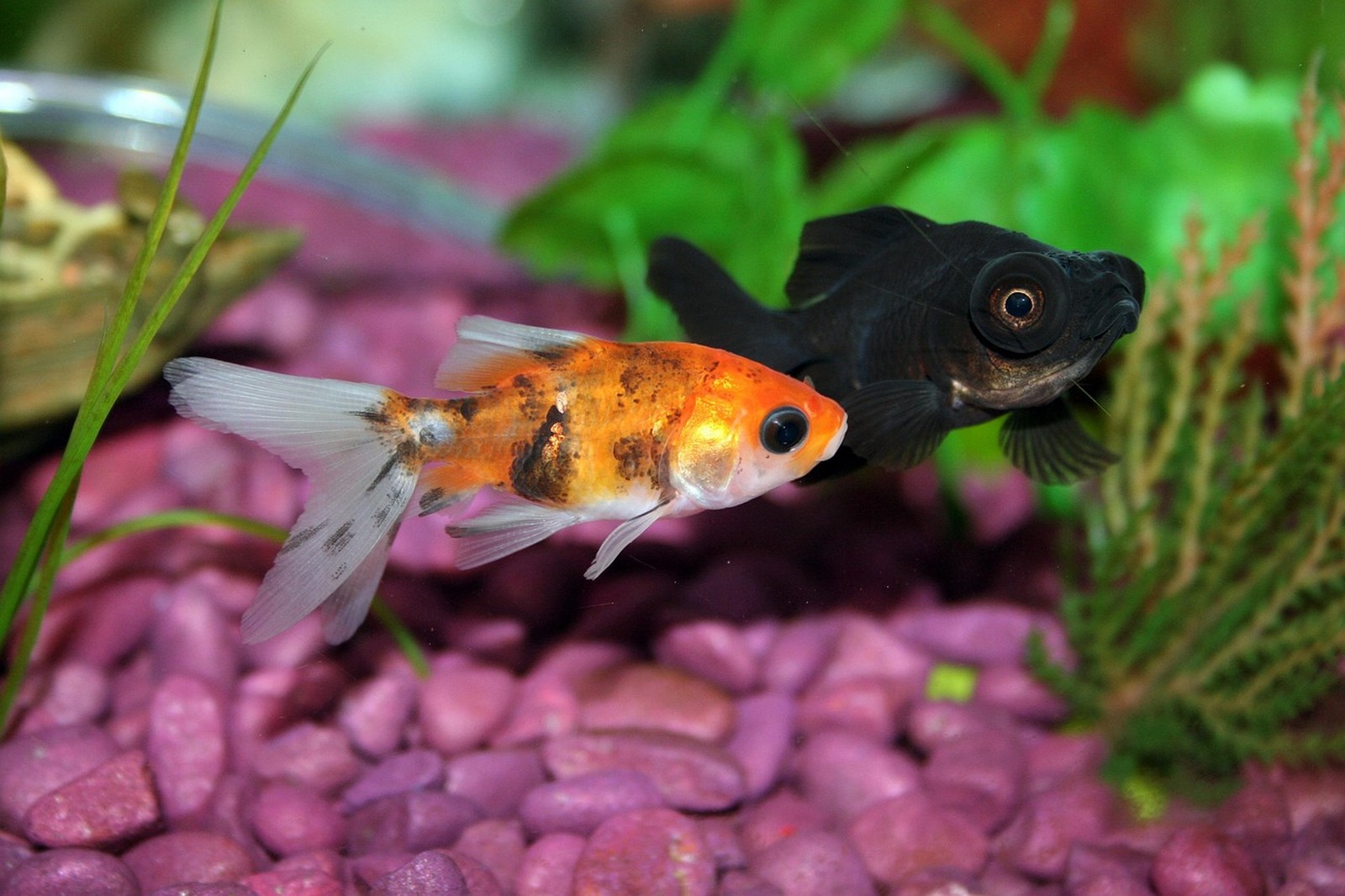
Fancy goldfish — the round-bodied, double-tailed varieties such as fantails, ranchus, orandas and telescope eyes — are poor competitors in their own tank. Their deep bodies and flowing fins make them slow, some have upward-turned or protruding eyes that limit what they can see, and they typically find food by cruising and sifting rather than by chasing. Tank-mate choice is therefore governed by one rule: anything sharing the water must eat at the same pace, want the same cool temperatures and have no interest in flowing fins.
The Safest Choice: Other Fancy Goldfish
Other fancy goldfish of a similar size and grade are the tank mates that work, because the whole group shares one speed, one diet and one set of weaknesses. Match body types with some care: a swift fantail will still outpace a ranchu, which has no dorsal fin and swims with a waddle, and telescope-eyed fish do best with other slow, visually limited varieties so that food reaches them before it is all eaten around them. Feed by observation rather than by schedule alone — floating food scattered widely, or sinking food that reaches the bottom browsers — and confirm each fish is eating, because a group that looks peaceful can still contain one fish quietly losing the race at every meal.
Similar-Speed Coldwater Companions
Beyond goldfish, the options narrow sharply, because the companion must want cool water, grow neither small enough to be swallowed nor large enough to intimidate, and leave fins alone. Weather loaches are the companion many keepers house successfully with fancy goldfish in a large, well-filtered tank: they are peaceful bottom-dwellers, active in cool water, and they scavenge the gravel line the goldfish stir up. Even here, match size sensibly and give the loaches a soft substrate area and hiding places of their own. Small schooling fish are a gamble in both directions — a growing goldfish can swallow a fish that fits its mouth, and busy small fish darting at feeding time can stress slow fancies — so mixed successes usually stay with the loaches and leave the schools to their own tanks.
Fish To Keep Out of a Fancy Goldfish Tank
Fast single-tailed goldfish — commons, comets and shubunkins — are a frequent bad match, precisely because they are also goldfish. They are stronger, faster swimmers built for ponds, they reach the food first at every feed, and over months the fancy fish in the mix grow thin while the single-tails thrive; the single-tails also grow large enough to crowd a tank sized for fancies. Tropical fish fail on temperature before behaviour is even considered: fancy goldfish live in cool water, and warming the tank to tropical levels speeds the goldfish's metabolism and cuts the water's oxygen while chilling a tropical fish weakens it. Known fin-nippers such as tiger barbs will shred flowing fins, and even ordinarily peaceful tropical tank mates can pick at a slow fancy's fins and slime coat once they learn it cannot escape. Large, predatory or territorial fish have no place here at all.
Watching the First Weeks
Quarantine any new fish before it joins the group, then watch the first weeks at feeding time, which is where incompatibility shows itself: a fish that stops reaching meals, fins that appear frayed or bitten, or one fish that hides through every feed is a combination that is not working, however peaceful the tank looks between meals. Goldfish also grow, so a match that works this year can fail when one fish doubles and its tank mate does not. KinsLe's Care Teams lets you assign a daily feeding watch for the tank, so whoever feeds also checks that every fancy goldfish ate and came away with its fins intact, marked complete with a timestamp.