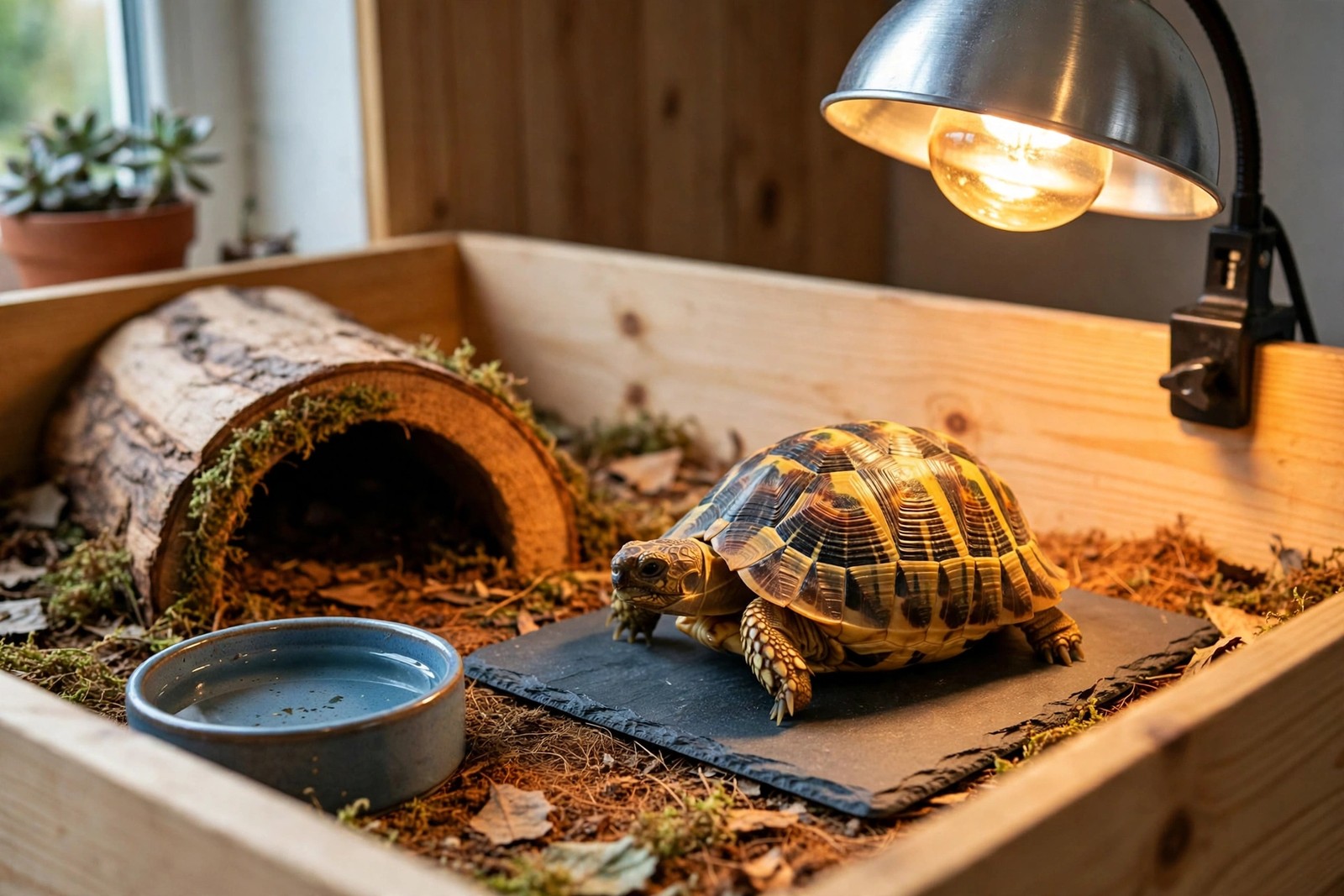
A tortoise cannot make its own body heat, so a tortoise table is not kept at one temperature — it is built as a slope of warmth the animal walks up and down all day. Get the two ends of that slope right and the middle mostly takes care of itself. The figures below suit the commonly kept Mediterranean species such as Hermann's and marginated tortoises; tropical species differ, so check your own species' needs.
The Basking Spot: 90 to 95 Degrees
Under the basking lamp, measured at the height of the tortoise's shell on the surface below, the target is roughly 90 to 95 degrees Fahrenheit. This is where the tortoise warms up after the night, digests food, and charges itself for activity. Raise or lower the lamp, or change its wattage, to hit that figure — judging by how the room feels is hopeless, so measure at shell height with a thermometer probe or an infrared temperature gun resting on the basking surface. A thermostat on the lamp adds a safety net against overheating on hot days.
The Cool End: Around 70 to 75 Degrees
The far end of the table, away from the lamp and ideally with a hide the tortoise can sleep in, should sit around 70 to 75 degrees during the day. This retreat matters as much as the hot spot: a tortoise that cannot cool down cannot regulate itself, and a table that is uniformly warm is a common, invisible cause of a lethargic, off-food tortoise. The warm middle ground between the two ends naturally lands in the mid eighties, giving the animal a genuine choice at every hour of the day.
Night-Time and the Daily Rhythm
Basking and UVB lamps go off at night, mimicking the natural cycle, and the table should fall to ordinary room temperature — around the mid sixties Fahrenheit is fine for Mediterranean species in a heated home. A tortoise that stays warm all night cannot rest properly and its appetite and activity patterns suffer. In the morning it will haul itself under the lamp to warm through before eating, which is exactly the behaviour a good gradient produces. In very cold houses, gentle background heat at night may be needed to keep the drop modest, but bright basking heat around the clock is never the answer.
Checking Temperatures Properly
Measure in three places — under the lamp at shell height, mid-table, and inside the cool-end hide — and recheck when the seasons change, when a lamp is replaced, and when the table moves rooms, because a sunny windowsill or a radiator can quietly rewrite the whole gradient. Digital probe thermometers left in place beat occasional guesses. Watch the tortoise as the final instrument: one that basks, feeds, patrols and then retreats to the cool end is using the gradient as intended, while one that hides all day or sits permanently under the lamp is telling you an end needs adjusting.
With the targets written into the profile everyone shares, KinsLe's Family Sharing keeps your tortoise's lamp schedule, basking figure and cool-end notes in front of the whole household, so a partner, parent or holiday helper checks the table against the same numbers you do.