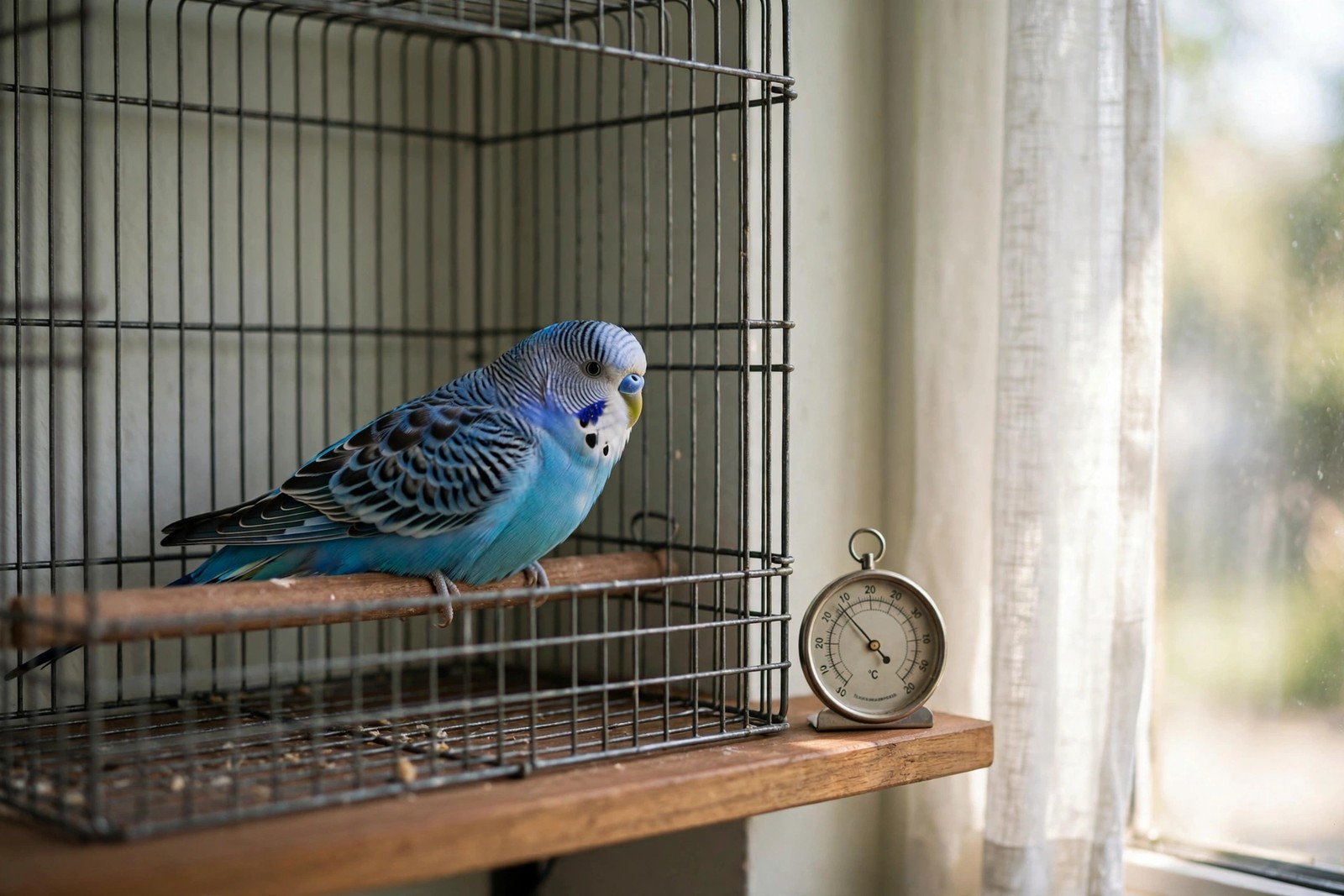
Most budgies are comfortable between about 65 and 85 degrees Fahrenheit, roughly 18 to 29 degrees Celsius. A healthy adult budgie in a normal living room is usually fine without any special heating, because that range matches the indoor temperatures people live in themselves. What matters more than chasing an exact number is steadiness: a small body loses and gains heat fast, so a cage that swings from sun-warmed to chilly in a few hours is harder on a budgie than a room that sits a few degrees cooler all day.
Where the cage sits matters most
Keep the cage away from windows that bake in afternoon sun or leak cold air at night, away from exterior doors that open onto winter air, and out of the direct stream from radiators, heaters, and air-conditioning vents. A wall side gives insulation and security. In summer, a budgie needs a shaded corner of the cage to retreat into and fresh water for bathing, which is one way birds shed heat. In winter, moving the cage into the warmest consistently used room helps more than covering it beside a cold window, and a cover at night should block drafts and light without sealing the cage airtight.
Reading your budgie's thermometer
Your bird shows you how the temperature feels before any gadget does. A cold budgie sits fluffed up with feathers puffed to trap air, may tuck its beak into its back feathers, goes quiet, and sits low and still on the perch. A hot budgie holds its feathers sleek and tight, holds its wings slightly away from its body, breathes with an open beak, and may pant. Brief fluffing during a nap is normal; a bird who stays fluffed, stops eating, or pants at rest needs the room adjusted first and a veterinarian's advice if the signs do not settle once the temperature is back in a comfortable range.
Handling changes gradually
If you must move the cage to a cooler or warmer room, do it in stages over a few days where you can, rather than carrying a budgie straight from a heated room into a cold one. Take the same care after a bath: a wet budgie cools quickly, so bathe earlier in the day in a warm room and let the bird dry fully before lights out. New, very young, sick, or elderly budgies have less margin, so keep them in the steadiest room you have and check them more often during heat waves and cold snaps. Writing the cage location, the covering routine, and who checks the room on cold nights into KinsLe's Care Teams gives every person helping with your budgie the same temperature checks to follow.