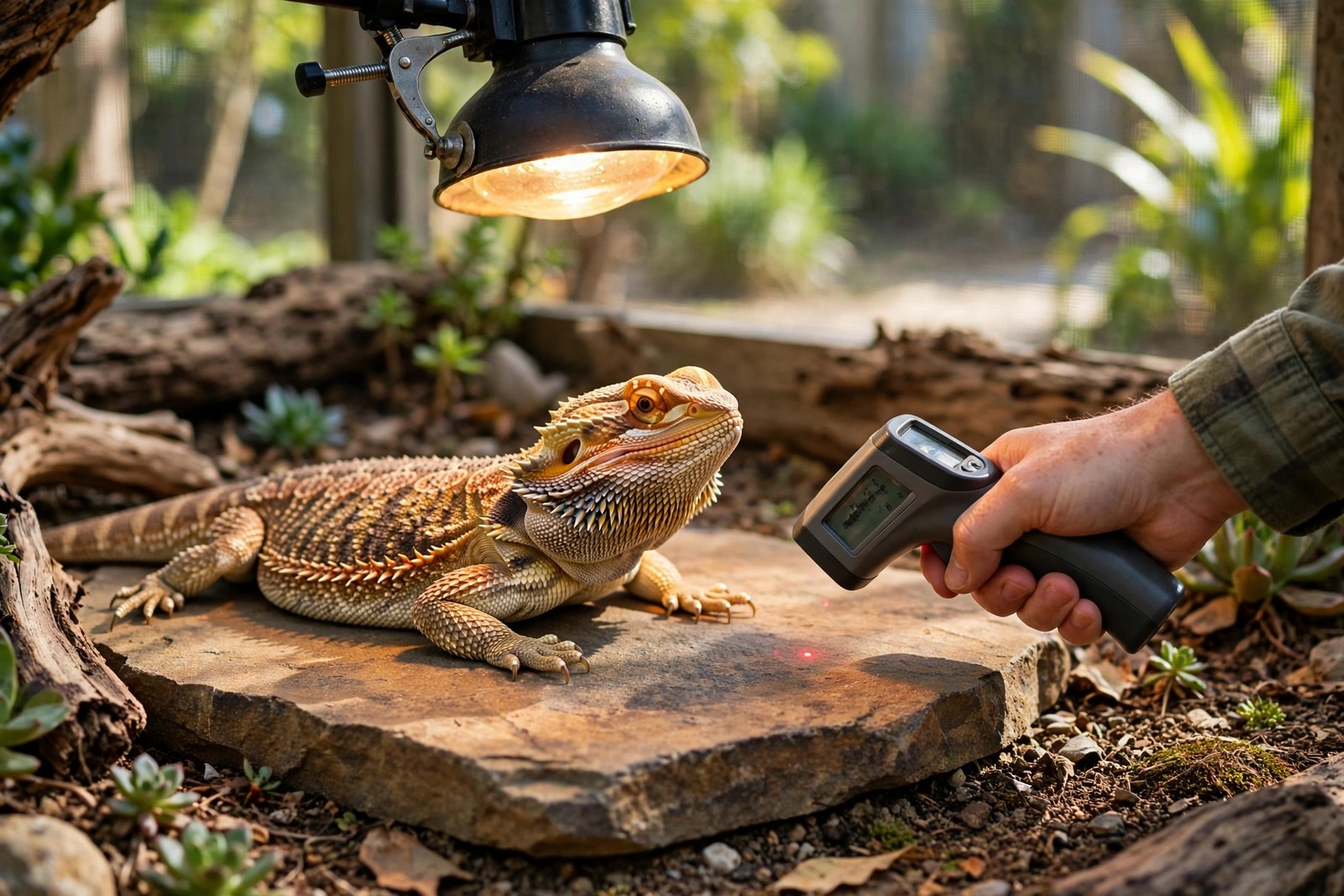
For an adult bearded dragon, the basking spot should read about 100 to 110°F (about 38 to 43°C), and the key word is surface. That figure is the temperature of the actual platform the dragon lies on, a flat rock, tile or sturdy branch directly under the basking lamp, measured with an infrared temperature gun aimed at the spot where the belly rests. Air temperature measured by a dial stuck to the glass can read ten degrees lower than the surface beneath the lamp, which is why owners who rely on air readings often run basking spots that are far too cool without realising it. Young, growing dragons bask hotter: give a juvenile a spot around 110 to 115°F (about 43 to 46°C) and expect it to spend long stretches flattened out on it, soaking up heat for digestion and growth.
Building the Gradient Around the Hot Spot
The basking spot is one end of a gradient, not the temperature of the whole enclosure. Away from the lamp, the warm side should shade down through the 90s°F, and the cool end should sit around 80 to 85°F (about 27 to 29°C), with a hide there so the dragon can rest out of the heat without feeling exposed. Place the ultraviolet light alongside the basking lamp so the dragon receives both together as it basks, the way it would under the sun. Adjust the surface temperature by raising or lowering the platform or the lamp, or by changing lamp output, then re-measure after the new arrangement has run for at least an hour, because surfaces take time to stabilise. At night the lights go off and the enclosure can fall comfortably into the 60s°F in a normal home; a dragon that stays under a glowing lamp around the clock is being kept on daylight time permanently, which disrupts sleep.
Signs the Spot Is Wrong
A dragon with a correct basking spot has a rhythm: it basks flat and relaxed after meals, gapes briefly now and then to shed excess heat while staying put, then moves off to the cool side or a shaded ledge when it has had enough. Warning signs point both ways. A spot that is too cool produces a dragon that basks all day without ever moving off, stays dark in colour, eats sluggishly and passes undigested food, because digestion literally runs on that heat. A spot that is too hot produces a dragon that avoids the platform, gapes constantly, presses itself into the cool corner or tries to climb the glass. Brief gaping while basking is normal temperature control; gaping at the cool end is a complaint. Poor appetite, lethargy or repeated undigested meals deserve a vet visit once you have verified the temperatures, since parasites and other illness can hide behind the same signs.
Making the Daily Check Stick
Measure the basking surface once a day, at a consistent time after the lamps have warmed the enclosure fully, and note the reading rather than trusting a glance, because lamps weaken and room temperatures swing with the seasons long before anything looks different. Replace the setup's measurements after any change of lamp, platform or room, and keep the temperature gun with the feeding supplies so the check happens alongside the morning feed instead of as a separate chore. KinsLe's Care Teams lets you assign that daily basking check and the lamp inspection to whoever feeds your bearded dragon that day, and the timestamped completion means a missed check is visible the same morning rather than discovered at the next illness.