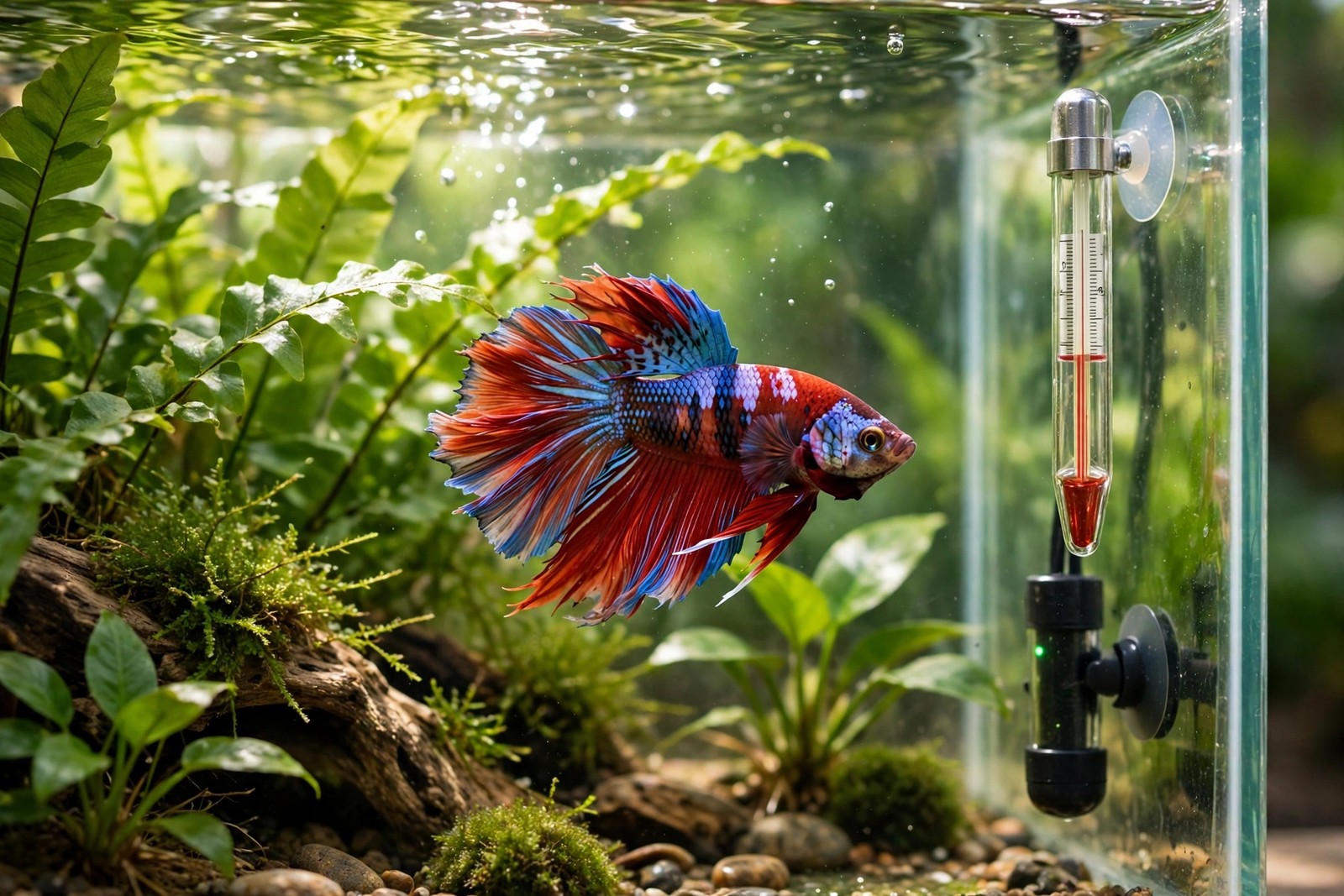
A betta's water should sit between about 78 and 80 degrees Fahrenheit — roughly 25 to 27 degrees Celsius — and the second half of that instruction matters as much as the first: steady. Bettas come from warm, shallow waters in Southeast Asia, and a small home aquarium left at room temperature usually runs cooler than that range and drifts up and down with the household heating, open windows and time of day.
Why the Range Matters
A betta is cold-blooded, so water temperature sets the pace of its whole body. In water that is too cool, a betta becomes sluggish, eats less, rests clamped near the bottom and is more vulnerable to illness. In water that is too warm, its metabolism runs fast, oxygen levels in the water fall, and the fish ages more quickly while becoming restless and stressed. Sudden swings are their own problem: a large water change with cold tap water can shock a betta even when the average temperature across the week looks correct.
A Heater Is Standard Equipment
In most homes, holding 78 to 80 degrees requires a small adjustable heater, even in summer. Choose one sized for your tank volume, set it, and then verify the result on a separate thermometer placed away from the heater itself — heater dials are approximate, and the thermometer is the reading that counts. Small tanks change temperature faster than large ones, so they deserve the closer eye; a heater that fails on in a tiny volume can overheat the water in hours, and one that fails off on a cold night can chill it just as fast.
Position the tank away from direct sun, exterior doors and heating vents, all of which create daily peaks and drops the heater then fights. A lid also helps, limiting evaporation and keeping the air above the surface warm and humid, which bettas appreciate when they breathe at the surface.
Holding It Steady Day to Day
Check the thermometer once a day, ideally at the same time, and glance at the betta while you do it: active swimming, spread fins and an eager response at feeding are the visible companions of a comfortable temperature. When you change water, match the new water to the tank temperature by feel and thermometer before it goes in, and add it gradually. If the temperature has drifted outside the range, correct it slowly over hours by adjusting the heater, never with kettles of hot water or ice.
During a power cut, insulate the tank with a towel and leave the lid closed; small, calm steps protect the fish better than urgent fixes once power returns. Recording daily readings and water changes with KinsLe Care Teams means a partner or sitter follows the same routine, and a slow drift downward — often the first sign of a dying heater — shows up in the log before the betta shows it in behaviour.