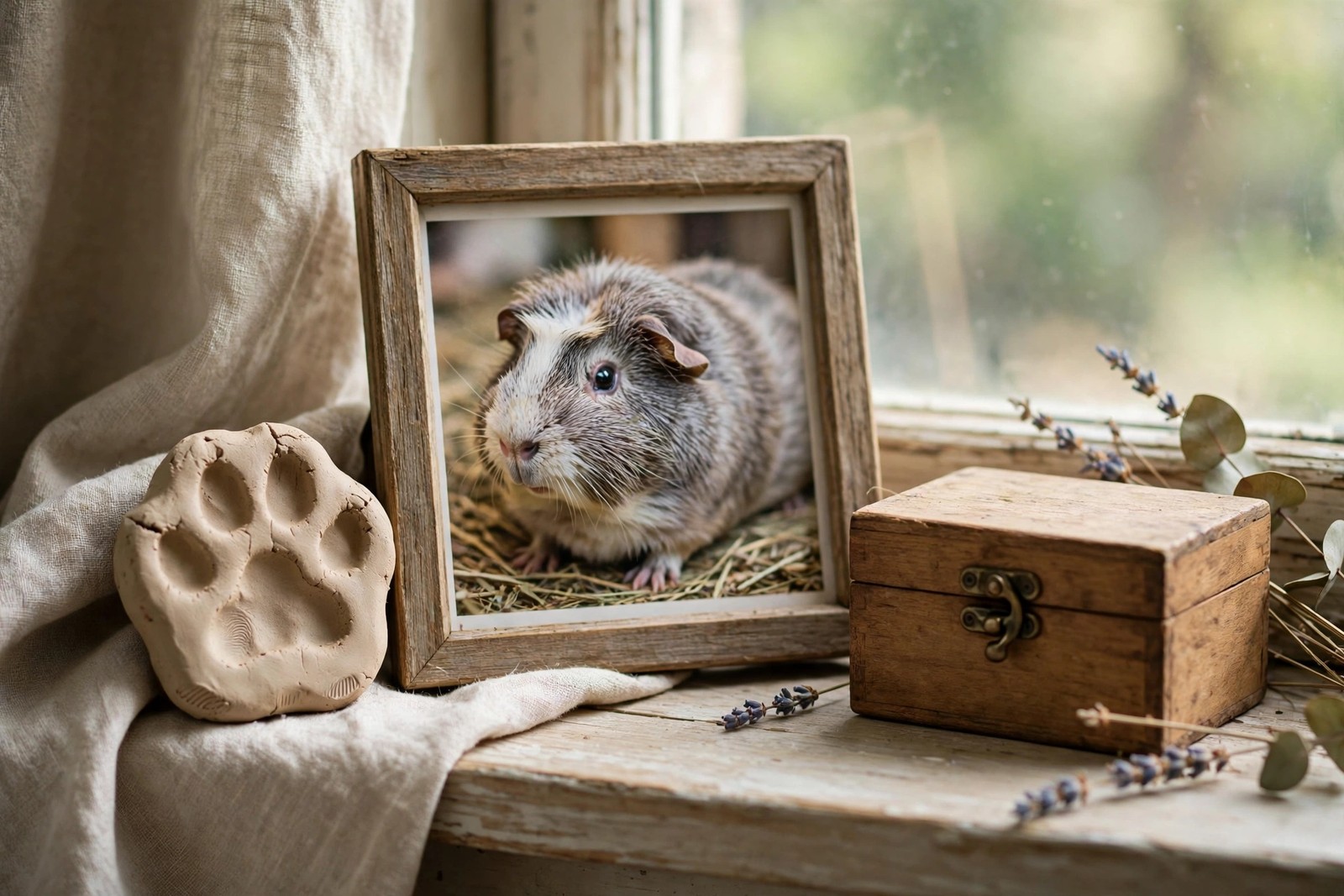
A small pet who shared your home for years — a rabbit who knew the sound of the fridge, a guinea pig who wheeked at footsteps, an elderly hamster — leaves a space far bigger than its body. Owners mark that loss in practical, tender ways, and it helps to know the main options in advance, because two of the most loved keepsakes can only be made in the first hours.
Keepsakes to Arrange Promptly
A paw print is the classic choice: pressed into soft clay that hardens into a disc, or taken with ink on card. Small paws print beautifully, but feet must be clean and the print taken before burial or cremation, so ask your veterinarian or the cremation service to make one if you cannot face doing it yourself. A nose print, unique to the individual animal, is a smaller, more private alternative some owners prefer.
A clipping of fur is equally time-sensitive. Snip a small lock from an unobtrusive spot, keep it in a paper envelope, a tiny glass vial or a locket, and label it with the pet's name. Owners of long-haired rabbits and guinea pigs sometimes keep a little of the coat they brushed so often; for a hamster, even a few soft hairs carry the same meaning.
Ashes, Burial and a Place to Visit
Private cremation returns one pet's ashes, usually in a small urn, wooden box or scatter tube sized to a small animal; communal cremation is the lower-cost option, with ashes not returned. If you scatter ashes, choose a place with meaning — under a garden shrub or in a favourite corner — and check any local rules that apply.
Home burial suits some households: check local rules first, confirm you are not in rented ground where it is prohibited, dig deep enough that wildlife cannot disturb the grave, and keep clear of water sources and utility lines. A flat stone, a planted herb pot or a small marker gives children and adults alike a place to stand and remember.
Photo and Object Memorials at Home
A framed photograph sounds simple, and it is often the keepsake looked at most. Choose a picture from ordinary life rather than the most polished one — asleep in hay, mid-yawn, sharing a vegetable with a companion. A small shadow box can hold a name tag, a favourite wooden chew, a bell or a snippet of a much-loved fleece alongside that photo. If another small pet shared the home, keep a familiar item in their space for a while; bonded rabbits and guinea pigs grieve in their own quiet way and do better with routine and a familiar scent while they adjust.
Children often want to make something: a drawn portrait, a painted stone for the grave, a letter tucked into the memorial box. Letting them do so usually helps more than shielding them from the whole goodbye. However you choose to remember, KinsLe Memorial Accounts lets you keep a free memorial profile for your pet, holding the photographs, the dates that mattered and the story of their long life where the people who loved them can visit it.