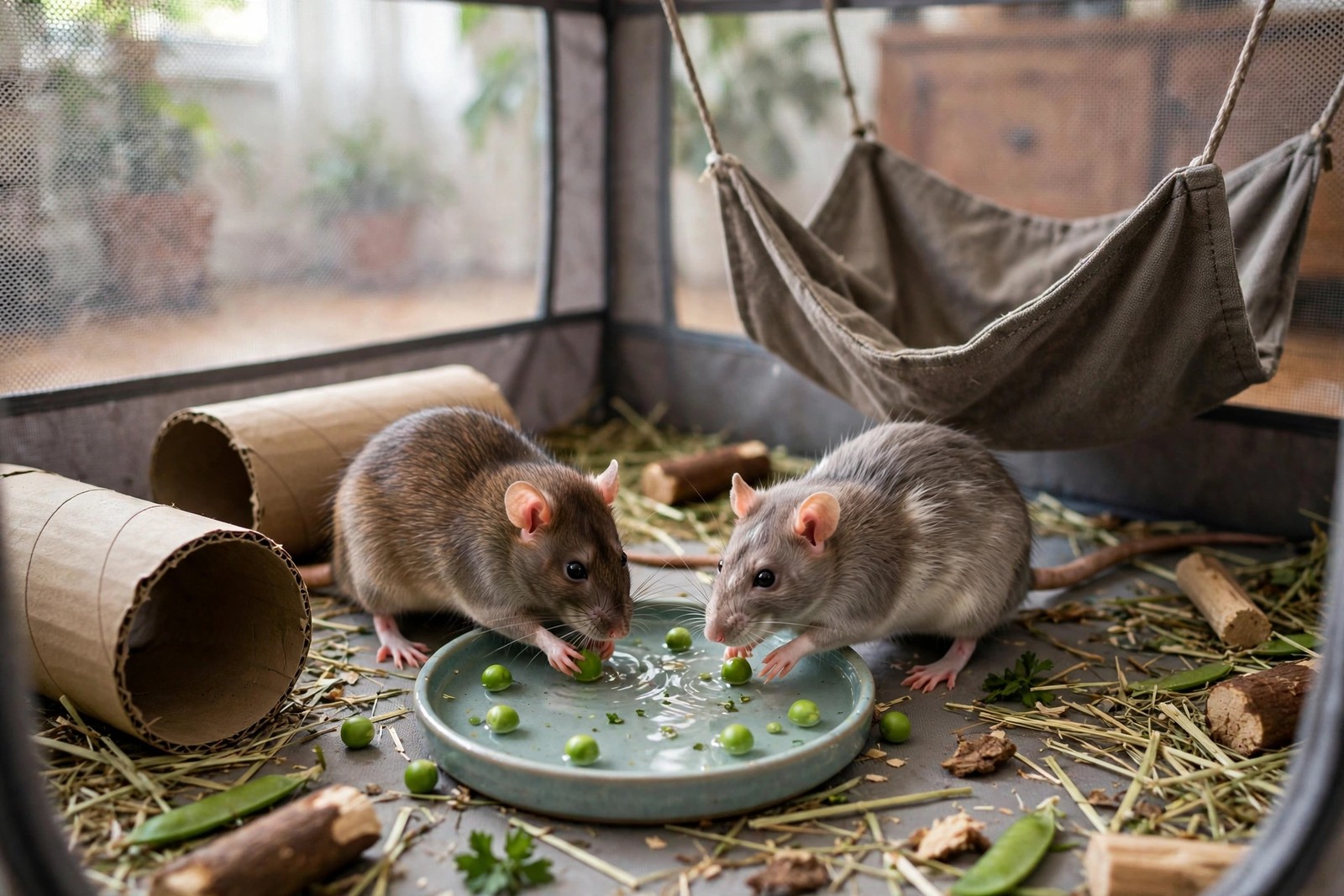
Rats are playful, social and relentlessly curious, and the toys they actually enjoy share one trait: the rat gets to do something. Top of the list for most rats are climbing toys, thick braided ropes strung between shelves, ladders and layered hammocks that double as the colony's favourite sleeping spots. Close behind come chew toys, untreated wooden sticks and blocks, woven grass shapes and plain cardboard, which rats shred with real dedication because their front teeth grow continuously and gnawing is both entertainment and maintenance. A toy that a rat can carry off, stash or demolish will almost always beat a solid object that just sits there, however colourful it looks on the shelf.
Foraging Toys: The Deepest Engagement
Food puzzles hold a rat's attention longer than anything else you can offer. Hide small pieces of vegetable or a few seeds inside a folded cardboard tube with the ends tucked in, wrap a treat in paper and bury it in a pile of shredded paper, or thread vegetables onto a hanging skewer made for small animals so the rats have to reach, pull and work together. Pea fishing is a standout favourite: float frozen peas in a shallow, heavy dish of water and let the rats scoop them out with their paws, ideally on an easy-clean floor outside the cage, with a towel nearby because enthusiastic fishers get wet. A dig box, a deep container of safe, dust-free filling with treats scattered through it, taps the same instinct and can occupy a group through a whole free-roam session.
Tunnels, Boxes and the Social Side of Play
Rats play together as much as alone, so think in terms of a playground rather than single objects. Cardboard boxes with two or more doorways cut in become castles to defend and remodel, flexible tunnels give chase games a route, and a pile of fleece strips or paper becomes a nest the group rebuilds nightly. During free-roam time outside the cage, set out the boxes, tunnels and dig box together in a rat-proofed space and let them choose; you will quickly learn each rat's taste, because one will live in the hammock, one will monopolise the pea dish, and one will spend the session transporting paper to a chosen corner. That individual variation is exactly why rotation matters: swap a few toys twice a week, putting cleaned favourites back into service and resting the ignored ones, rather than replacing everything at once and overwhelming the group.
Safety Checks That Keep Play Harmless
Inspect toys the way rats use them, hard and with teeth. Remove anything with fraying fabric loops that could trap a foot, cracked plastic with sharp edges, or small parts that could be chewed free and swallowed. Choose wooden chews that are untreated and of a type safe for small animals, avoid anything scented or dyed, and wash hammocks and fleece regularly since rats scent-mark their favourites enthusiastically and fabric holds odour fast. Supervise new toys for the first session, especially anything with holes, because a rat that can push its head through an opening it cannot reverse out of needs the toy removed, not a rescue later. Retire a toy when it is chewed down to a stub or a hazard, and replace it with a fresh version of a proven favourite rather than a novelty every time. KinsLe's Family Sharing keeps your rats' proven favourites, rotation and retired-for-safety list on the shared profile, so anyone buying or making toys for the group works from what your rats genuinely enjoy.