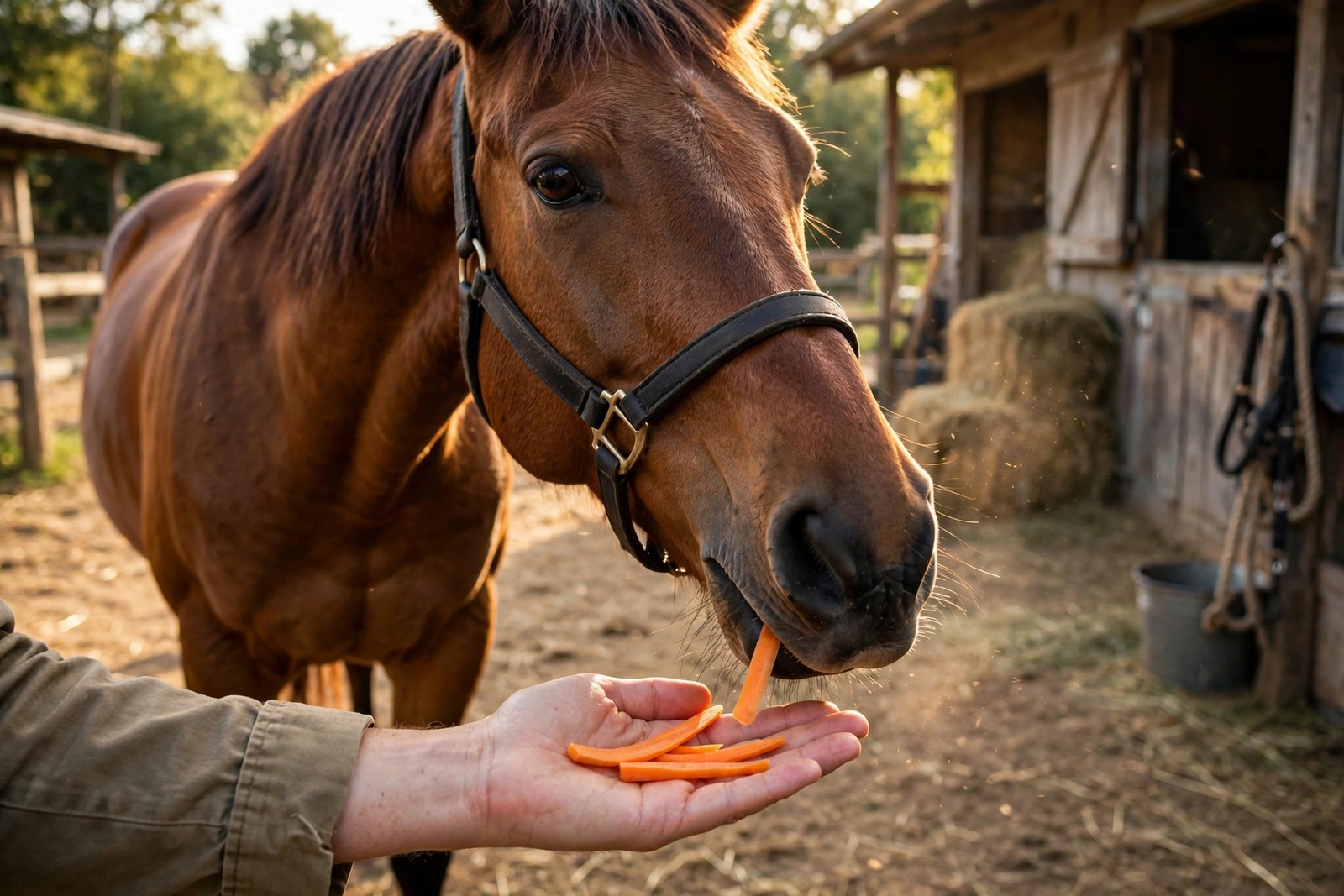
Most horses can enjoy a short list of familiar treats: carrot pieces, cored apple slices, a little banana or pear, the occasional slice of watermelon rind, and treats manufactured specifically for horses. The list matters less than the amount and the preparation — treats are a greeting and a training reward, not a feed, and a handful across a day is plenty for a healthy horse whose main diet is forage.
Prepare Treats Against Choke
Horses cannot vomit, and they chew quickly when excited, so shape is a safety issue. Slice carrots lengthwise into thin strips rather than cutting them into round coins, quarter or slice apples and remove the core and seeds, and never offer whole apples, whole carrots or large hard chunks to a horse that bolts food. Offer pieces from a flat, open palm or a bucket so fingers stay clear of teeth, and be extra careful with elderly horses whose worn teeth grind less effectively.
Foods to Never Offer
Keep a firm never list and make sure visitors know it. Never feed chocolate, avocado, onions, or lawn clippings and garden waste. Lawn clippings deserve special emphasis because well-meaning neighbours offer them often: cut grass ferments quickly, can be swallowed in unchewed wads, and may contain plants or treatments the horse should not eat. Never feed meat, cake, sweets, fruit stones or pits, or mouldy hay, feed or produce of any kind. This list has no exceptions to negotiate at the gate — a polite, clear yard rule protects the horse from kindness that harms.
Moderation for Easy Keepers and Laminitis-Prone Horses
Sugar and starch are the deciding factor for many horses. A horse or pony with a history of laminitis, a cresty neck, or a weight problem, or one managed for a metabolic condition, should have carrots, apples and sweetened treats strictly limited or removed altogether, because even natural fruit sugars add up across a day of visitors. Ask your veterinarian what, if anything, is appropriate for that individual horse; lower-sugar options such as a few celery pieces or a handful of plain forage-based treats may be approved, but the decision belongs to the horse's own health picture, not the yard average.
Introduce any new treat in a small amount and watch droppings and demeanour over the next day, and keep treat-feeding to people who know the rules — a horse taught to expect food from every pocket can become pushy at gates and stable doors. Writing the approved treats, the preparation and the never list into KinsLe Care Teams means a relief groom, a livery neighbour or a family member covering your holiday feeds exactly as you do, with each visit timestamped.