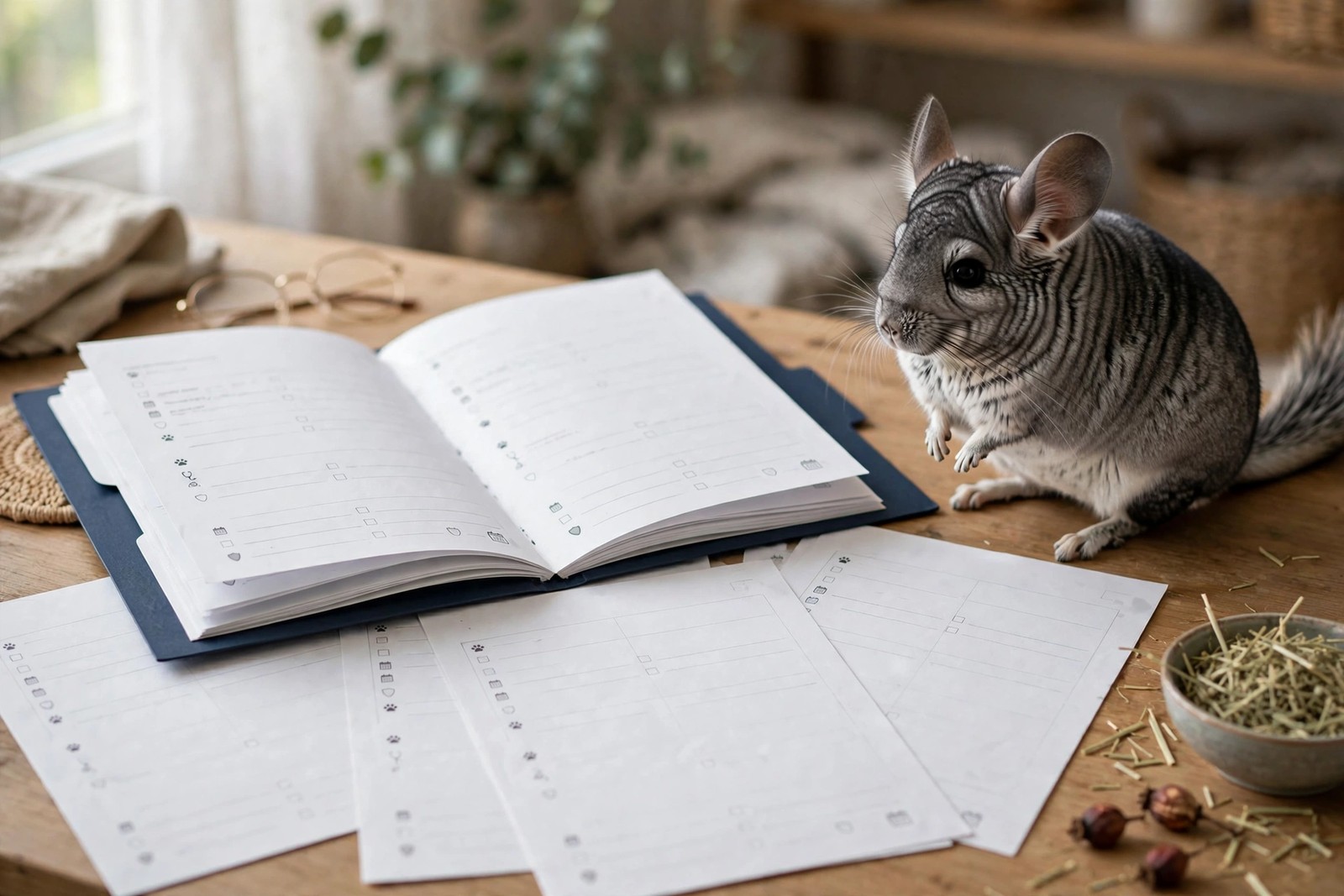
For a chinchilla, a permanent file is a health history, not a stack of vaccine cards. This species has no routine vaccination programme in most regions, so what earns a permanent place is the paper trail of health checks, dental examinations, weight records, test results and any treatment notes, filed beside adoption or breeder paperwork from the start of ownership. The dates that deserve reminders are different, too: the next annual health check, regular teeth and weight reviews at home, and any follow-up your vet books after illness. Filed together from the beginning, those records show a chinchilla's baseline — and for an animal who hides illness well, the baseline is often the earliest warning.
What Owners Need to Know
A chinchilla record proves its worth on the difficult days: a new exotics vet reconstructing a dental history, a boarder needing feeding and handling details in writing, or an emergency visit where nobody can remember when the weight began to slide. Hold identification details, every health-check summary, your own routine notes and emergency contacts for this one animal together, and add each new entry as it happens rather than rebuilding the file from memory under pressure.
Chinchillas live a long time for a small mammal, which makes early paperwork disproportionately valuable: a weight chart begun in the first year can still be guiding decisions a decade later, long after recollection of 'about normal' has faded.
Practical Steps That Help
File the chinchilla's record in this order and it will stay usable for years:
- File health-check summaries and dental notes in date order from the first visit
- Log weight on a regular day and keep the chart with the vet papers
- Record appetite, droppings and dust-bath habits whenever they change
- Add breeder or adoption paperwork and a clear recent photograph
- Note the vet's number and an emergency contact on the file's first page
A Note on Health Information
Everything in this article is general information to help you observe your chinchilla and decide what to do next; it is not a diagnosis, and no written guide can examine the animal in front of you. Treat severe, sudden or worsening signs as urgent — a chinchilla who stops eating, cannot breathe easily, collapses or appears to be in pain needs a veterinarian the same day, not a period of watching and waiting.
Making It Part of Everyday Life
Tie the filing to habits that already exist. Photograph each new vet summary on the day it arrives, weigh on the same morning each week, and let a fortnight of entries sit side by side — a slow weight drift that no single week reveals becomes obvious, and that trend is exactly what a vet, boarder or sitter can act on. Refresh the file whenever the chinchilla's diet, housing or health changes, so the record describes the animal you have now, not the one from last year. Filed this way, each new weight entry or check summary joins an unbroken history, and the Pet Passport in KinsLe keeps this chinchilla's packet ready to hand over at a clinic, boarder or new home.