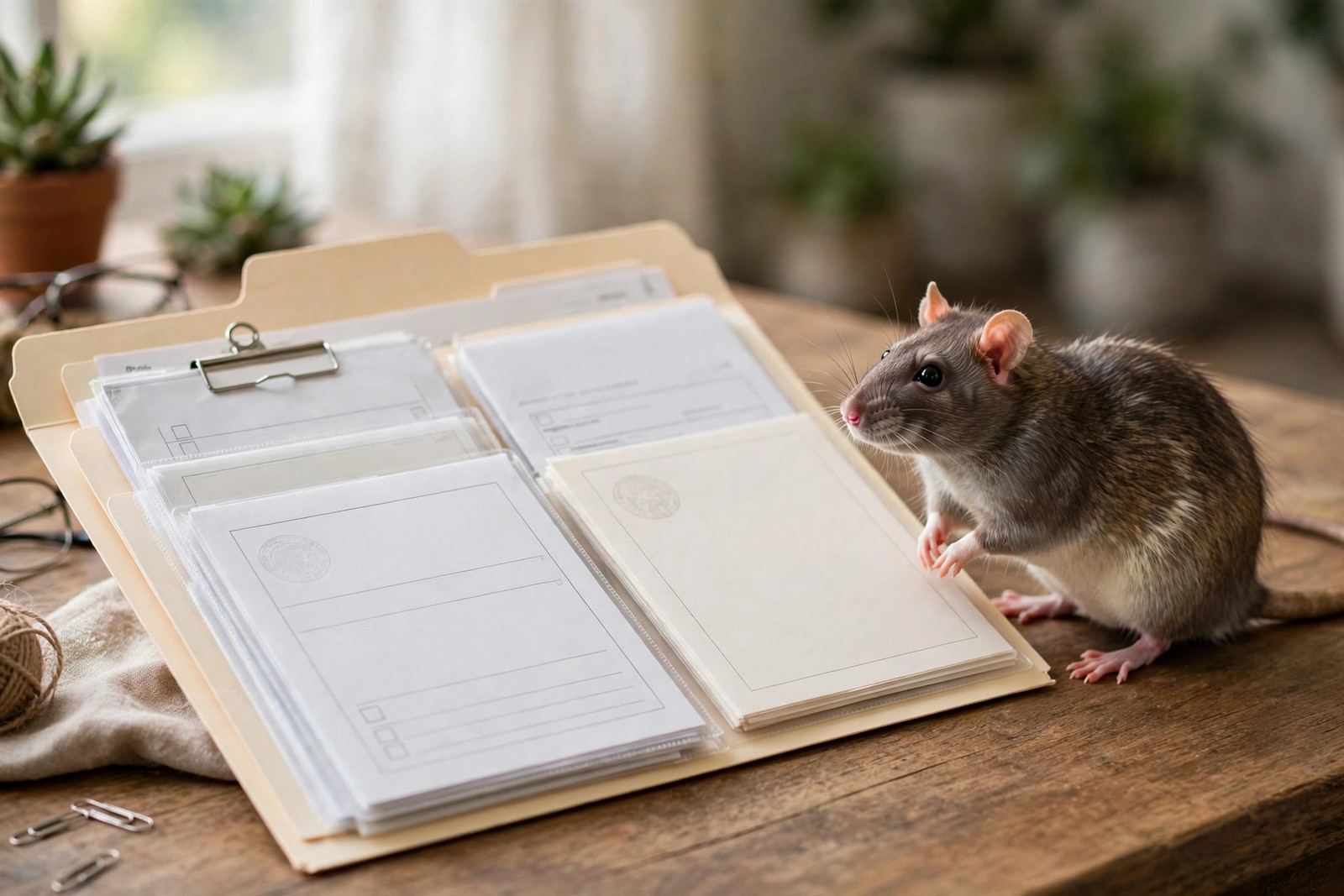
For a rat, the permanent file is a clinical history rather than a vaccine record, because rats are not routinely vaccinated in most regions. Keep health-check summaries, notes from any respiratory episodes, test or treatment records, weight entries and adoption or breeder paperwork for the whole of the rat's life, however short that life is. The dates worth flagging are the follow-ups your vet sets after illness or surgery, plus your own regular rhythm of weight and breathing checks at home, since a rat's breathing and body condition can change quickly and the comparison with last month's entry is what shows it.
What Owners Need to Know
A rat's file earns its place when a vet is deciding whether this breathing episode is new or the third one this year, or when a sitter needs feeding details and the vet's number without a phone call. Identification, health history, routine notes and emergency contacts for this one rat belong together, added to as events happen instead of being pieced together from memory later.
Respiratory disease is the recurring theme in rat health, which makes dated notes on breathing, sneezing and energy unusually valuable: a sequence of small entries can show a pattern that a single visit never reveals.
Practical Steps That Help
File the rat's record in this order and it will stay usable for life:
- File health-check summaries and respiratory notes in date order
- Record weight regularly and keep the entries with the vet papers
- Note breathing, sneezing, appetite and energy whenever they change
- Keep breeder or adoption paperwork and a clear recent photograph together
- Add the vet's number and an emergency contact to the front of the file
Judge any change against this rat's own normal, not against a cage mate's. You know the usual breathing sounds at rest, the typical appetite and the normal energy at playtime — a departure from that personal baseline, even a quiet one, is the signal worth recording and, if it persists, raising with a vet.
Making It Part of Everyday Life
Rats are often kept in pairs or groups, so agree as a household who weighs, who files and who books follow-ups, with every helper working from the same entries; a record kept by several people in several places is no record at all. Add each entry as it happens, in a few minutes, and the file stays trustworthy for the moments it is actually needed. Respiratory episodes, weight dips and recovery notes gain meaning when they sit in date order, and the Pet Passport in KinsLe keeps this rat's packet together for a clinic visit, a trip or a handover to a sitter.