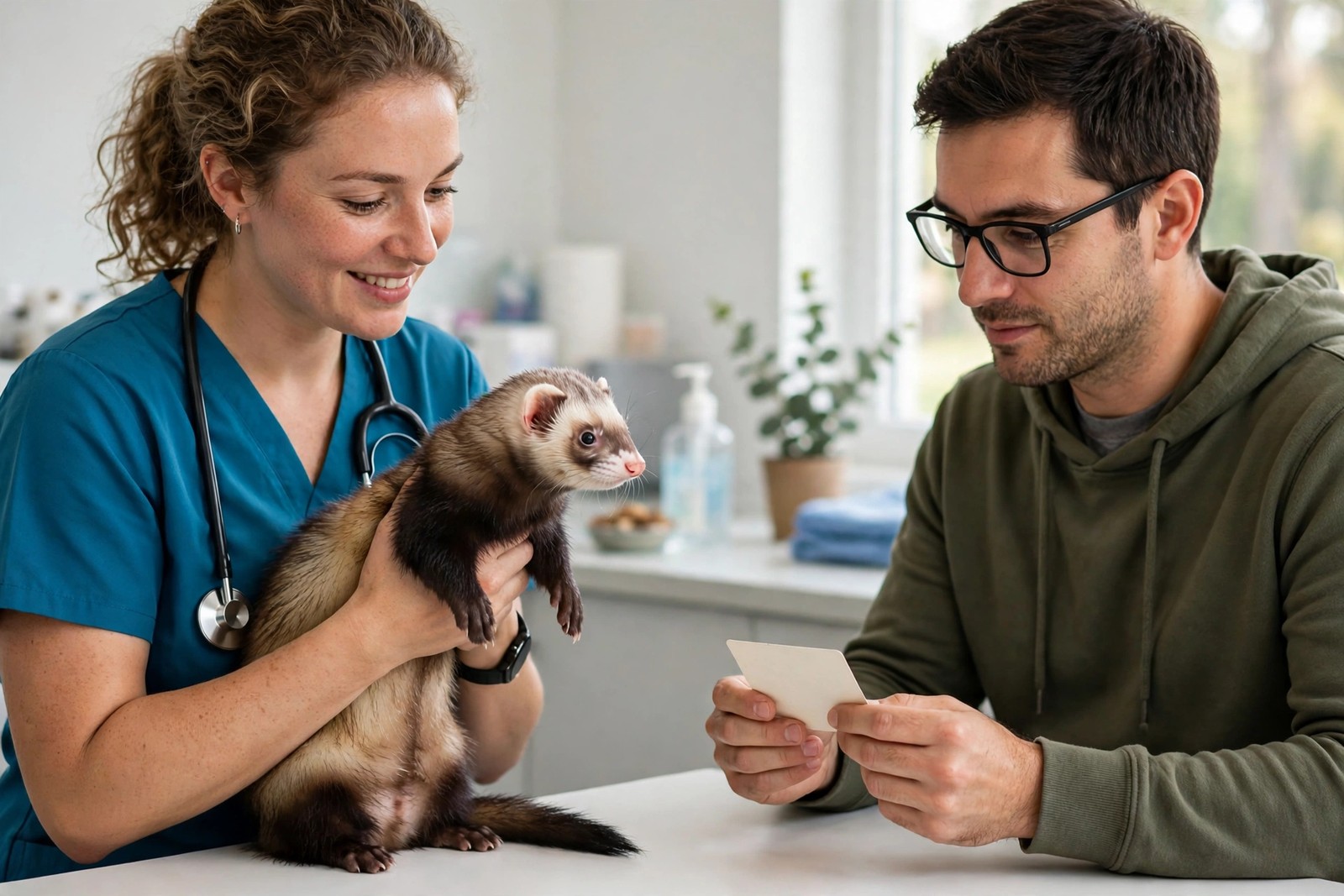
Two vaccination dates run a ferret owner's calendar: canine distemper and rabies. Everything else — booking boarding, registering with a new veterinarian, even some pet insurance paperwork — tends to ask about those two, so diarise the due dates, not just the dates given, and set the reminder a few weeks early so an appointment can actually be booked before cover lapses.
Canine Distemper: Series First, Then Boosters
Ferrets are highly susceptible to canine distemper, and protection starts young. Kits typically receive a series of distemper vaccinations through their first months, spaced a few weeks apart — commonly starting at around six to eight weeks with further doses following at intervals your veterinarian sets — because protection from the mother fades gradually and a single early dose cannot be relied on. After the kit series, boosters are diarised on the schedule your veterinarian advises, which for most ferrets is annual.
If you adopt an adult ferret with an unknown history, treat the record as a fresh start and discuss a series with your veterinarian rather than assuming cover exists. After any ferret vaccination, stay at the clinic for a short observation period if you are advised to, since ferrets are among the pets more prone to vaccine reactions, and note the time of the appointment in your diary so a reaction later that day can be reported accurately.
Rabies: First Dose and Legal Rhythm
Rabies vaccination is typically first given at around three months of age, then repeated annually or at the interval your local law and your veterinarian specify. In many places rabies cover is a legal requirement as well as a health one, and the certificate carries the vaccine details, the date given and the expiry — the expiry is the date to diarise in bold. Rules differ between regions, so confirm the interval that applies where you live rather than copying another owner's schedule.
How Boarding Services Check
A reputable ferret boarder checks paperwork before accepting the animal, not on trust at the door. Expect to show the veterinary certificate or printed record — many boarders ask for it at booking, again before the stay — showing that distemper and rabies cover are both current and will remain in date through the final day of boarding. A ferret whose booster falls due mid-stay, or whose records cannot be produced, may be refused or asked to be vaccinated with enough lead time before the stay, because a vaccine given the day before boarding has not had time to provide its protection.
Keep the originals safe and travel with copies. Store the certificates, due dates and your veterinarian's details in KinsLe Pet Passport, which keeps a ferret's records together in one portable packet you can show a boarder, a new clinic or a sitter without hunting through email the night before a trip.