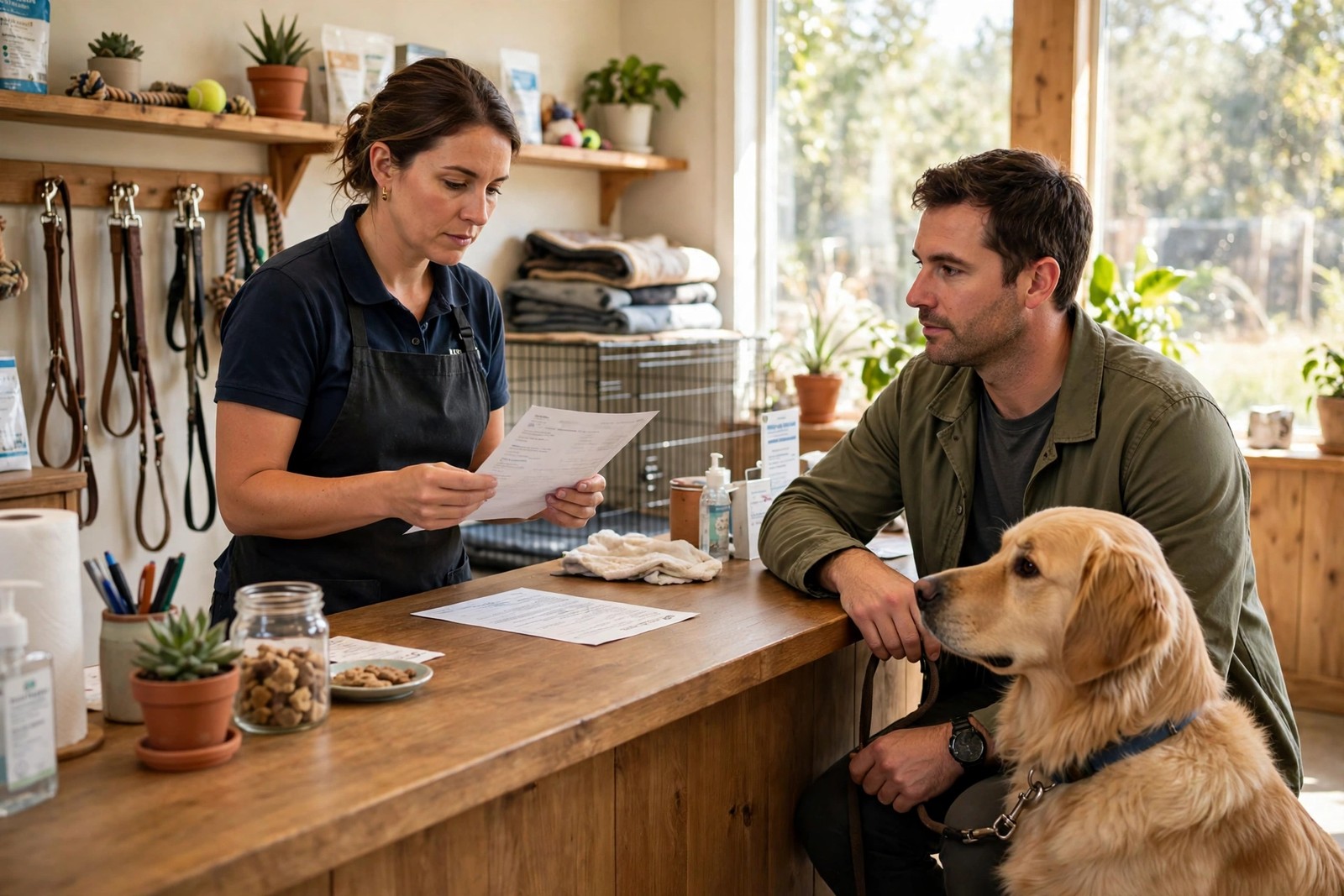
A boarding kennel will not take your word for your dog's vaccinations — it will ask to see veterinary proof, and for a first stay it usually checks that proof before confirming the booking. Expect three names on almost every list: rabies, the distemper and parvovirus core combination, and Bordetella. A fourth, canine influenza, is now required by many kennels, and requirements are checked against dates, so assemble the records weeks ahead rather than the night before drop-off.
The Vaccines Kennels Ask About
Rabies comes first. It is legally required in most places, and the kennel will want the rabies certificate showing the date given and the date it expires; an invoice alone often does not carry the certificate details a kennel needs.
The core combination is usually recorded as DHPP or a similar abbreviation, covering distemper, hepatitis, parvovirus and parainfluenza. Puppies must have completed their initial series, and adults must be within the booster interval on the record — a dog whose core booster expired last month counts as out of date even if it was covered for years before.
Bordetella, the kennel cough vaccine, is the one that catches first-time boarders out, because many family dogs are not routinely given it until boarding is planned. Kennels commonly require it within the previous six to twelve months, and canine influenza — covering the H3N2 strain, and sometimes H3N8 — is required by a growing number, particularly where cases have occurred locally. Some kennels also ask about leptospirosis or a recent flea and worming history; the kennel's own written list is the authority, so ask for it when you book.
Proof Format and Timing
What satisfies a kennel is a certificate or printed record from the veterinary practice, or a clear copy of it, showing the dog's name, the vaccine, the date administered and the next due date. Kennels typically review this in advance — by email or upload at booking, or at a pre-stay assessment — and may re-check the originals at drop-off. If anything is missing or expired, the stay can be refused at the door, which is why the check happens early.
Timing matters as much as paperwork. Vaccines need time to build protection, and many kennels require Bordetella or influenza to have been given at least one to two weeks before the stay; a first influenza course can involve two doses spaced weeks apart, so a dog starting from scratch may need a month of lead time. Book the veterinary appointment as soon as the boarding dates are known.
Getting First-Stay Ready
Call the kennel, get its exact list, then call your veterinarian with the list in hand and compare dates line by line. Photograph or scan every certificate the same day. Keeping the certificates, due dates and kennel requirements together in KinsLe Pet Passport means the packet a kennel asks for is already assembled — one portable record you can send at booking and show again at drop-off without a scramble.