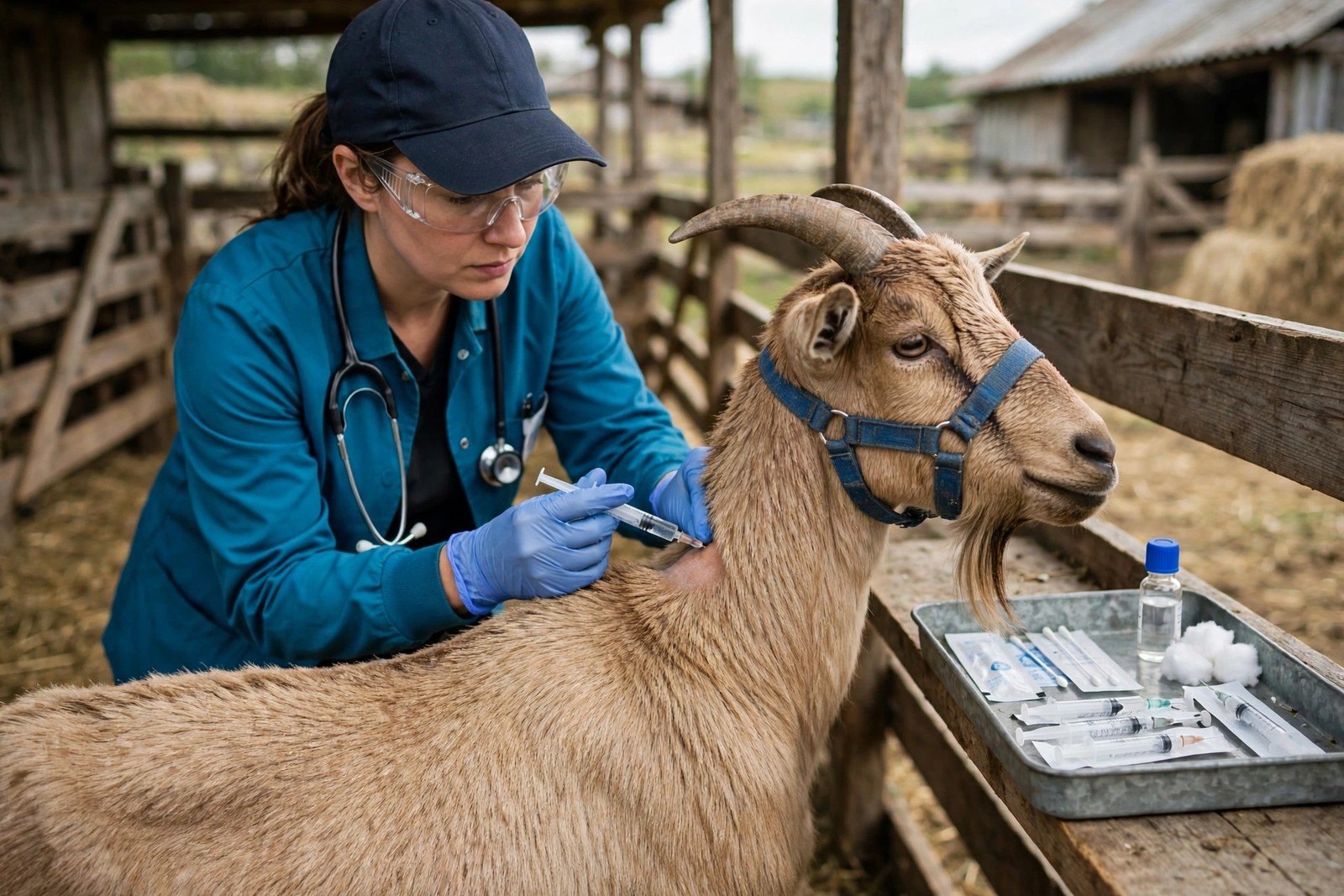
For goats, the non-negotiable cover is clostridial, above all enterotoxemia and tetanus. These are usually delivered as a combined 'CD&T' vaccination: kids typically start at around six to eight weeks (timing depends on their dam's vaccination status), with a booster a few weeks later, and adults are boosted annually, with does commonly boosted in late pregnancy so protection passes to their kids through colostrum. Beyond the core, requirements are regional and situational — some areas add other clostridials (the multi-way sheep-and-goat vaccines cover blackleg, pulpy kidney, and more), and rabies vaccination is used where rabies is endemic and required.
Building a Goat Vaccination Rhythm With Your Vet
Exact products and schedules vary by country and by what your vet stocks, so the plan is set with your practice — the pattern that matters is: know every goat's status, never let boosters lapse past their year, time late-pregnancy boosters deliberately (about a month before kidding is the common pattern) so kids are born protected, vaccinate new arrivals of unknown status as a fresh course, and record batch, date, and animal every time, because in a herd emergency the question 'which goats are covered?' needs a written answer. Keep vaccines refrigerated as directed, use clean needles, and expect occasional small injection-site lumps (a known feature of clostridial vaccines, especially in goats). Vaccination interacts with the rest of the plan: enterotoxemia risk rises with rich feed and sudden changes, so vaccine cover is paired with gradual diet transitions, not used instead of them.
Working With Your Vet
With goats, the record you bring to the appointment is the vaccination history itself: which product, which batch, which date, and which animals were actually done — because in a herd, saying the goats were covered in spring is not the same as knowing the newly bought doe was included. Tell the vet about any injection-site lumps that appear, mention any goat that missed a round, and ask before assuming a bought-in animal's paperwork matches what it really received. Signs such as bloat, staggering, bellowing or sudden collapse in a goat are an immediate vet call, not a wait-and-see: those are the clostridial emergencies the CD&T programme exists to prevent, and the window for help is short. Pin the schedule to the herd's own rhythm — kidding dates worked backwards for late-pregnancy boosters, new arrivals started as a fresh course — and review the whole plan with your vet whenever feed, ground or herd numbers change in a material way.
Kept animal by animal, that record can sit in a Pet Passport in KinsLe: a single goat's dates, products used and vet notes, gathered into one portable packet for any appointment.