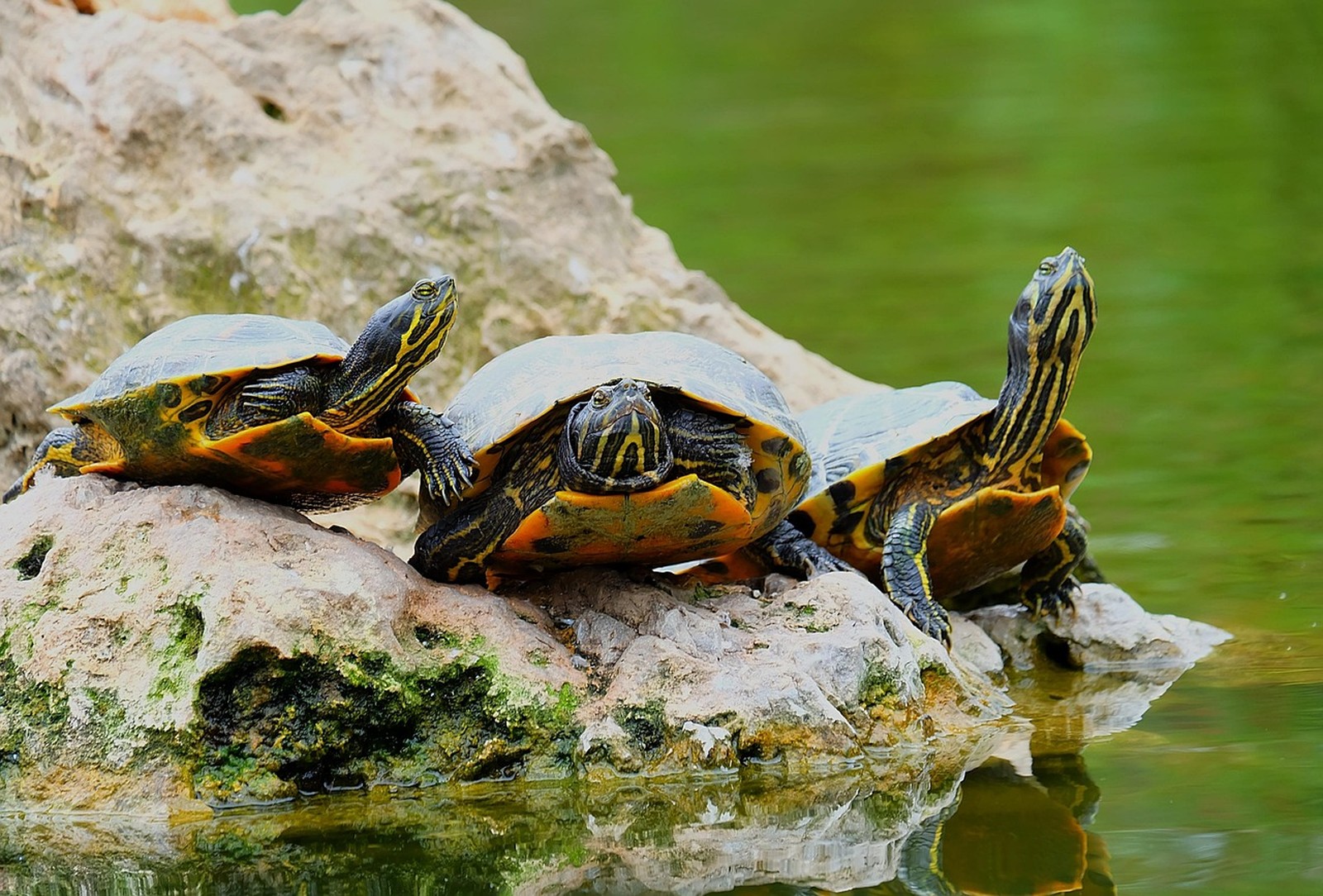
Red-eared sliders live between two temperatures: the water they swim and feed in, and the much warmer dry spot where they haul out to bask. Keepers who set only one of them right usually end up puzzling over a turtle that will not eat or will not bask. Adults and youngsters also differ slightly, with the youngest turtles needing the warmest water of all.
The Water Itself: 75 to 80 Degrees for Adults
For a healthy adult slider, water around 75 to 80 degrees Fahrenheit keeps appetite, digestion and immune function running as they should. Below the low seventies, sliders grow sluggish, eat less and become vulnerable to respiratory trouble; much above the low eighties, the water holds less oxygen, encourages algae and bacteria, and the turtle may refuse to swim in favour of sitting out all day. A submersible aquarium heater sized for the tank, guarded so a strong turtle cannot knock or bite it, holds the range — and because sliders are messy, powerful swimmers, the heater has to survive being treated as furniture.
Hatchlings and small juveniles need it warmer, roughly 78 to 82 degrees. A baby slider in cool water stops feeding quickly, and a young turtle that is not eating is not growing, so err on the warm side for the first year and ease towards the adult range as the turtle grows.
The Basking Spot: 85 to 95 Degrees
Above the waterline, the basking platform surface should reach roughly 85 to 95 degrees under its lamp. Basking is not sunbathing for pleasure: a slider must be able to raise its body temperature well above the water's, dry its shell and skin completely, and absorb UVB while it does so. A turtle that cannot get properly warm and dry is at risk of shell problems, and one whose platform is barely warmer than the water simply will not use it. Provide a ramp the turtle can climb easily, size the dry area so the whole animal fits out of the water, and combine the heat lamp with a proper UVB lamp over the same spot.
Measuring Instead of Guessing
Use a thermometer in the water, not the reading on the heater dial, and check the basking surface with a probe or infrared gun at shell height. Room temperature misleads: a tank in a cool room can need heating even when the house feels fine to you, and a tank in summer sun can overshoot at both ends. Recheck after every water change, heater swap or room move. Then watch the turtle as the final gauge — a slider that feeds eagerly in the water, basks for solid stretches, and slides back in to swim is living at the right pair of temperatures.
Those two numbers are far easier to hold when everyone helping knows them, and KinsLe's Family Sharing keeps your slider's water range, basking target, heater checks and feeding notes in a single shared profile, so a family member covering the tank for a week maintains the same warmth you set.