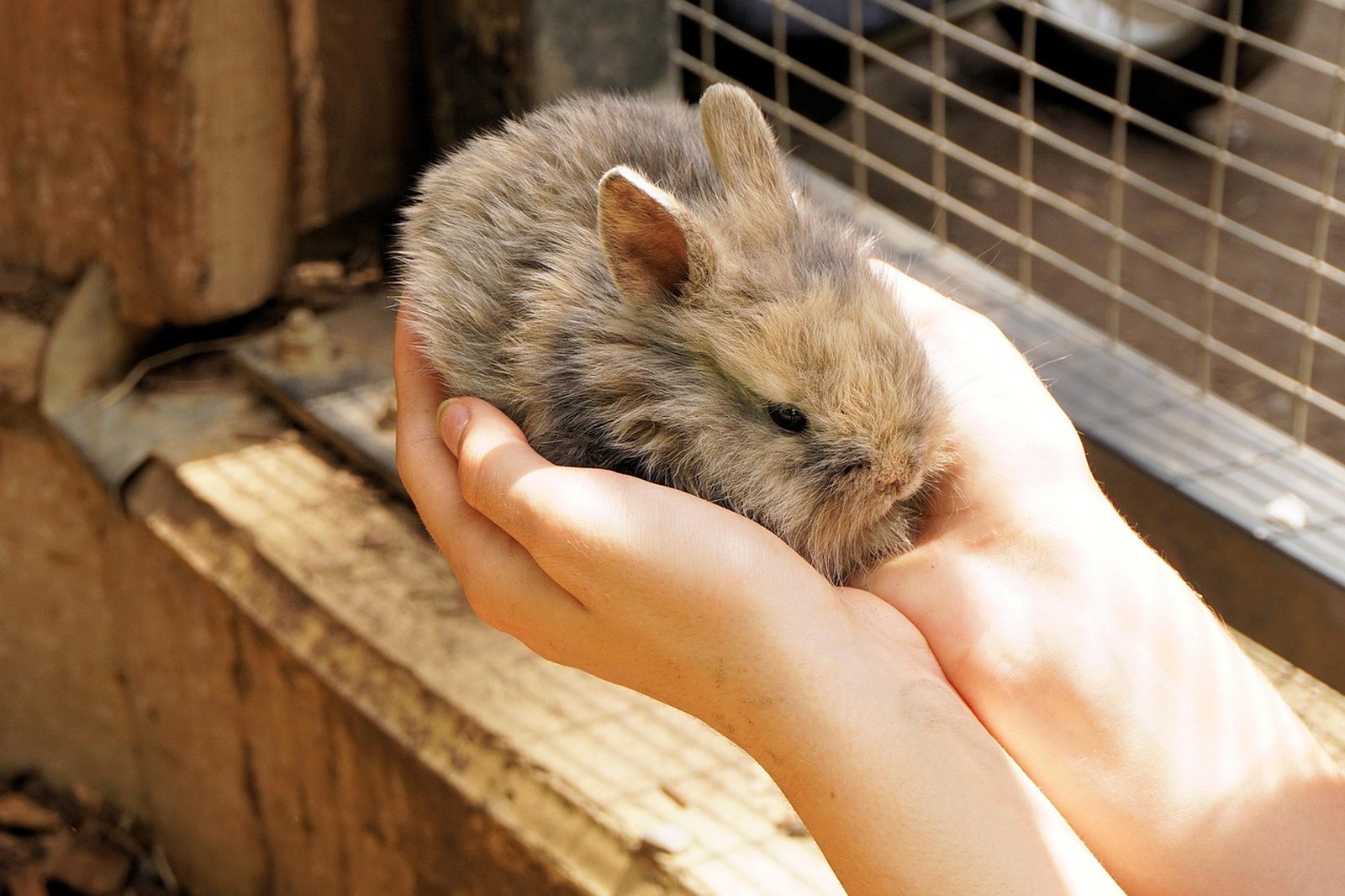
Baby rabbits, called kits, are born blind, deaf and hairless, and their timeline sets the handling rules. For the first days of life, keep contact minimal but purposeful: one brief nest check once a day, with clean hands rubbed in a little of the nest bedding so they carry no strange scent. Lift the covering of fur the mother has pulled, count the kits, feel for round, filled bellies that show they are being fed, and remove any kit that has died, since leaving it endangers the rest. Then cover the nest exactly as you found it and leave. This restraint is not superstition. A rabbit mother normally visits the nest only once or twice a day, usually in the dark, to nurse for a few minutes, and her absence the rest of the time is correct behaviour, not neglect.
After the Eyes Open: Around Day 10
Kits' eyes open at around 10 days old, and that is the turning point for handling. From then on, you can begin short, deliberate sessions: sit on the floor with the kit held low over your lap or a soft blanket, support its chest and hindquarters so it never dangles or kicks unsupported, and keep each session to two or three minutes at first. Build up gradually across the following days as the kits grow fur, steadiness and curiosity, letting them hop onto your hands rather than always being lifted. By about three to four weeks, when kits are leaving the nest, nibbling hay and exploring, regular short handling sessions are both safe and valuable, because youngsters handled calmly in this window usually grow into rabbits that accept being picked up, groomed and health-checked as adults without panic.
The Mother Decides the Pace
The doe's stress is the deciding factor at every stage, and her signals override the calendar. A relaxed mother ignores the nest checks or watches calmly from a distance. A stressed one stamps her hind feet, grunts or lunges at hands near the nest, races around the enclosure, or, at the extreme, stops feeding the kits or harms them. If you see that escalation, cut handling back to the bare nest check, give her more cover, quiet and distance from household noise and other pets, and let the litter settle for a day or two before trying again more briefly. Keep children and visitors away from the nest entirely in the early weeks, however tempting the kits are, and make one calm adult the only handler until the kits are weaned, since consistency is what makes the experience feel safe to both mother and babies. If a mother genuinely rejects or injures kits, or a kit is found cold, thin-bellied and crying outside the nest repeatedly, contact a vet promptly for advice rather than improvising feeding.
Handling Technique That Keeps Kits Safe
Technique matters as much as timing. Never lift a rabbit of any age by its ears or the scruff alone, and never let a kit be carried standing up across a room, because a sudden kick from an unsupported rabbit can seriously injure its spine. Scoop the kit with one hand under the chest and the other under the hindquarters, hold it close against your body, and always handle at floor level so a wriggle cannot become a fall. Wash hands before handling if you have touched other animals, keep sessions warm and brief for the youngest kits, who chill quickly out of the nest, and return each kit to the nest promptly, tucked back under the fur. Note what you find at each check, numbers, bellies, growth, so a slow-growing kit is spotted early. KinsLe's Care Teams lets you assign that once-daily nest check and the later short handling sessions to the one calm person your doe trusts most, and the timestamped record keeps the whole litter's early routine steady and undisturbed.