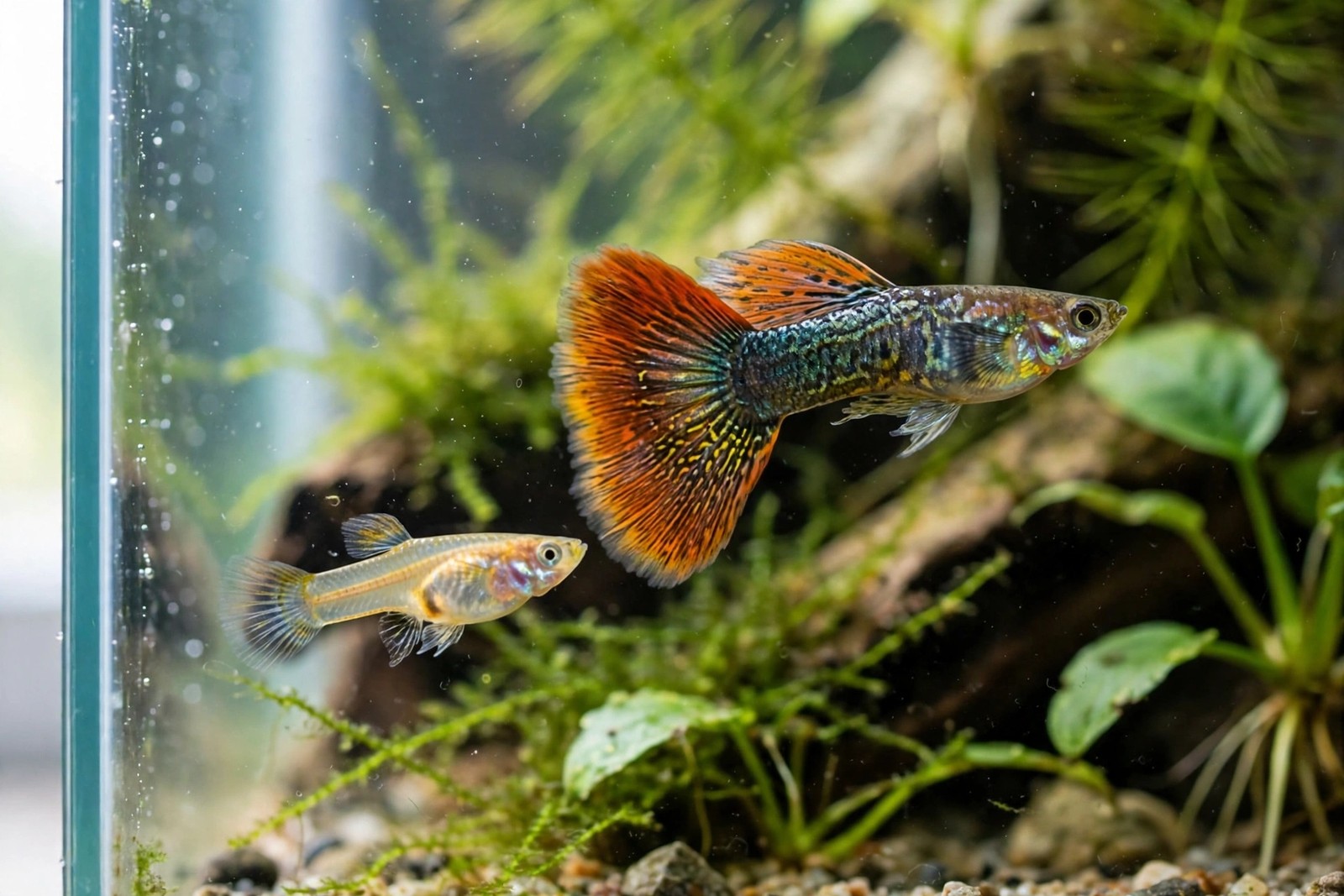
There is no birthday that makes a young fish safe in the main tank. The real test is size: a juvenile is ready when it is clearly too large to fit into the mouth of the biggest fish in that tank. A peaceful community fish can still swallow a fry it finds, because swallowing small fish is normal feeding behaviour for many species, so compare the youngster's body depth and length against the widest mouth it will meet, not against its parents alone.
Readiness Signs Beyond Size
Size alone is not enough. A move-ready juvenile swims steadily through the whole water column instead of hovering in one corner, keeps its fins spread rather than clamped, and comes forward to eat alongside other young fish. It should have been eating well for at least a week, with a rounded belly after meals and steady growth. A juvenile that is still smaller than its siblings, hides constantly, or gets pushed away from food needs more time in the grow-out tank, where extra small meals are easier to deliver and nothing larger can bully it.
Check the Main Tank First
Test the main tank before moving day. Ammonia and nitrite should both read zero, nitrate should be modest, and temperature should sit in the range the species prefers, because young fish tolerate swings far worse than settled adults do. If the main tank has just finished cycling, has recently been medicated, or has had an unexplained death, wait until it has run stably and cleanly. Young fish raised at home from your own adults can usually move once size and water line up. Young fish bought or given from another keeper are a different risk: keep them in a separate quarantine tank first and watch for spots, frayed fins, scratching, or fading colour before they meet your established stock.
Moving Day, Done Gently
Match the water gradually. Float the container to equalise temperature, then add small amounts of main-tank water over time so chemistry changes slowly rather than all at once, and net the fish in instead of pouring grow-out water into the tank. Dimming the lights and feeding the residents just before release distracts attention from the newcomers. Briefly rearranging a plant or a piece of decor can also soften territorial claims, since established fish have to re-explore instead of defending fixed landmarks. Release schooling youngsters together rather than one by one, so no single fish carries all the attention.
The First Days After the Move
Watch the first feeding closely. Young fish that reached the size threshold can still lose out at the surface, so scatter food in two places or add a sinking portion where the youngsters gather. Brief chasing is normal while a pecking order forms, but torn fins, constant cornering, or a young fish that stops eating means it goes back to the grow-out tank to gain more size. Check on them morning and evening for several days, and keep up the small, frequent meals young growers still need. Growing youngsters change size quickly, and a tank that shares those daily size, feeding, and water checks through KinsLe's Care Teams gives every helper the same record, so the move happens when the fish is ready rather than when the calendar says so.