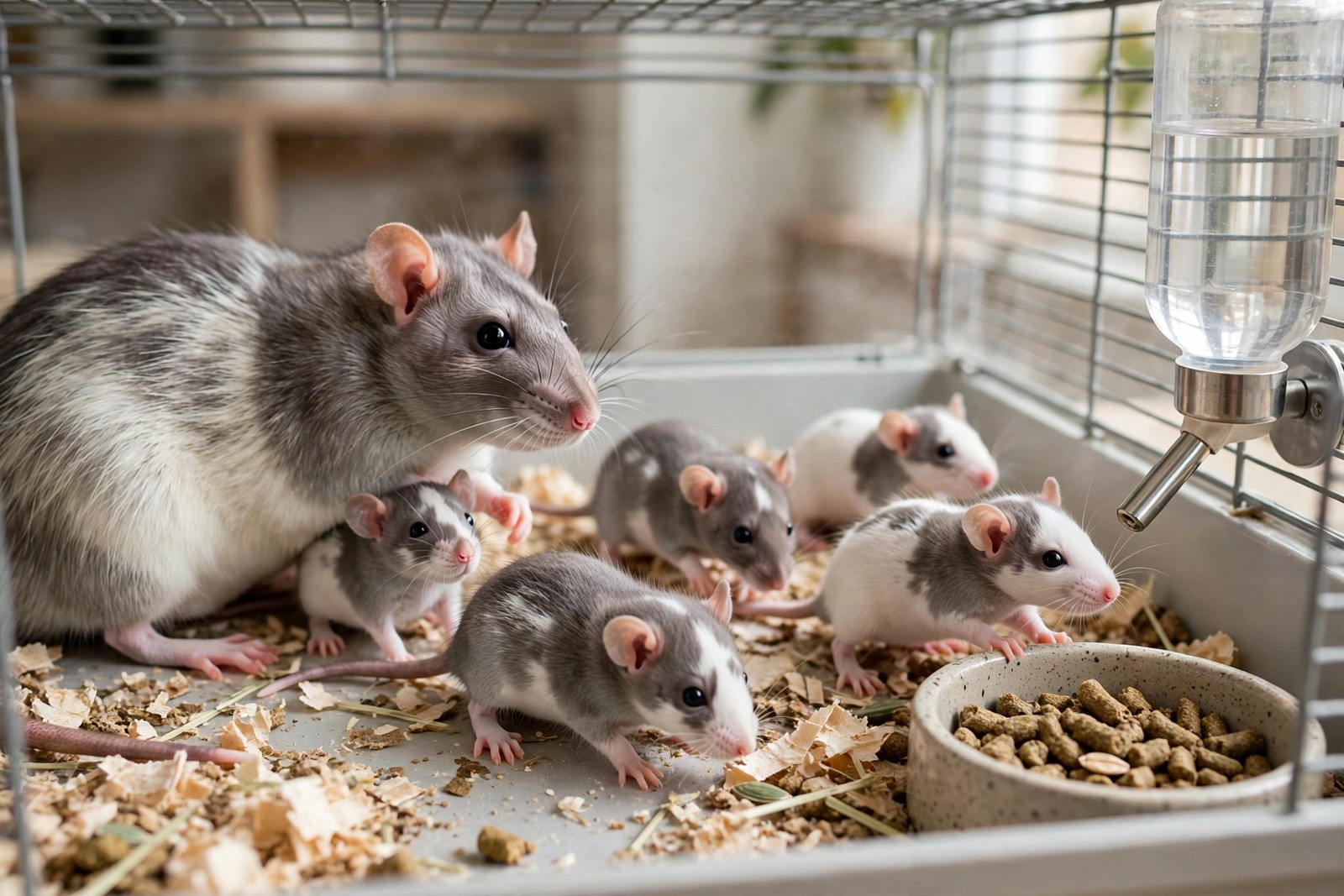
Rat pups develop at startling speed. Born blind and hairless, they open their eyes at about two weeks, start sampling solid food soon after, and by four to five weeks most are eating and drinking independently enough to leave their mother. The timing is not just about weaning, though — it is also about how early young rats can breed, and that second clock is the one that catches people out.
The Weaning Timeline
For the first fortnight the pups live entirely on milk, and the mother does everything, including keeping them warm and clean. From around two to three weeks they begin nibbling the food she eats, drinking from the water bottle, and wrestling with littermates — play that looks rough but teaches bite control and rat manners they will use for life. By four weeks a healthy pup eats solid food confidently; by five weeks it should be gaining weight steadily on its own. A pup that is eating well, drinking, active and holding its weight is ready. One that is still small, quiet or clinging to nursing should stay a little longer and be watched, and a pup that is losing weight or seems unwell needs a vet's input rather than a new home.
The Deadline That Really Matters: Separating the Boys
Young male rats can become fertile at around five weeks, and their mother and sisters can be bred from not long after. That means the boys must move into their own cage by about five weeks of age — not when it is convenient, and not at eight or ten weeks as with some other small pets. Leave it later and you risk the mother or a sister becoming pregnant by a son or brother, which is the single commonest accident in home rat breeding. The girls face no equivalent deadline and can stay with their mother indefinitely; many keepers keep daughters with mum for life.
How Babies Should Leave
However well weaned they are, young rats should never go to a new home singly. Rats are deeply social, and a pup rehomed alone into a strange cage is under far more stress than the move itself causes. Send babies in same-sex pairs or trios from the same litter wherever possible, so each pup keeps a familiar companion. Keep handling them daily right up to leaving day — pups handled gently and often through their first five weeks leave as confident, people-friendly youngsters, while a litter barely touched in that window takes far longer to tame.
For the final week, weigh pups every day or two and jot the figures down: a steady upward line is your evidence each pup is truly independent, and it flags the one quiet pup eating less than its siblings before the move.
With several jobs falling in the same fortnight — daily weights, watching who eats, and the boys' move on the right day — KinsLe's Care Teams lets you assign each check to a named helper for every litter, and the timestamp on each finished task proves the separation happened when it should, not days late.