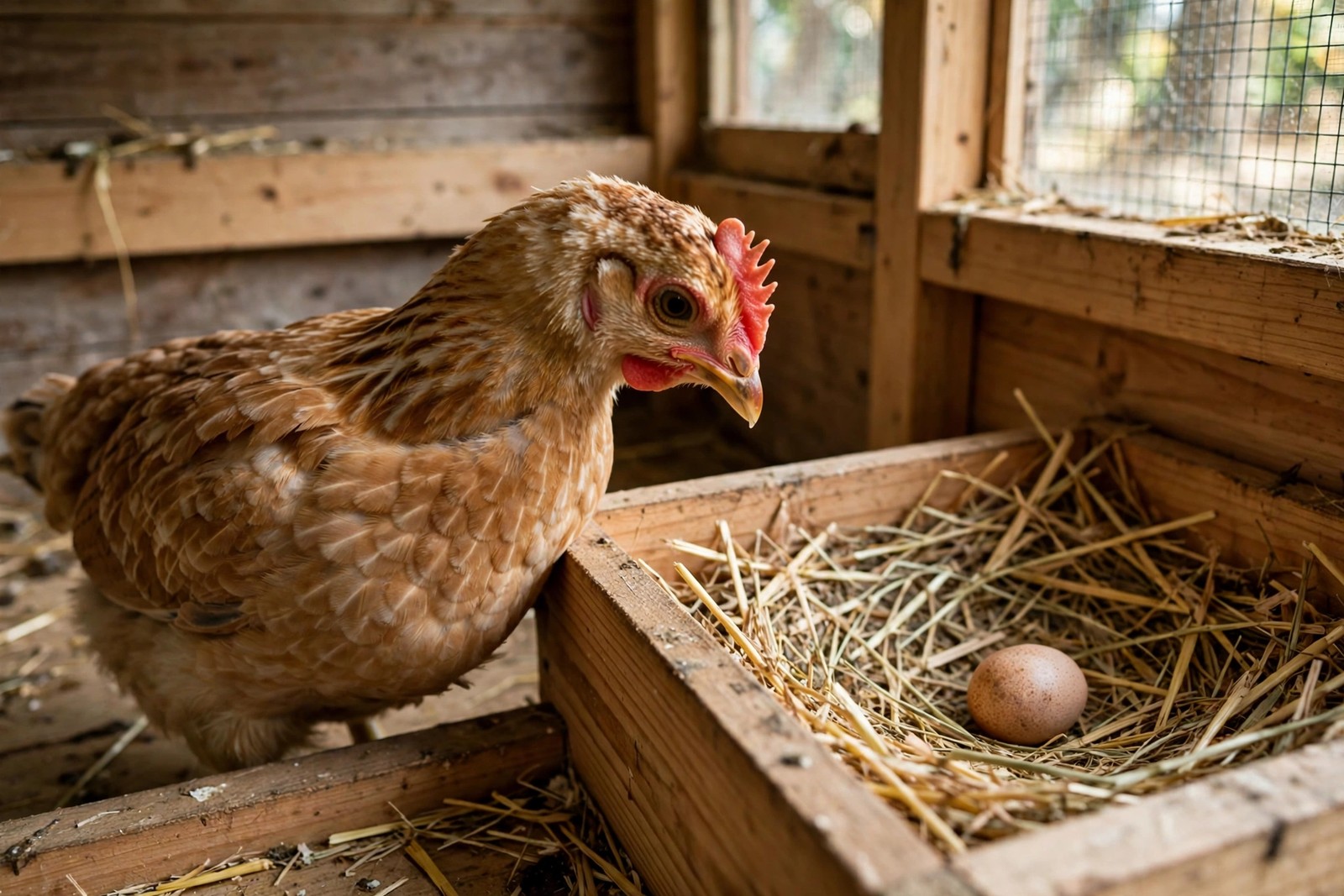
Most pullets, young hens under a year old, start laying at about 18 to 22 weeks of age. That range is a guide, not a deadline, and two forces move a given bird within or beyond it. The first is breed: production hybrids bred for early laying often start at the early end of the range, sometimes a little before it, while heavier dual-purpose and heritage breeds mature more slowly and may not lay until they are several weeks older. The second is daylight. Laying is switched on by lengthening days, so a pullet that reaches 20 weeks as daylight is shrinking in late autumn may politely wait, staying healthy but unproductive, until the days lengthen again and her system gets the signal.
The Signs That Laying Is Close
A pullet approaching point of lay advertises it in the final week or two. Her comb and wattles, small and pale pink while she is immature, grow noticeably and turn a rich red as blood flow increases. She begins to squat when you approach or reach to stroke her back, flattening herself with wings slightly out, which is breeding behaviour and a classic tell. She takes a new interest in the nest boxes, climbing in, shuffling the bedding and sitting for a while without producing anything, and many pullets become more vocal, practising the loud, repetitive cackle known as the egg song. You may also see her appetite rise and her pelvic bones, which you can feel on either side of the vent, gradually widen from a narrow gap to a space that fits two or three fingers as her body prepares to pass an egg.
The First Eggs, and Feeding the Change
First eggs rarely match the picture on a carton. Expect small pullet eggs at first, sometimes oddly shaped, sometimes with a double yolk, and occasionally a shell-less or thin-shelled egg laid from the roost overnight while the shell-making system finds its rhythm. These settle within the first few weeks of laying in a healthy bird. Match the feed to the milestone: keep pullets on grower feed until around 18 weeks or the first egg, whichever comes first, then change gradually to a layer feed formulated for laying hens, and offer a separate dish of crushed oyster shell that hens can take freely, since shell-making draws heavily on calcium and each hen regulates her own intake well. Provide one clean, dark, bedded nest box for roughly every four to five hens, in place before laying starts, so the first eggs land in boxes rather than teaching floor-laying habits you then have to break.
When a Late Starter Needs a Second Look
Patience covers most late starters, especially heritage breeds and autumn pullets, but a hen that is well past the expected window with a pale, shrunken comb, weight loss, a swollen abdomen or a drooping, penguin-like stance needs a vet rather than more waiting, since laying problems and other illness can hide behind a simple failure to start. Check the mundane causes first: a bird that is actually a mis-sexed young cockerel, a hidden nest under a bush where a free-ranging pullet has been laying all along, stress from a recent move, or parasites quietly draining condition. Collect eggs daily once laying begins, both to keep them clean and to discourage hens from sitting on growing piles. KinsLe's Care Teams lets you assign the daily egg collection, nest-box check and oyster-shell top-up for your flock to named helpers, and each timestamped task builds a simple record of when each pullet started and how the flock's laying settles in.