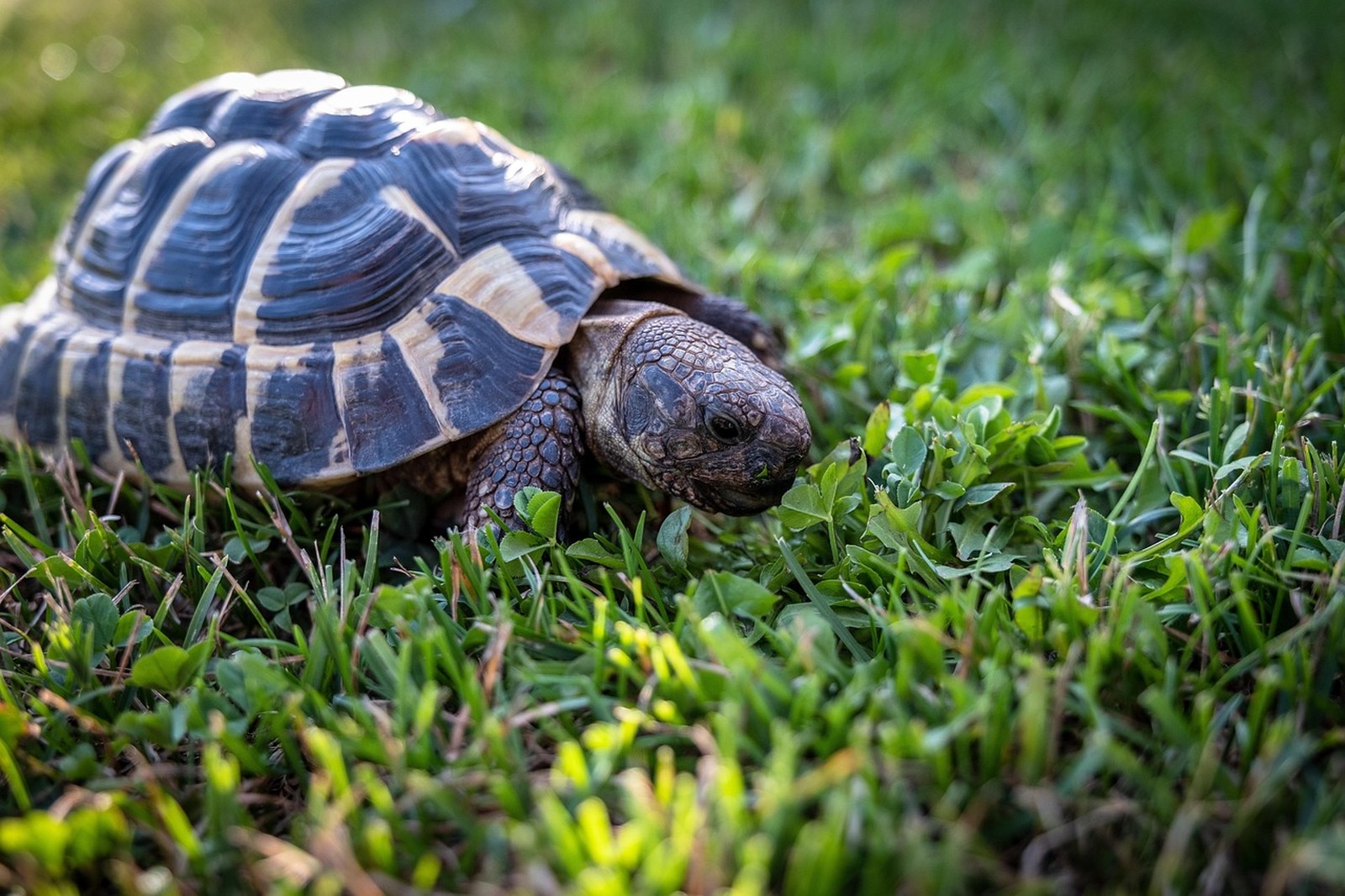
Young tortoises of herbivorous species do not wait weeks to start on greens. A Russian, Hermann's, or sulcata hatchling hatches ready to eat the same kind of leafy diet its parents eat, and most begin nibbling within their first few days, once the yolk sac that nourished them in the egg is fully absorbed. That yolk covers the very first day or two, which is why a brand-new hatchling may ignore food briefly, but there is no weaning period and no starter food stage to pass through before greens are offered.
What to Put in Front of a Hatchling
Offer a varied pile of dark leafy greens, chopped or torn small enough for a tiny mouth to bite pieces off. Dandelion leaves and flowers, collard greens, mustard greens, turnip greens, endive, and escarole all suit growing herbivorous tortoises far better than pale lettuce, which is mostly water and fills a hatchling up without feeding it. Grass and pieces of edible weeds belong in the mix for grazing species such as sulcatas and leopards as they grow. Keep fruit off a young herbivore's plate except as a rare taste, since sugary foods ferment in a gut built for fibre, and skip spinach-heavy mixes in favour of rotation. A light dusting of calcium powder over the greens, following your reptile vet's guidance for a growing tortoise, supports shell and bone growth.
Helping a Slow Starter Eat
A hatchling that picks at greens usually needs conditions fixed, not a different food. Warmth drives appetite in tortoises, so check that the basking spot and the cooler end of the enclosure are both in the right range for the species, and that the youngster gets a proper day and night light cycle with suitable ultraviolet light for grazing and digestion. A shallow lukewarm soak each day encourages drinking and often triggers grazing right afterwards. Serving greens first thing, while the hatchling is warming up and most active, and mixing a favourite leaf through less-loved ones teaches a broad palate early, which matters because tortoises can become stubborn about familiar foods.
How Much Eating Is Normal
Expect enthusiastic grazing on some days and lighter nibbling on others, especially during the first week in a new enclosure, but the overall direction should be steady eating and slow, smooth growth. Weigh a hatchling regularly and write the figure down, because a tiny tortoise can lose condition before the change is visible in the hand. Greens left untouched day after day, a softening shell, swollen eyes, or a hatchling that sleeps through its warm hours are not settling-in quirks; they are reasons to book a reptile vet promptly, since hatchlings have small reserves. Species matters too: a red-footed tortoise is an omnivore that also takes some fruit and protein, while desert and grassland species should be almost entirely leaf, grass, and weed based from the start.
Building the Daily Routine
Greens offered fresh each morning, yesterday's leftovers removed, water kept shallow and clean, and weights logged weekly turn a hatchling's first months into a steady rhythm instead of daily guesswork. Keepers who share those morning greens, daily soaks, and weekly weigh-ins through KinsLe's Care Teams can see at a glance what has been done for the hatchling and spot a missed feed the same day, which is exactly the consistency a growing tortoise depends on.