
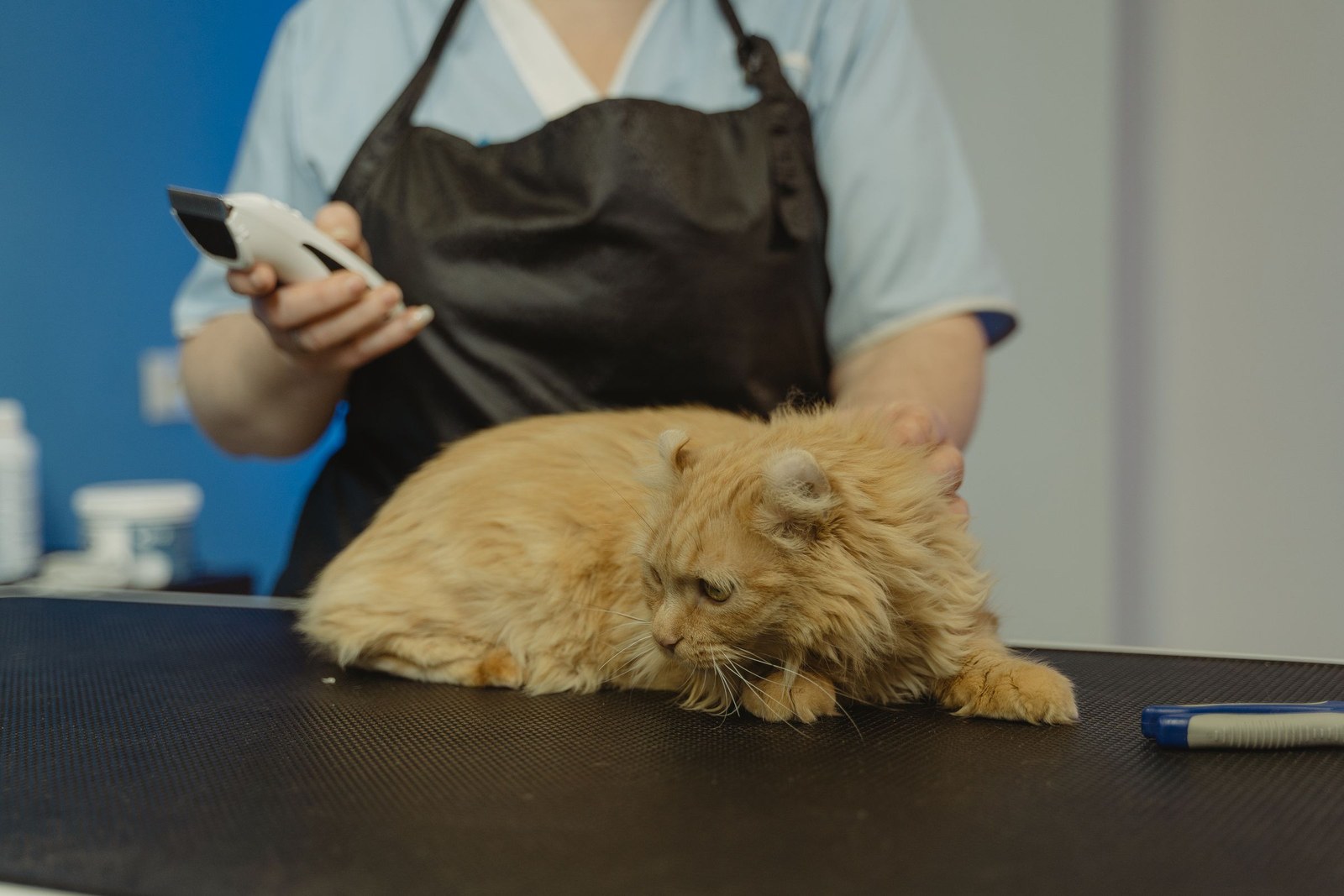
A professional groomer is the right call when grooming stops being safe or manageable at home — heavy matting, a cat who genuinely needs a bath but panics in your sink, senior cats who need extra-gentle handling, or any job your cat simply will not allow without a real risk of bites, scratches, or injury. There is no failure in handing over; the welfare question is whether the job gets done calmly and safely, not whose hands do it.
The clearest cases for booking a pro
Heavy or widespread matting. Mats that sit tight against the skin are painful — they pull with every movement — and removing them at home with scissors is one of the most common causes of grooming injuries, because cat skin is paper-thin and tents up into a mat invisibly. A professional can clip beneath mats safely with the right tools, and advise whether the coat can be saved or needs to grow out from a shorter cut.
The bath that becomes a battle. Most cats never need a bath, but some do: a cat who has rolled in something oily or unsafe to lick off, a long-haired cat whose coat has become greasy, or one your vet wants bathed for a skin reason. If your cat panics at water, a groomer experienced with cats has the handling skills, equipment, and drying setup to make it a short, controlled event instead of a traumatic afternoon for everyone.
Senior and fragile cats. Older cats often groom less because of stiffness or sore joints, so coats and nails quietly deteriorate. They also stress more easily and may have thin skin and lumps that need care around. A good cat groomer works slowly, supports joints, and will flag anything unusual they find under the coat.
Jobs your cat won't allow. Nail trims on a cat who bites, sanitary trims on a wiggly long-hair, or de-shedding a determined struggler — if you are dreading it and she is too, a professional session is kinder than repeated failed attempts that poison the routine at home.
What to look for in a cat groomer
Cat grooming is a specialism, not an add-on. Ask directly:
- Do you groom cats regularly, and are you trained or certified specifically in cat grooming?
- Are cats kept and groomed separately from dogs, ideally on cat-only sessions or days?
- How do you handle a frightened cat — and will you stop and call me if she is too stressed?
- What happens if you find mats, skin problems, or lumps?
- How long will she be with you? Short appointments mean less stress.
A groomer who welcomes these questions and talks knowledgeably about cat behaviour is a good sign. Be honest about your cat's temperament and history — a groomer warned about a biter can plan handling and timing, and may suggest a vet visit first if a cat's distress suggests pain or if sedation grooming (only ever done under veterinary supervision) needs discussing.
Preparing your cat for the visit
Book during quieter times if possible, use a secure carrier lined with familiar-smelling bedding, and skip food for a few hours beforehand if travel makes her nauseous. Tell the groomer about health conditions, medications, and the areas your cat dislikes having touched. Afterwards, expect her to smell different and possibly to be a little aloof — other cats at home may react to the new scent for a day or so.
Finding the right person nearby
KinsLe's Pet Services Directory helps you find local groomers, vets, sitters, and trainers, so you can compare nearby cat-friendly options in one place rather than relying on a single recommendation. Before booking, compare the cat groomers you are considering through the Pet Services Directory on KinsLe, checking which ones groom cats separately from dogs and handle senior cats gently.