
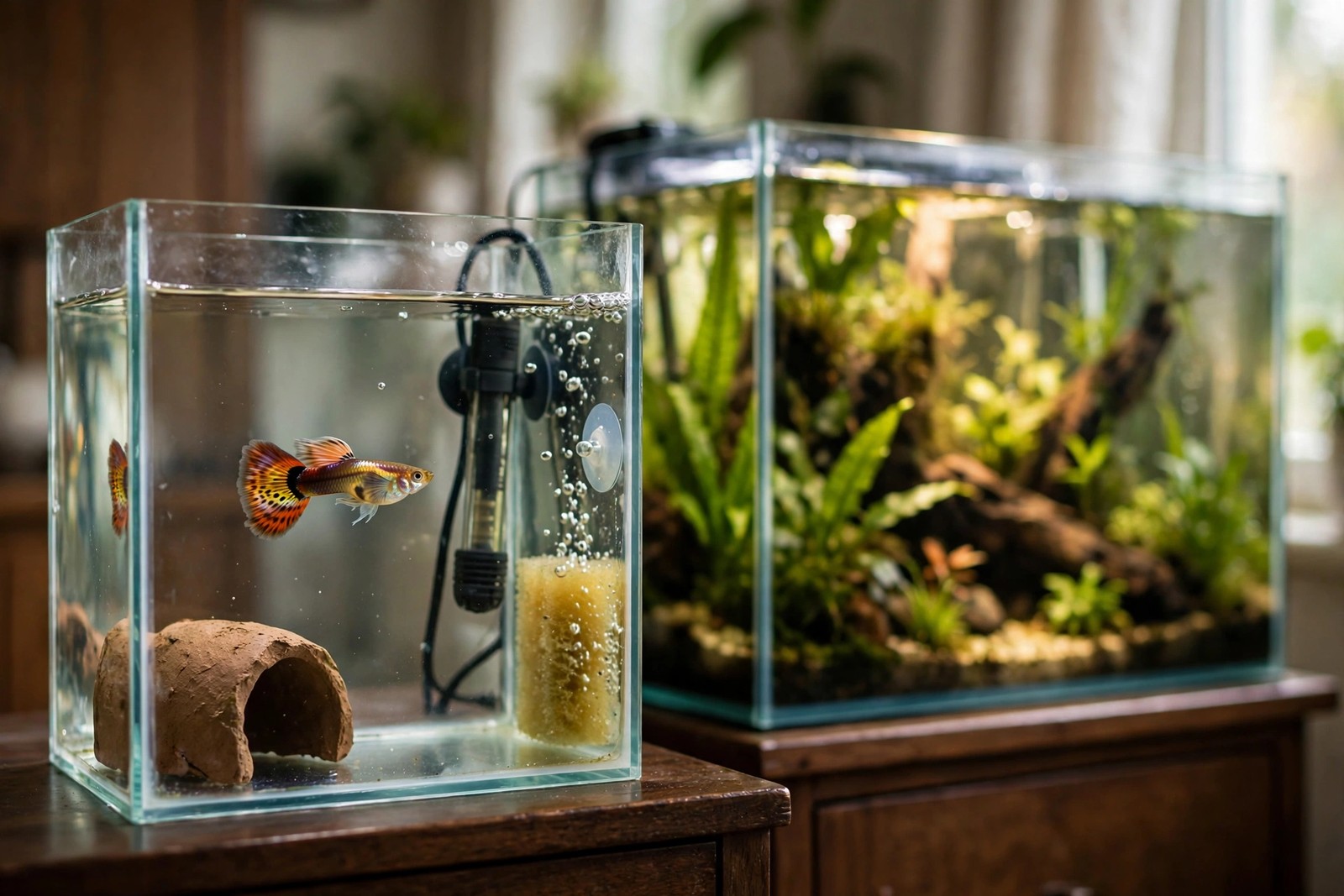
The answer to when you should quarantine a new fish is simple: always, before it goes anywhere near your main tank, whatever shop it came from and however healthy it looks. Shop systems mix fish from many sources, and the stress of netting, bagging and travel lowers a fish's defences just enough for hidden parasites or infections to surface days later. Two to four weeks in a separate tank turns that risk into a short, calm observation period instead of an outbreak among fish you have kept healthy for years. What follows is general information for healthy new arrivals — a fish that arrives visibly sick is a case for an aquatic vet, not for home guesswork.
What You Are Watching For
Use the quarantine weeks actively. The warning signs are the classics: tiny white spots dusting the body and fins, fins clamped tight against the body, scratching or flicking against decor, rapid or one-sided gill movement, gasping at the surface, stringy pale droppings, loss of appetite, or a fish that hides constantly when its species normally explores. Just as important is confirming the positive: the fish eats eagerly within a day or two, swims level and relaxed, and breathes at an easy rate. Many problems declare themselves within the first fortnight; the extra time up to four weeks catches the slower ones and lets a shy fish settle and feed properly before facing tankmates.
Do not treat a healthy-looking fish with medicines just in case during quarantine. Unneeded medication stresses the fish and its filter, and it can mask exactly the signs you are watching for. If signs do appear, photograph or film them, test the water, and consult an aquatic vet for identification and next steps rather than reaching for a shelf of bottles.
Setting Up a Quarantine Tank That Works
It need not be elaborate: a basic tank of around 10 to 20 gallons suits most community-sized fish, with a cycled sponge filter — keep a spare sponge running in your main tank so it is biologically ready — plus a heater, conditioned water, a lid and one simple hiding place. Acclimate the new fish to this tank as carefully as to any other: float the bag to equalise temperature, then add small amounts of quarantine water over twenty to thirty minutes before releasing the fish. Keep lights dim and traffic low for the first few days, and test the water regularly, since a lightly stocked quarantine tank can still spike ammonia; ammonia and nitrite should read zero and the temperature and pH should end up close to your main tank's, so the final move is not a second shock.
The Move Across, and the Record
When the period passes clean, move only the fish — net or cup it gently and leave the quarantine water, and everything in it, behind. Rinse and dry the quarantine equipment, or keep the tank running ready for the next arrival if you add fish often. Then write the story down while it is fresh: where the fish came from, when it arrived, how its quarantine went, and anything you noticed. KinsLe's Pet Passport holds that source, arrival and health history in each fish's own records packet from the very first day, so if trouble ever traces back to an introduction months later, you have dates and facts to hand — including for the aquatic vet — instead of a vague memory.