
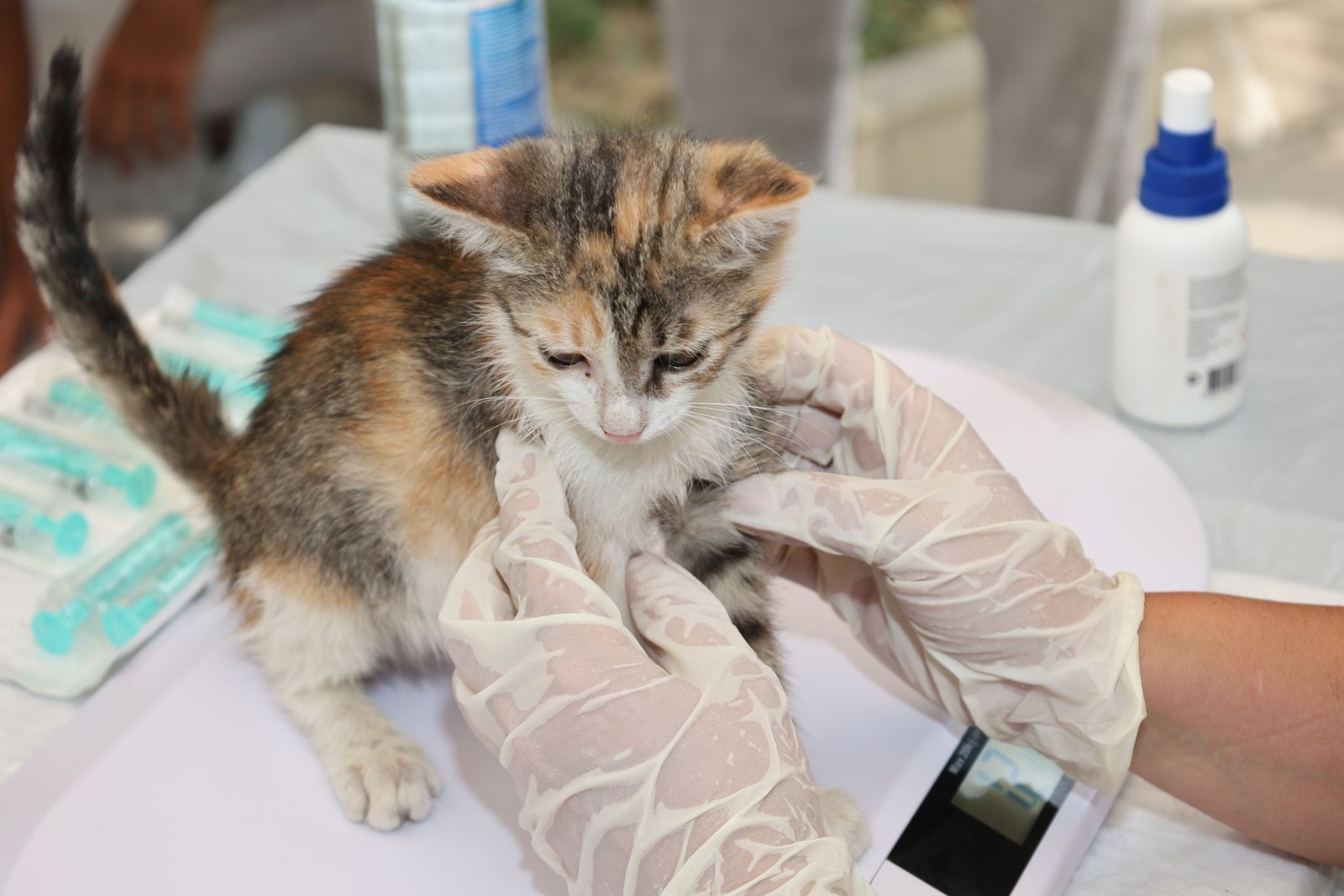
Your kitten should have her first vet visit soon after she comes home — commonly around six to eight weeks old, or within the first few days after adoption at any age. That visit establishes her health baseline, starts her vaccine series, checks for parasites, and gives you a feeding and care plan from someone who has actually examined her, which no website can replace.
Why the timing matters
Kittens receive early protection from their mother's milk, but it fades on an unpredictable schedule during the first two months. Starting vaccines in that six-to-eight-week window, with boosters at intervals your veterinarian sets, is how protection gets built before the maternal cover fully disappears. Waiting until a kitten is 'older and stronger' actually leaves the most vulnerable weeks uncovered. If you adopt an older kitten or a young cat with unknown history, the rule is the same: book the visit right away rather than guessing where she is in a vaccine series.
What the first visit usually includes
Expect a full physical exam — eyes, ears, heart, lungs, teeth, coat, and belly — plus a weight that anchors all future growth checks. Most first visits also include:
- The first round of core vaccines appropriate to her age, with a booster schedule to take home.
- A fecal test and deworming if needed, since intestinal parasites are extremely common in kittens.
- A check for fleas and ear mites, and a plan for parasite prevention.
- A conversation about feeding: how much, how often, and when to transition foods.
- Discussion of spaying timing, microchipping, and what your region requires.
Bring every scrap of paper you received — breeder or rescue records, vaccine stickers, deworming dates, the food she's currently eating. Gaps in that paperwork are normal for rescues; your vet will build a sensible plan around what is known rather than starting from zero.
Before and after the appointment
Get her used to the carrier at home first — leave it out with a soft blanket and treats inside so it is furniture, not a trap that appears only on vet day. Schedule young-kitten appointments at calm times if you can, keep the car ride quiet, and bring a small meal or treats if the clinic allows. Afterward, mild sleepiness for a day following vaccines is common; call the clinic if she stops eating, vomits repeatedly, has facial swelling, or seems genuinely unwell rather than just tired.
Choose a clinic you can actually reach quickly, ask what their after-hours advice is, and save the number in your phone before you ever need it at midnight.
Keeping her records straight from day one
Paperwork scatters fast — a vaccine card here, a booster reminder on the fridge, a deworming note in an adoption folder. KinsLe's Pet Passport is your kitten's records packet, built to hold her vaccines, medications, allergies, and documents in one place that you can share with vets and sitters when they need it. Start it at the first visit, add each booster as it happens, and her history stays readable instead of reconstructed from memory. Add that first visit to her Pet Passport on KinsLe — exam findings, vaccine dates, and her weight recorded that day — and the packet will show a later clinic exactly what has already been done.